

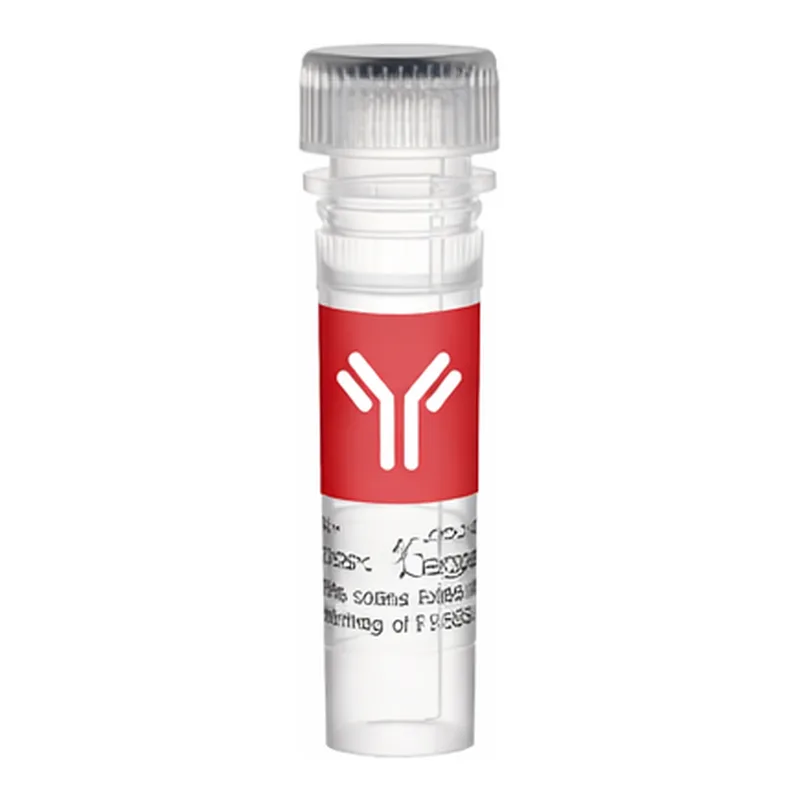
Thermo Fisher Scientific PYGL Polyclonal Antibody
Thermo Fisher Scientific의 PYGL Polyclonal Antibody는 인간, 마우스, 랫트 시료에 반응하며 Western blot, IHC, ICC, IP에 사용 가능합니다. 항원 친화 크로마토그래피로 정제된 고순도 항체로, PBS/glycerol 완충액에 보관됩니다. 연구용으로만 사용됩니다.
- 판매단위
- pk
카탈로그
1개 옵션 · 카탈로그 번호를 클릭하면 복사됩니다Thermo Fisher Scientific · Thermo Fisher Scientific PYGL Polyclonal Antibody
Applications and Tested Dilution
| Application | Tested Dilution |
|---|---|
| Western Blot (WB) | 1:500–1:2,000 |
| Immunohistochemistry (Paraffin) (IHC (P)) | 1:50–1:200 |
| Immunocytochemistry (ICC/IF) | 1:50–1:200 |
| Immunoprecipitation (IP) | 1:50–1:200 |
Product Specifications
| 항목 | 내용 |
|---|---|
| Species Reactivity | Human, Mouse, Rat |
| Host / Isotype | Rabbit / IgG |
| Class | Polyclonal |
| Type | Antibody |
| Immunogen | Recombinant full length Human PYGL (UniProt ID: P06737-1, amino acids 1–847) |
| Conjugate | Unconjugated |
| Form | Liquid |
| Concentration | 1 mg/mL |
| Purification | Antigen affinity chromatography |
| Storage Buffer | PBS, pH 7.2, with 50% glycerol |
| Contains | 0.02% sodium azide |
| Storage Conditions | Store at 4°C short term. For long term storage, store at -20°C, avoiding freeze/thaw cycles. |
| Shipping Conditions | Wet ice |
| RRID | AB_2720723 |
Product Specific Information
The antibody was affinity-purified from rabbit antiserum by affinity chromatography using an epitope-specific immunogen. The purity is greater than 95% as determined by SDS-PAGE.
Target Information
This gene encodes a homodimeric enzyme that catalyzes the cleavage of α-1,4-glucosidic bonds to release glucose-1-phosphate from liver glycogen stores. The enzyme is activated by phosphorylation at serine residue 15, switching from phosphorylase B to phosphorylase A. Its activity is regulated by allosteric effectors and hormonal control mechanisms.
Humans express three glycogen phosphorylase isozymes primarily in liver, brain, and muscle. The liver isozyme maintains systemic glucose levels, while the brain and muscle isozymes serve local energy demands. Mutations in the liver glycogen phosphorylase gene cause glycogen storage disease type VI (Hers disease), characterized by inhibited glycogen-to-glucose conversion, moderate hypoglycemia, mild ketosis, growth retardation, and hepatomegaly. Alternative splicing produces multiple transcript variants encoding different isoforms.
For Research Use Only. Not for use in diagnostic procedures. Not for resale without express authorization.
Thermo Fisher Scientific 상품 둘러보기
전체보기
문의
0개 · 배송·재고 문의는 실시간 상담이 빠릅니다아직 등록된 문의가 없어요.