

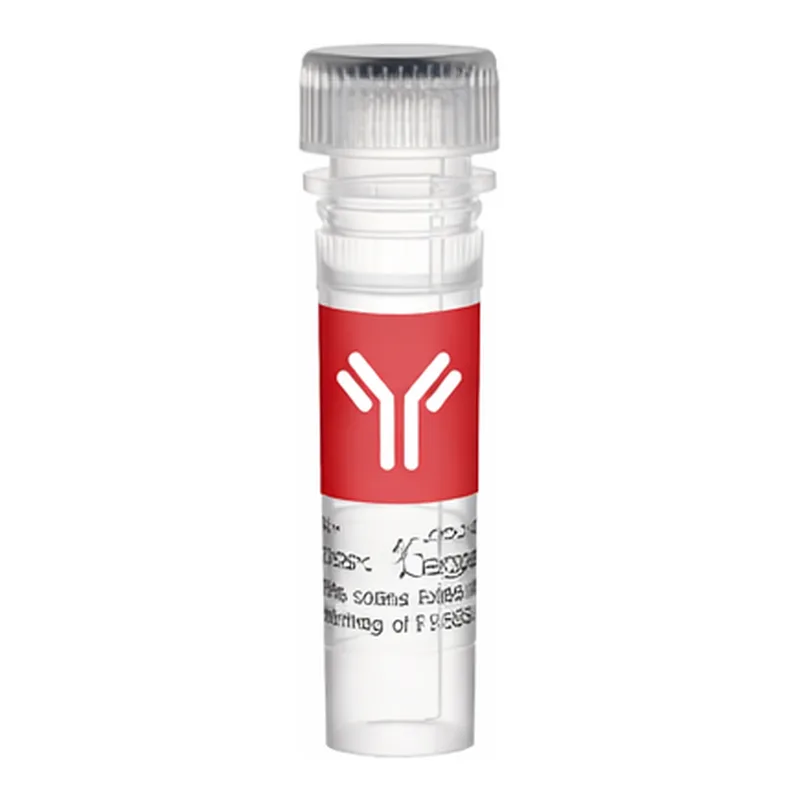
Thermo Fisher Scientific TPM3 Polyclonal Antibody
Rabbit polyclonal antibody against TPM3 for WB and ICC/IF applications. Reacts with human, mouse, and rat. Affinity purified and supplied as liquid at 0.5 mg/mL in PBS with BSA and glycerol. For research use only.
- 판매단위
- pk
카탈로그
1개 옵션 · 카탈로그 번호를 클릭하면 복사됩니다Thermo Fisher Scientific · Thermo Fisher Scientific TPM3 Polyclonal Antibody
Applications and Tested Dilutions
| Application | Tested Dilution |
|---|---|
| Western Blot (WB) | 1–2 µg/mL |
| Immunocytochemistry (ICC/IF) | 2 µg/mL |
Product Specifications
| Property | Description |
|---|---|
| Species Reactivity | Human, Mouse, Rat |
| Host / Isotype | Rabbit / IgG |
| Class | Polyclonal |
| Type | Antibody |
| Immunogen | Peptides corresponding to Human TPM3 (aa 40–49, 225–234) |
| Conjugate | Unconjugated |
| Form | Liquid |
| Concentration | 0.5 mg/mL |
| Purification | Affinity chromatography |
| Storage Buffer | PBS, pH 7.4, with 0.1% BSA, 30% glycerol |
| Contains | 0.09% sodium azide |
| Storage Conditions | Store at 4°C short term. For long term storage, store at -20°C, avoiding freeze/thaw cycles. |
| Shipping Conditions | Ambient (domestic); Wet ice (international) |
| RRID | AB_2633251 |
Product Specific Information
These polyclonal antibodies are of rabbit origin, developed by immunizing animals with proteins or peptides. The antibody is purified by affinity chromatography from rabbit sera generated after immunization with a specific protein or peptide. The purified antibody has been tested for functionality in various research applications.
This product is intended for Research Use Only and is non-hazardous and non-infectious.
This antibody is predicted to react with Monkey, Horse, Rat, and Pig.
Target Information
TPM3 (tropomyosin 3) is a member of the tropomyosin family of actin-binding proteins involved in the contractile system of striated and smooth muscles and in the cytoskeleton of non-muscle cells. Tropomyosins are dimers of coiled-coil proteins that polymerize end-to-end along the major groove of actin filaments, providing stability and regulating the binding of other actin-associated proteins.
In muscle cells, they regulate contraction by controlling myosin head binding to actin filaments.
Mutations in this gene are associated with autosomal dominant nemaline myopathy, and chromosomal translocations involving this locus have been linked to cancer. Multiple transcript variants encoding different isoforms have been identified.
For Research Use Only. Not for use in diagnostic procedures. Not for resale without express authorization.
Thermo Fisher Scientific 상품 둘러보기
전체보기
문의
0개 · 배송·재고 문의는 실시간 상담이 빠릅니다아직 등록된 문의가 없어요.