

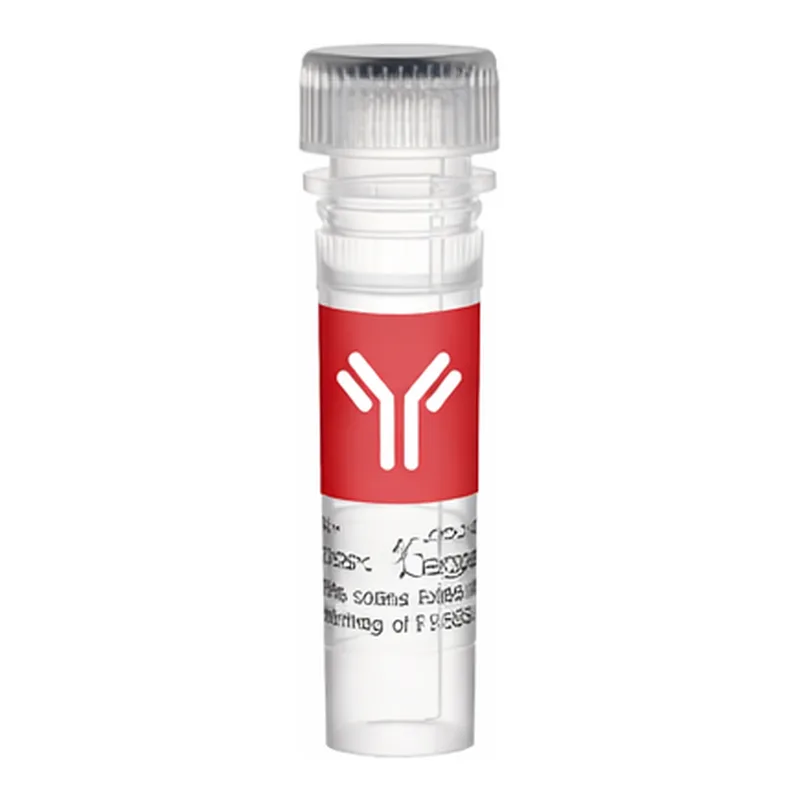
Thermo Fisher Scientific SERPINB3/SERPINB4 Polyclonal Antibody
SERPINB3/SERPINB4 단백질을 인식하는 Rabbit Polyclonal 항체로, Western blot에 적합합니다. Human, Mouse, Rat 시료에 반응하며, 항원 친화 정제 방식으로 높은 순도를 보장합니다. 장기 보관 시 -20°C에서 안정적으로 유지됩니다.
- 판매단위
- pk
카탈로그
1개 옵션 · 카탈로그 번호를 클릭하면 복사됩니다Thermo Fisher Scientific · Thermo Fisher Scientific SERPINB3/SERPINB4 Polyclonal Antibody
Applications
- Western Blot (WB): 1:500–1:1,000
Product Specifications
| 항목 | 내용 |
|---|---|
| Species Reactivity | Human, Mouse, Rat |
| Host / Isotype | Rabbit / IgG |
| Class | Polyclonal |
| Type | Antibody |
| Immunogen | Synthetic peptide corresponding to residues in Human SERPINB3/SERPINB4 |
| Conjugate | Unconjugated |
| Form | Liquid |
| Concentration | 1 mg/mL |
| Purification | Antigen affinity chromatography |
| Storage Buffer | PBS, pH 7.2, with 50% glycerol |
| Contains | 0.02% sodium azide |
| Storage Conditions | Store at 4°C short term. For long term storage, store at -20°C, avoiding freeze/thaw cycles. |
| Shipping Conditions | Wet ice |
| RRID | AB_2719569 |
Product Specific Information
The antibody was affinity-purified from rabbit antiserum by affinity chromatography using an epitope-specific immunogen. The purity is greater than 95% as determined by SDS-PAGE.
Target Information
Metastasis of a primary tumor to a distant site is influenced by signaling cascades that disrupt interactions between cells and extracellular matrix proteins. Serine proteases, such as neutrophil elastase, play a key role in this process.
In 1985, Dr. Jim Travis and Dr. R.W. Carrell identified the serpin family of serine protease inhibitors, which share homology in both amino acid sequence and tertiary structure. Serpins contain a peptide stretch that mimics a substrate for a corresponding serine protease, forming a 1:1 complex that renders the enzyme inactive.
Aberrant expression of serpin family members is associated with diseases such as emphysema (α-1 antitrypsin deficiency), fatal bleeding, thrombosis (antithrombin deficiency), and certain cancers. Circulating levels of squamous cell carcinoma antigen (SCCA1) increase with the progression of some cervical, lung, esophageal, and head and neck cancers.
Human chromosome 18q21.3 includes a cluster of serpin genes, including a tandem duplication of the SCCA gene, plasminogen activator inhibitor type 2, and maspin. SCCA is transcribed by two nearly identical genes (SCCA1 and SCCA2), primarily producing SCCA1, a 390 amino acid protein originally isolated from metastatic cervical squamous cell carcinoma.
For Research Use Only. Not for use in diagnostic procedures. Not for resale without express authorization.
Thermo Fisher Scientific 상품 둘러보기
전체보기
문의
0개 · 배송·재고 문의는 실시간 상담이 빠릅니다아직 등록된 문의가 없어요.