

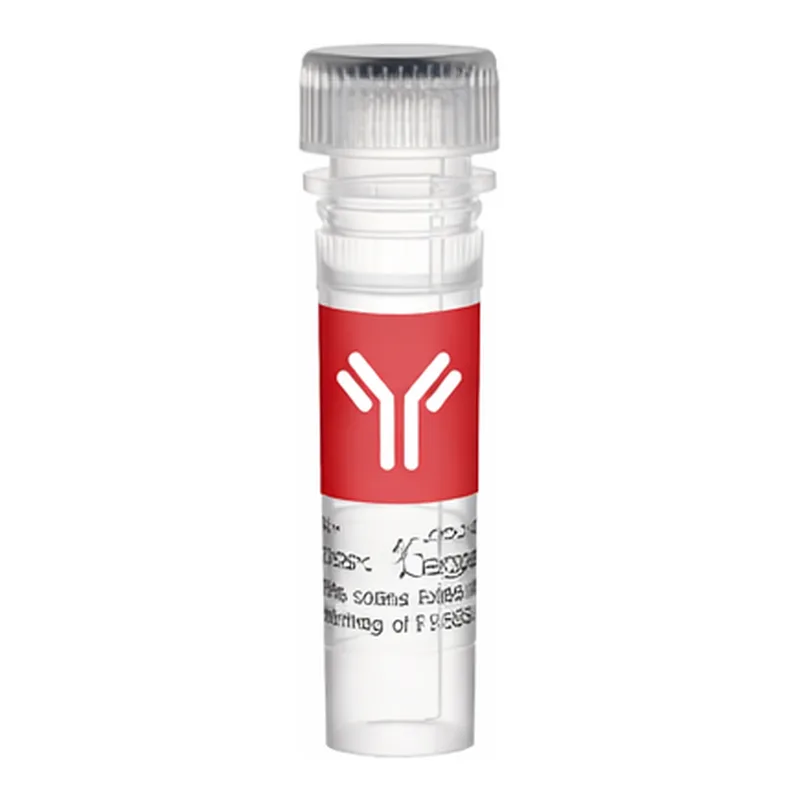
Thermo Fisher Scientific SPG11 Recombinant Rabbit Monoclonal Antibody (2H25L11)
SPG11 단백질을 표적으로 하는 Thermo Fisher의 재조합 토끼 단클론 항체입니다. Western blot 및 ICC/IF에 적합하며, 높은 특이성과 로트 간 일관성을 제공합니다. 인간 반응성, Expi293 발현 시스템 기반, Protein A 정제 및 PBS 버퍼에 보존됩니다.
- 판매단위
- pk
카탈로그
1개 옵션 · 카탈로그 번호를 클릭하면 복사됩니다Thermo Fisher Scientific · Thermo Fisher Scientific SPG11 Recombinant Rabbit Monoclonal Antibody (2H25L11)
Applications
| Application | Tested Dilution |
|---|---|
| Western Blot (WB) | 1:200 |
| Immunocytochemistry (ICC/IF) | 5 µg/mL |
Product Specifications
| 항목 | 내용 |
|---|---|
| Species Reactivity | Human |
| Host/Isotype | Rabbit / IgG |
| Expression System | Expi293 |
| Class | Recombinant Monoclonal |
| Type | Antibody |
| Clone | 2H25L11 |
| Immunogen | Peptide corresponding to human SPG11 (aa873-aa892) |
| Conjugate | Unconjugated |
| Form | Liquid |
| Concentration | 0.5 mg/mL |
| Purification | Protein A |
| Storage Buffer | PBS, pH 7.4 |
| Contains | 0.09% sodium azide |
| Storage Conditions | Store at 4°C short term. For long term storage, store at -20°C, avoiding freeze/thaw cycles. |
| Shipping Conditions | Wet ice |
| RRID | AB_2725406 |
Product Specific Information
This antibody is predicted to react with Monkey, Horse, Bovine, and Sheep.
Recombinant rabbit monoclonal antibodies are produced using in vitro expression systems developed by cloning specific antibody DNA sequences from immunoreactive rabbits. Individual clones are screened to select optimal production candidates.
Advantages of recombinant rabbit monoclonal antibodies:
- Excellent specificity and sensitivity
- Lot-to-lot consistency
- Animal origin-free formulations
- Broader immunoreactivity due to larger rabbit immune repertoire
Target Information
Hereditary spastic paraplegias (HSPs) are genetically and phenotypically heterogeneous disorders. Spastic paraplegia with thinning of the corpus callosum (ARHSP-TCC) is a frequent form of complicated hereditary spastic paraplegia (cHSP) characterized by mental retardation and muscle stiffness followed by progressive paraparesis and cognitive deterioration.
Mutations in the SPG11 gene, encoding spatacsin, are a major cause of HSP-TCC. Spatacsin is a potential transmembrane protein phosphorylated upon DNA damage and expressed throughout the brain, with high levels in the cerebellum. SPG11 mutations may be more common in familial cHSP forms. Kjellin syndrome and juvenile Parkinsonism have also been linked to SPG11 mutations.
For Research Use Only. Not for use in diagnostic procedures. Not for resale without express authorization.
제품 이미지
Thermo Fisher Scientific 상품 둘러보기
전체보기
문의
0개 · 배송·재고 문의는 실시간 상담이 빠릅니다아직 등록된 문의가 없어요.