

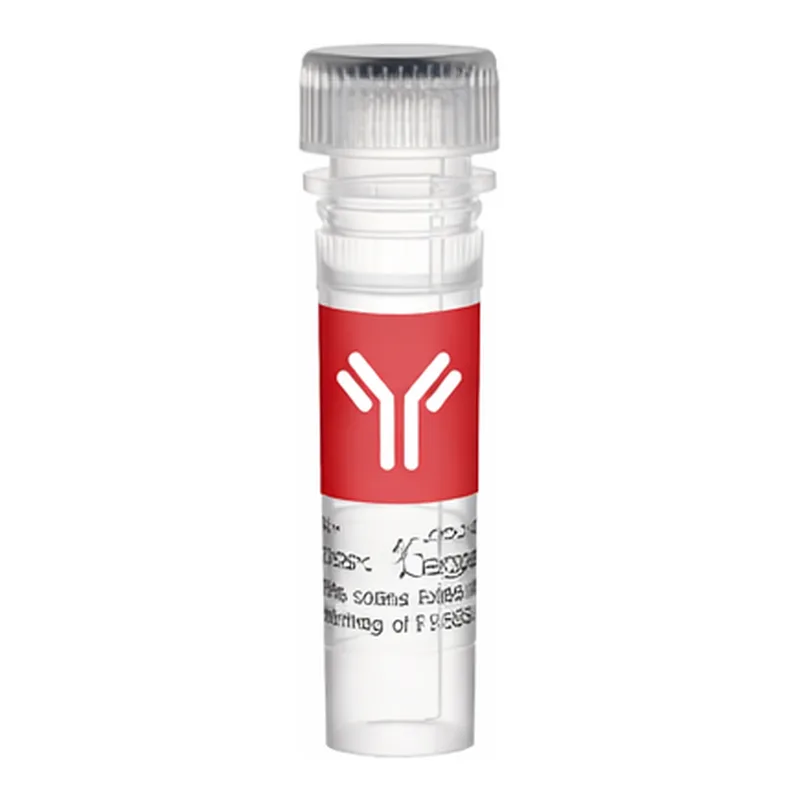
Thermo Fisher Scientific CD366 (TIM3) Monoclonal Antibody (RMT3-23), eBioscience
마우스 CD366(TIM3)을 인식하는 RMT3-23 단클론 항체로, Th1 및 Tc1 세포 표면 단백질 분석에 적합합니다. Flow Cytometry에 검증되었으며, 0.5 mg/mL 농도의 액상 형태로 제공됩니다. 다양한 형광 표지 형식으로도 이용 가능합니다.
- 판매단위
- pk
카탈로그
3개 옵션 · 카탈로그 번호를 클릭하면 복사됩니다Thermo Fisher Scientific · Thermo Fisher Scientific CD366 (TIM3) Monoclonal Antibody (RMT3-23), eBioscience
Applications and Tested Dilution
| Application | Tested Dilution | Publications |
|---|---|---|
| Flow Cytometry (Flow) | 1 µg/test | View 28 publications |
| Neutralization (Neu) | - | View 1 publication |
| Functional Assay (Functional) | - | View 4 publications |
Product Specifications
| 항목 | 내용 |
|---|---|
| Published species | Human, Mouse |
| Host / Isotype | Rat / IgG2a, kappa |
| Class | Monoclonal |
| Type | Antibody |
| Clone | RMT3-23 |
| Conjugate | Unconjugated |
| Form | Liquid |
| Concentration | 0.5 mg/mL |
| Storage conditions | 4°C |
| Shipping conditions | Wet ice |
| RRID | AB_467643 |
Additional Formats Available
- APC
- Brilliant Violet 421
- Brilliant Violet 605
- Brilliant Violet 650
- Brilliant Violet 711
- FITC
- PE
- PE-Cyanine7
- PerCP-eFluor 710
- Super Bright 436
- Super Bright 702
- Request custom conjugation
Product Specific Information
The RMT3-23 monoclonal antibody reacts with mouse CD366 (TIM3), a Th1-specific cell surface protein expressed in both BALB/c and C57BL/6 mice. CD366 is a type I transmembrane protein containing an immunoglobulin and mucin-like domain extracellularly and a tyrosine phosphorylation motif intracellularly. It is selectively expressed on differentiated CD4⁺Th1 and CD8⁺Tc1 cells, but absent on Th2 and Tc2 cells. Other hematopoietic cells such as naïve T cells, B cells, macrophages, and dendritic cells do not express CD366 at the protein level.
CD366 expression increases at late stages of Th1 differentiation after multiple rounds of polarization, suggesting a role in effector function rather than differentiation. In experimental autoimmune encephalomyelitis (EAE) models, CD366 is highly expressed on CNS-infiltrating T cells at disease onset.
RMT3-23 has functional activity, including blocking dendritic cell recognition of apoptotic cells and inducing autoantibody production.
Applications Reported: Flow cytometric analysis
Applications Tested: Tested by flow cytometry on CD366-transfected cells. Recommended ≤1 µg/test (in 100 µL final volume; 10⁵–10⁸ cells/test). Optimize by titration for best performance.
Purity: >90% (SDS-PAGE)
Aggregation: <10% (HPLC)
Filtration: 0.2 µm post-manufacturing filtered
Target Information
TIM3 (Hepatitis A virus cellular receptor 2, HAVCR2) is a 281-amino acid, type I Th1-specific surface glycoprotein expressed on terminally differentiated CD4⁺Th1 and CD8⁺Tc1 cells. It consists of an IgV-like domain, a mucin-like domain, and a conserved tyrosine phosphorylation motif. TIM3 is involved in macrophage activation, immune tolerance, and regulation of Th1-mediated immune responses. It has pathological relevance in Th1-dependent autoimmune diseases such as experimental autoimmune encephalomyelitis (EAE).
For Research Use Only. Not for use in diagnostic procedures. Not for resale without express authorization.
Thermo Fisher Scientific 상품 둘러보기
전체보기
문의
0개 · 배송·재고 문의는 실시간 상담이 빠릅니다아직 등록된 문의가 없어요.