

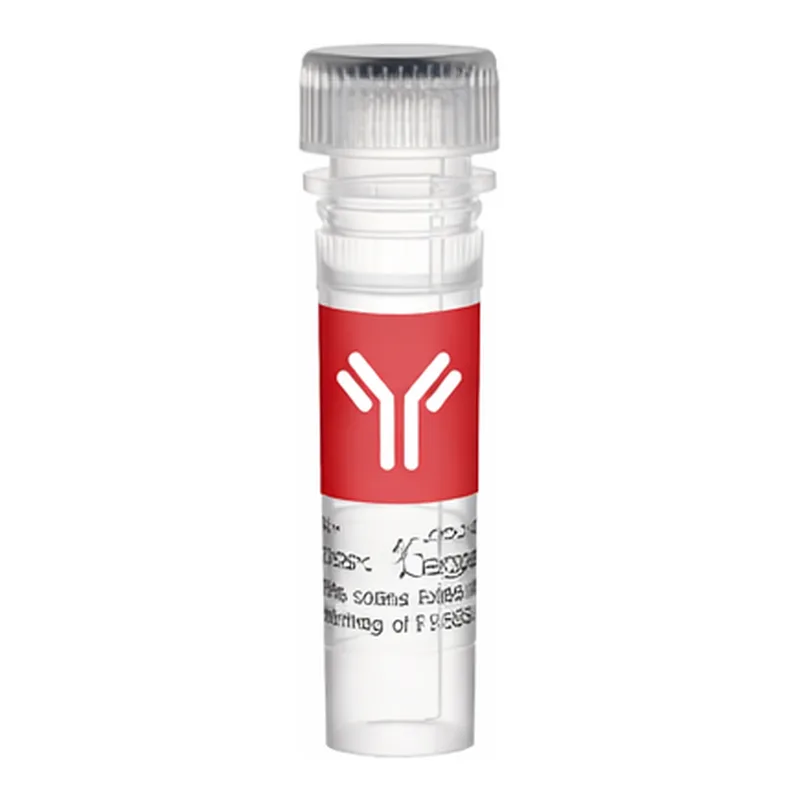
Thermo Fisher Scientific CD86 Monoclonal Antibody (2B11)
CD86 단백질을 인식하는 Mouse IgG1 단클론 항체로, Flow Cytometry 및 ELISA에 사용 가능. T세포 활성화 연구 및 면역반응 조절 기전 분석에 적합. 동결건조 형태로 제공되며, -20°C 이하에서 보관 권장.
- 판매단위
- pk
카탈로그
1개 옵션 · 카탈로그 번호를 클릭하면 복사됩니다Thermo Fisher Scientific · Thermo Fisher Scientific CD86 Monoclonal Antibody (2B11)
Applications and Tested Dilution
| Application | Tested Dilution |
|---|---|
| Flow Cytometry (Flow) | 1–5 µg/mL |
| ELISA | 0.01–0.05 µg/mL |
Product Specifications
| 항목 | 내용 |
|---|---|
| Host / Isotype | Mouse / IgG1 |
| Class | Monoclonal |
| Type | Antibody |
| Clone | 2B11 |
| Immunogen | Recombinant CD86 protein |
| Conjugate | Unconjugated |
| Form | Lyophilized |
| Storage Conditions | -20°C or -80°C if preferred |
| Shipping Conditions | Wet ice |
Product Specific Information
Reconstitute the lyophilized antibody with deionized water (or equivalent) to a final concentration of 0.5 mg/mL.
CD86, also known as B7-2, B70, and Ly-58, is a member of the immunoglobulin superfamily. It is expressed on B lymphocytes, T lymphocytes, dendritic cells, and astrocytes. As a ligand for CD28 and CD152 (CTLA-4), CD86 plays a critical role in T cell–B cell interactions. The interaction of CD86 with CD28 can transduce co-stimulatory signals for T cell proliferation and cytokine production. CD86 is also involved in NK cell-mediated cytotoxicity.
Human CD86 Antibody (2B11), mAb, Mouse is produced from a hybridoma resulting from the fusion of partner and B-lymphocytes obtained from a mouse immunized with CD86.
Target Information
CD86 is one of two ligands (the other being CD80) for CTLA4 and CD28. It acts as a costimulatory molecule in eliciting T-cell help during antigen presentation. Antigen presentation without sufficient co-stimulation involving CD86/CD80 can induce tolerance.
CD86 is a type I membrane protein and a member of the immunoglobulin superfamily. It is expressed by antigen-presenting cells and binds to two T-cell surface proteins: CD28 antigen and cytotoxic T-lymphocyte-associated protein 4 (CTLA-4). Binding to CD28 provides a costimulatory signal for T-cell activation, while binding to CTLA-4 negatively regulates T-cell activation and diminishes the immune response.
Alternative splicing results in two transcript variants encoding different isoforms of CD86. Additional transcript variants have been described but their full-length sequences have not been determined. Diseases associated with CD86 dysfunction include gallbladder squamous cell carcinoma and myocarditis.
For Research Use Only. Not for use in diagnostic procedures. Not for resale without express authorization.
Thermo Fisher Scientific 상품 둘러보기
전체보기
문의
0개 · 배송·재고 문의는 실시간 상담이 빠릅니다아직 등록된 문의가 없어요.