

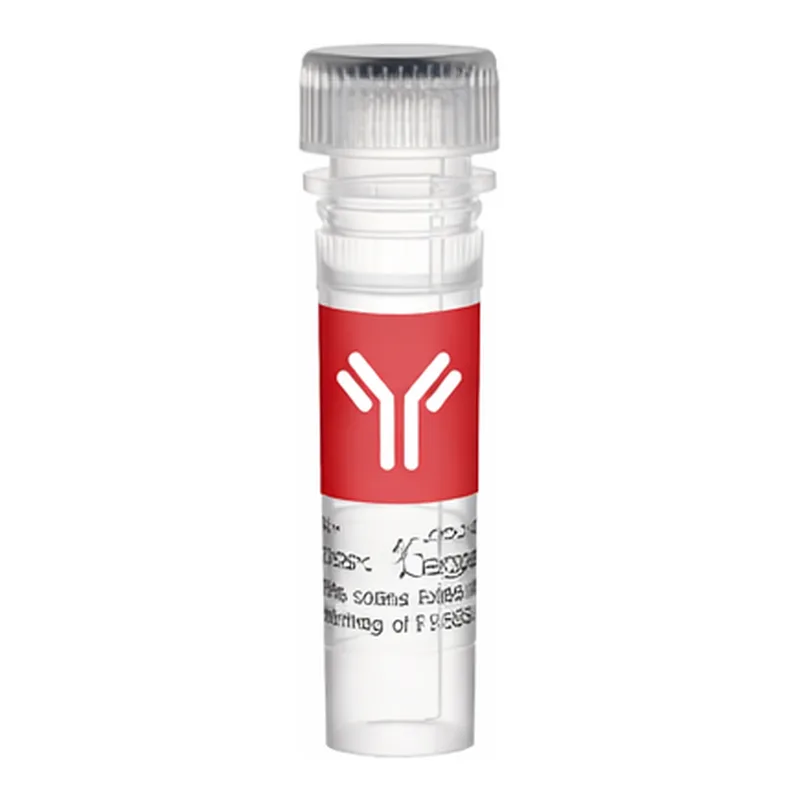
Thermo Fisher Scientific CPSF1 Polyclonal Antibody
Rabbit polyclonal antibody against human CPSF1. Validated for ICC/IF applications. Antigen affinity purified and supplied in PBS with 40% glycerol. Suitable for research use only. High sequence identity with mouse and rat orthologs.
- 판매단위
- pk
카탈로그
1개 옵션 · 카탈로그 번호를 클릭하면 복사됩니다Thermo Fisher Scientific · Thermo Fisher Scientific CPSF1 Polyclonal Antibody
Applications
| Application | Tested Dilution | Publications |
|---|---|---|
| Immunocytochemistry (ICC/IF) | 0.25–2 µg/mL | - |
Product Specifications
| Property | Description |
|---|---|
| Species Reactivity | Human |
| Host / Isotype | Rabbit / IgG |
| Class | Polyclonal |
| Type | Antibody |
| Immunogen | Recombinant Human CPSF1. Recombinant protein control fragment (Product #RP-107662) |
| Conjugate | Unconjugated |
| Form | Liquid |
| Concentration | 0.05 mg/mL |
| Purification | Antigen affinity chromatography |
| Storage Buffer | PBS, pH 7.2, with 40% glycerol |
| Contains | 0.02% sodium azide |
| Storage Conditions | Store at 4°C short term. For long term storage, store at -20°C, avoiding freeze/thaw cycles. |
| Shipping Conditions | Wet ice |
| RRID | AB_2663196 |
Product Specific Information
Immunogen sequence:
AISLNITQKVH PVIWSLTSLP FDCTQALAVP KPIGGVVVFA VNSLLYLNQS VPPYGVALNS LTTGTTAFPL RT
Highest antigen sequence identity to the following orthologs:
- Mouse: 99%
- Rat: 99%
Target Information
Midline-1 (Tripartite motif-containing protein 18, Putative transcription factor XPRF, RING finger protein 59) is a 667 amino acid protein encoded by the human gene MID1.
Midline-1 belongs to the TRIM/RBCC family and contains two B box-type zinc fingers, one B30.2/SPRY domain, one COS domain, one fibronectin type-III domain, and one RING-type zinc finger.
It is believed to have E3 ubiquitin ligase activity which targets the catalytic subunit of protein phosphatase 2 for degradation.
This cytoplasmic protein is found as a homodimer or heterodimer with Midline-2 and interacts with IGBP1 (Lymphocyte signaling protein A4).
Defects in MID1 are the cause of Opitz syndrome type I (OS-I), an X-linked recessive disorder characterized by hypertelorism, genitourinary defects, cleft lip/palate, imperforate anus, developmental delay, and congenital heart defects.
For Research Use Only. Not for use in diagnostic procedures. Not for resale without express authorization.
Thermo Fisher Scientific 상품 둘러보기
전체보기
문의
0개 · 배송·재고 문의는 실시간 상담이 빠릅니다아직 등록된 문의가 없어요.