

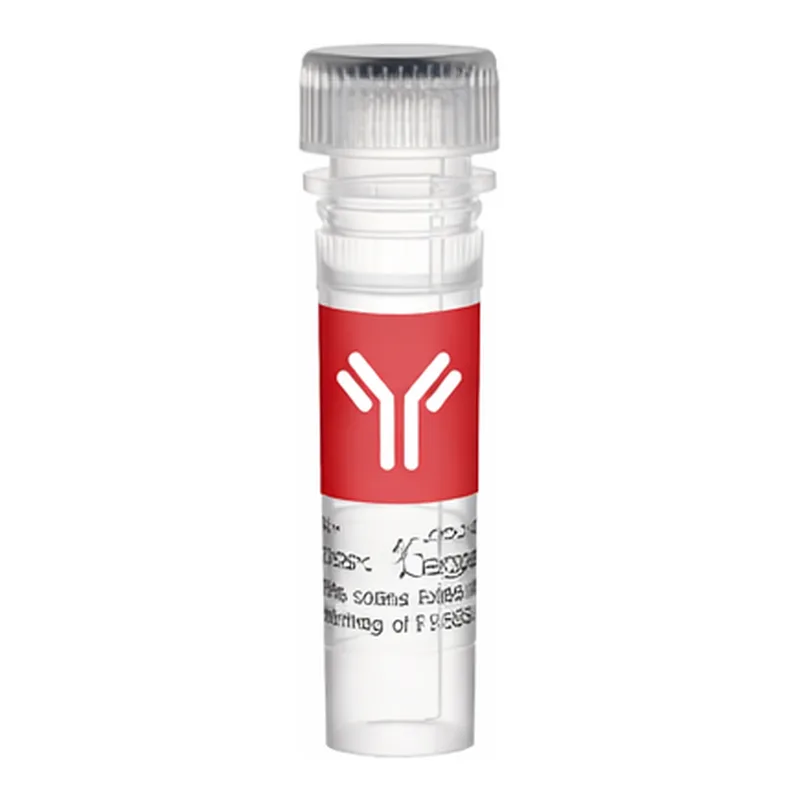
Thermo Fisher Scientific ZFYVE26 Polyclonal Antibody
ZFYVE26 단백질을 인식하는 Thermo Fisher Scientific의 Rabbit Polyclonal Antibody로, WB 및 IHC에 사용 가능. Human, Mouse, Rat 반응성. 항원 친화 크로마토그래피로 정제되었으며, PBS 버퍼에 0.02% sodium azide 포함. 연구용으로만 사용.
- 카탈로그번호
- PA520685
- 판매단위
- pk
카탈로그
1개 옵션 · 카탈로그 번호를 클릭하면 복사됩니다Thermo Fisher Scientific · Thermo Fisher Scientific ZFYVE26 Polyclonal Antibody
Applications and Tested Dilution
| Application | Tested Dilution |
|---|---|
| Western Blot (WB) | 1–2 µg/mL |
| Immunohistochemistry (IHC) | 20 µg/mL |
Product Specifications
| 항목 | 내용 |
|---|---|
| Species Reactivity | Human, Mouse, Rat |
| Host / Isotype | Rabbit / IgG |
| Class | Polyclonal |
| Type | Antibody |
| Immunogen | A 16 amino acid peptide near the carboxy terminus of human SPG15 |
| Conjugate | Unconjugated |
| Form | Liquid |
| Concentration | 1 mg/mL |
| Purification | Antigen affinity chromatography |
| Storage Buffer | PBS |
| Contains | 0.02% sodium azide |
| Storage Conditions | Maintain refrigerated at 2–8°C for up to 3 months. For long-term storage, store at -20°C. |
| Shipping Conditions | Ambient (domestic); Wet ice (international) |
| RRID | AB_11153791 |
Product Specific Information
- Suggested positive control: rat heart tissue lysate
- PA5-20685 can be used with blocking peptide PEP-0801.
Target Information
Hereditary spastic paraplegias (HSPs) are genetically and phenotypically heterogeneous disorders. Spastic paraplegia with thinning of the corpus callosum (ARHSP-TCC) is a relatively frequent form of complicated hereditary spastic paraplegia characterized by mental retardation and muscle stiffness at onset, followed by slowly progressive paraparesis and cognitive deterioration.
SPG15 is the second gene known to be responsible for ARHSP-TCC in the Italian population. Mutations in this gene are associated with autosomal recessive spastic paraplegia-15.
SPG15 encodes a protein containing a FYVE zinc finger binding domain, which is thought to target these proteins to membrane lipids through interaction with phospholipids. SPG15 mRNA is widely distributed in human tissues and rat embryos, suggesting a possible role during embryonic development. SPG15 co-localizes partially with endoplasmic reticulum and endosome markers, indicating a role in intracellular trafficking. Multiple isoforms of SPG15 are known to exist.
For Research Use Only. Not for use in diagnostic procedures. Not for resale without express authorization.
Thermo Fisher Scientific 상품 둘러보기
전체보기
문의
0개 · 배송·재고 문의는 실시간 상담이 빠릅니다아직 등록된 문의가 없어요.