

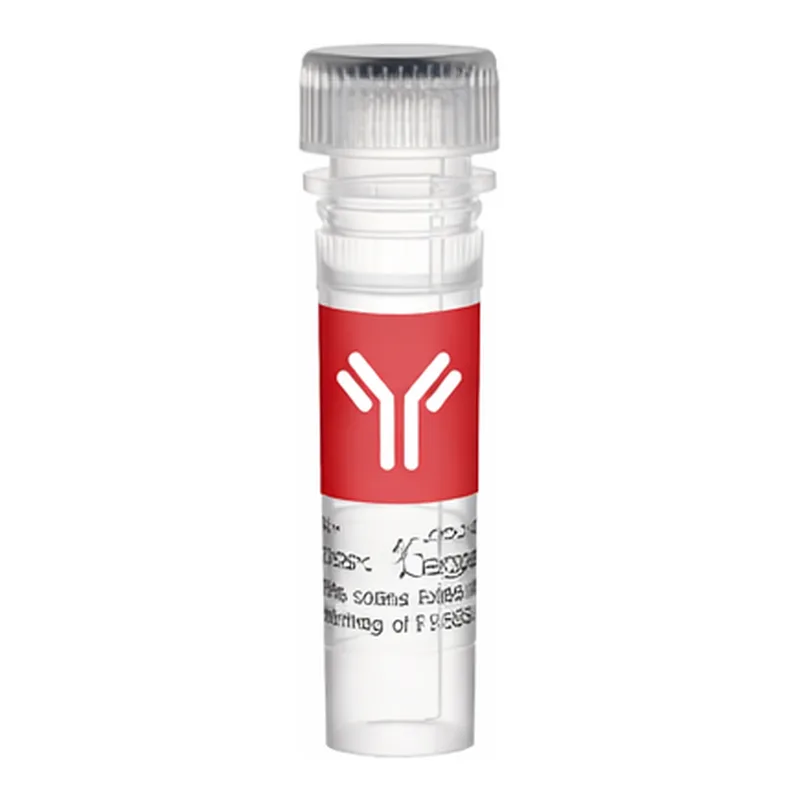
Thermo Fisher Scientific Human FGF-basic (FGF-2/bFGF) (aa 10-155) Recombinant Protein
인간 FGF-basic (FGF-2/bFGF) 재조합 단백질로, 세포 증식 및 혈관신생 연구에 활용 가능. E. coli 발현, ≥95% 순도, 낮은 엔도톡신(<0.1 ng/µg). 기능적 활성 검증 완료, 다양한 세포 기반 실험에 적합. For Research Use Only.
- 카테고리
- Protein
- 판매단위
- pk
카탈로그
1개 옵션 · 카탈로그 번호를 클릭하면 복사됩니다Thermo Fisher Scientific · Thermo Fisher Scientific Human FGF-basic (FGF-2/bFGF) (aa 10-155) Recombinant Protein
Applications
| Application | Tested Dilution | Notes |
|---|---|---|
| Western Blot (WB) | Assay-dependent | |
| Immunohistochemistry (IHC) | Assay-dependent | |
| ELISA | Assay-dependent | |
| Functional Assay | Assay-dependent | |
| Control | Assay-dependent |
Product Specifications
| 항목 | 내용 |
|---|---|
| Species | Human |
| Expression System | E. coli |
| Amino Acid Sequence | PALPEDGGSG AFPPGHFKDP KRLYCKNGGF FLRIHPDGRV DGVREKSDPH IKLQLQAEER GVVSIKGVCA NRYLAMKEDG RLLASKCVTD ECFFFERLES NNYNTYRSRK YTSWYVALKR TGQYKLGSKT GPGQKAILFL PMSAKS |
| Molecular Weight | 17 kDa |
| Class | Recombinant |
| Type | Protein |
| Purity | ≥95% by SDS-PAGE |
| Endotoxin Concentration | <0.1 ng/µg |
| Activity | ED50 ≤ 1.0 ng/mL; determined by the dose-dependent proliferation of BALB/3T3 cells. |
| Conjugate | Unconjugated |
| Form | Lyophilized |
| Purification | Purified |
| Storage Buffer | 20 mM citrate, pH 5 |
| Contains | No preservative |
| Storage Conditions | -20°C |
| Shipping Conditions | Dry ice |
Product Specific Information
Carrier-Free
Reconstitution:
Upon initial thawing, centrifuge the vial briefly before opening to bring the contents to the bottom. Apportion the protein into working aliquots and store at ≤ -20°C. Make any further dilutions of the reconstituted protein in low endotoxin medium or buffered solution with FBS or tissue culture grade BSA.
Storage:
Store the unopened vial at ≤ -20°C. Upon thawing, apportion into working aliquots and store at ≤ -20°C. Avoid repeated freeze-thaw cycles.
Target Information
FGF2 (FGFb, fibroblast growth factor basic) belongs to the fibroblast growth factor (FGF) family and interacts with high-affinity transmembrane receptors to influence cell proliferation and tissue neovascularization. FGF2 exists as five isoforms with distinct intracellular localizations and functions.
The 18 kDa isoform is predominantly cytosolic and acts through cell surface receptors, whereas the 22, 22.5, 24, and 34 kDa isoforms are nuclear and may signal independently of transmembrane receptor pathways.
In humans, the gene is located on the q arm of chromosome 4. FGF2 is implicated in diverse biological processes, such as limb and nervous system development, wound healing, and tumor growth. The mRNA for FGF2 contains multiple polyadenylation sites and is alternatively translated from non-AUG and AUG initiation codons, resulting in five different isoforms with distinct properties.
The CUG-initiated isoforms are localized in the nucleus and are responsible for the intracrine effect, whereas the AUG-initiated form is mostly cytosolic and is responsible for the paracrine and autocrine effects of this FGF.
Diseases associated with FGF2 dysfunction include Kaposi Sarcoma and corneal neovascularization.
For Research Use Only. Not for use in diagnostic procedures. Not for resale without express authorization.
Thermo Fisher Scientific 상품 둘러보기
전체보기

문의
0개 · 배송·재고 문의는 실시간 상담이 빠릅니다아직 등록된 문의가 없어요.