

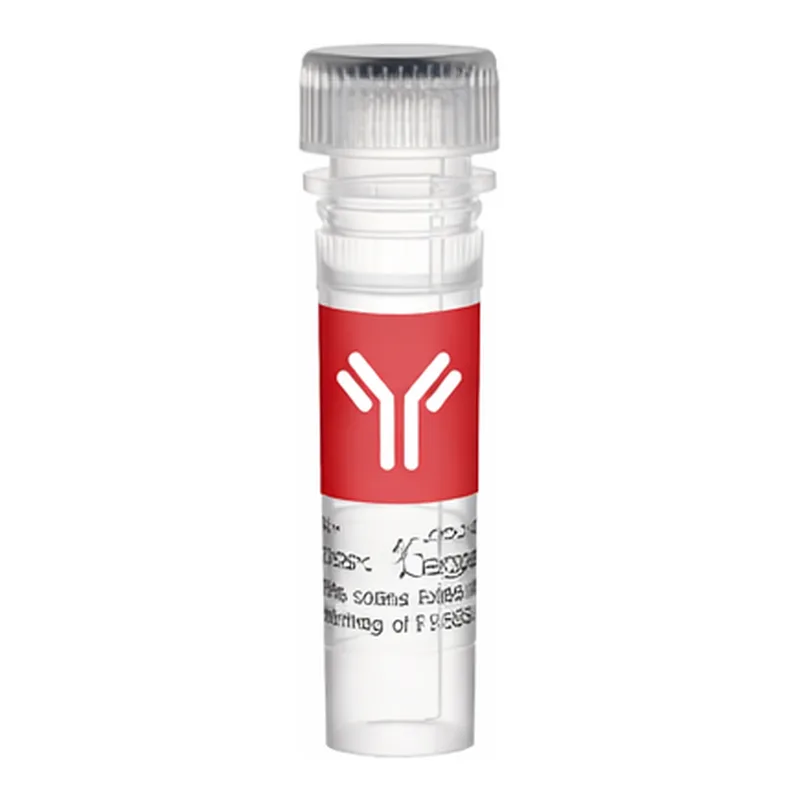
Thermo Fisher Scientific Huntingtin Recombinant Rabbit Monoclonal Antibody (3H2L4)
Huntingtin 단백질을 인식하는 재조합 토끼 단클론 항체로, ICC/IF에 적합합니다. Expi293 시스템에서 발현되며 로트 간 일관성과 높은 특이성을 제공합니다. 인간, 원숭이, 생쥐, 소 시료에 반응 예측됩니다. 연구용으로만 사용 가능합니다.
- 판매단위
- pk
카탈로그
1개 옵션 · 카탈로그 번호를 클릭하면 복사됩니다Thermo Fisher Scientific · Thermo Fisher Scientific Huntingtin Recombinant Rabbit Monoclonal Antibody (3H2L4)
Applications
Immunocytochemistry (ICC/IF)
- Tested Dilution: 5 µg/mL
Product Specifications
| 항목 | 내용 |
|---|---|
| Host / Isotype | Rabbit / IgG |
| Expression System | Expi293 |
| Class | Recombinant Monoclonal |
| Type | Antibody |
| Clone | 3H2L4 |
| Immunogen | Peptides corresponding to Human HTT (aa 584–601, 650–666, 82–99) |
| Conjugate | Unconjugated |
| Form | Liquid |
| Concentration | 0.5 mg/mL |
| Storage Conditions | Store at 4°C short term. For long term storage, store at -20°C, avoiding freeze/thaw cycles. |
| Shipping Conditions | Wet ice |
| RRID | AB_2633029 |
Product Specific Information
This antibody is predicted to react with Monkey, Mouse, and Bovine.
Recombinant rabbit monoclonal antibodies are produced using in vitro expression systems. These systems clone specific antibody DNA sequences from immunoreactive rabbits. Individual clones are screened to select the best candidates for production.
Advantages:
- High specificity and sensitivity
- Lot-to-lot consistency
- Animal origin-free formulation
- Broader immunoreactivity due to larger rabbit immune repertoire
Target Information
Huntingtin is a disease gene linked to Huntington’s disease (HD), a neurodegenerative disorder characterized by loss of striatal neurons. This is caused by an expanded, unstable trinucleotide repeat in the huntingtin gene, translating as a polyglutamine repeat in the protein product.
HD typically manifests in mid-life as an autosomal dominant neurodegenerative disease characterized by psychiatric disorders, dementia, and involuntary movements (chorea), leading to death within 10–20 years.
The huntingtin locus spans approximately 180 kb and consists of 67 exons. It is widely expressed and required for normal development. Two alternatively polyadenylated forms exist, showing different abundance in fetal and adult tissues. The larger transcript (~13.7 kb) is predominant in brain, while the smaller (~10.3 kb) is more broadly expressed.
The genetic defect leading to Huntington’s disease may not eliminate transcription but may alter mRNA properties or protein function.
For Research Use Only. Not for use in diagnostic procedures. Not for resale without express authorization.
Thermo Fisher Scientific 상품 둘러보기
전체보기
문의
0개 · 배송·재고 문의는 실시간 상담이 빠릅니다아직 등록된 문의가 없어요.