

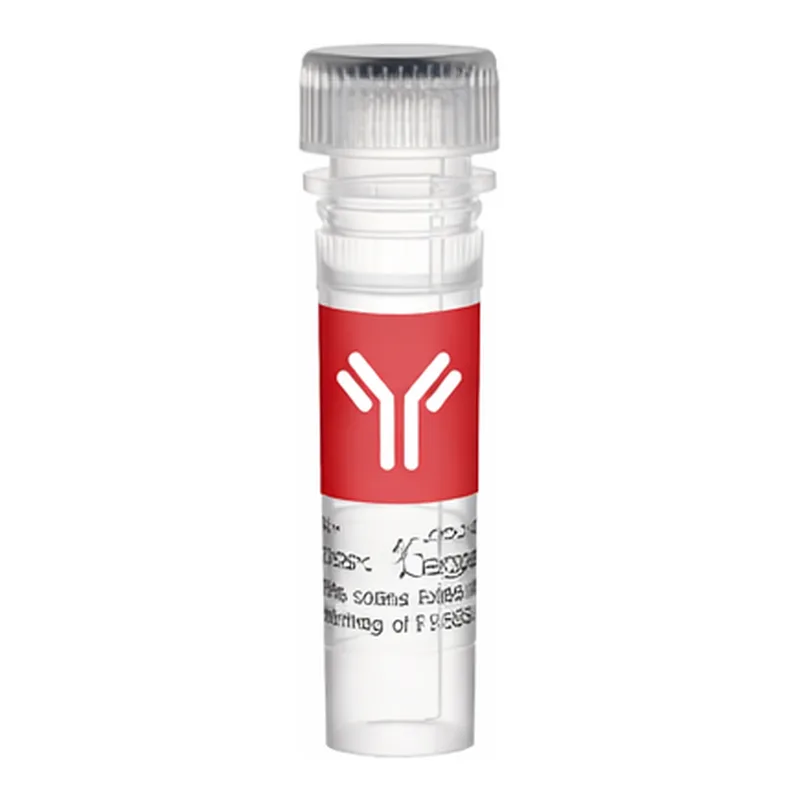
Thermo Fisher Scientific PAI1 Polyclonal Antibody
Thermo Fisher Scientific의 PAI1 Polyclonal Antibody는 인간 PAI1 단백질을 인식하는 염소 유래 IgG 항체로, WB 및 IHC(Paraffin)에서 검증되었습니다. 액상 형태로 제공되며, 고순도 정제 및 안정적 저장 조건을 갖추어 연구용으로 적합합니다.
- 판매단위
- pk
카탈로그
1개 옵션 · 카탈로그 번호를 클릭하면 복사됩니다Thermo Fisher Scientific · Thermo Fisher Scientific PAI1 Polyclonal Antibody
Applications
Western Blot (WB)
- Tested Dilution: 0.1–0.3 µg/mL
Immunohistochemistry (Paraffin) (IHC (P))
- Tested Dilution: 4–6 µg/mL
Product Specifications
| 항목 | 내용 |
|---|---|
| Species Reactivity | Human |
| Host / Isotype | Goat / IgG |
| Class | Polyclonal |
| Type | Antibody |
| Immunogen | Synthetic peptide corresponding to amino acids C-GFKIDDKGMAPALRH from the internal region of SERPINE1 (aa 86–101) |
| Conjugate | Unconjugated |
| Form | Liquid |
| Concentration | 0.5 mg/mL |
| Purification | Ammonium sulfate precipitation |
| Storage Buffer | TBS, pH 7.3, with 0.5% BSA |
| Contains | 0.02% sodium azide |
| Storage Conditions | -20°C, Avoid Freeze/Thaw Cycles |
| Shipping Conditions | Wet ice |
| RRID | AB_2187040 |
Product Specific Information
- Predicted to react with canine based on sequence homology.
- Tested in Peptide ELISA: antibody detection limit dilution 64,000.
Target Information
PAI1 (plasminogen activator inhibitor 1) belongs to the serine protease inhibitor superfamily and is the principal inhibitor of tissue-type and urokinase-type plasminogen activators (tPA and uPA).
Platelets are the main source of circulating PAI1, but it is also synthesized and secreted by various tissue and cell types, including fibroblasts, smooth muscle cells, endothelial cells, hepatocytes, and inflammatory cells.
Expression of PAI1 can be regulated by multiple factors such as growth factors, cytokines, hormones, inflammatory mediators, glucose or lipid metabolites, vascular tone regulators, chemicals, and environmental or physical stimuli.
PAI1 levels are increased in several disease states and have been linked to thrombosis in obesity, thrombophilia, and metabolic syndrome. Defects in PAI1 cause abnormal bleeding and plasminogen activator inhibitor-1 deficiency.
PAI1 mediates inhibition of fibrinolysis by blocking plasminogen activator activity and may promote neuronal survival.
Alternatively spliced transcript variants encoding different isoforms of PAI1 have been identified.
For Research Use Only. Not for use in diagnostic procedures. Not for resale without express authorization.
Thermo Fisher Scientific 상품 둘러보기
전체보기
문의
0개 · 배송·재고 문의는 실시간 상담이 빠릅니다아직 등록된 문의가 없어요.