

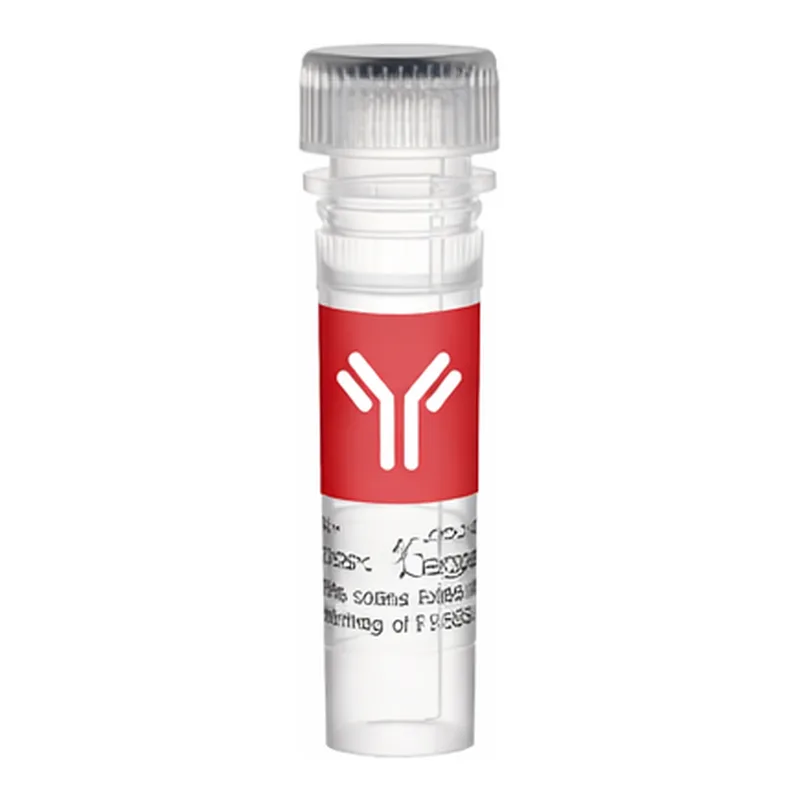
Thermo Fisher Scientific Phospho-p16INK4a (Ser152) Polyclonal Antibody
Human p16INK4a의 Ser152 인산화 부위를 인식하는 Rabbit Polyclonal Antibody. WB, IHC, ELISA에 사용 가능하며 높은 특이성과 재현성을 제공. 항원 친화 크로마토그래피로 정제되어 안정적이며 연구용으로 적합.
- 판매단위
- pk
카탈로그
1개 옵션 · 카탈로그 번호를 클릭하면 복사됩니다Thermo Fisher Scientific · Thermo Fisher Scientific Phospho-p16INK4a (Ser152) Polyclonal Antibody
Thermo Fisher Scientific Phospho-p16INK4a (Ser152) Polyclonal Antibody
Applications and Tested Dilutions
| Application | Tested Dilution |
|---|---|
| Western Blot (WB) | 1:500–1:2,000 |
| Immunohistochemistry (IHC) | 1:100–1:300 |
| ELISA | 1:5,000 |
Product Specifications
| Specification | Description |
|---|---|
| Species Reactivity | Human |
| Host / Isotype | Rabbit / IgG |
| Class | Polyclonal |
| Type | Antibody |
| Immunogen | Synthesized peptide derived from human p16 around the phosphorylation site of S152 |
| Conjugate | Unconjugated |
| Form | Liquid |
| Concentration | 1 mg/mL |
| Purification | Antigen affinity chromatography |
| Storage Buffer | PBS (pH 7.4) with 0.5% BSA, 50% glycerol |
| Contains | 0.02% sodium azide |
| Storage Conditions | -20°C, Avoid Freeze/Thaw Cycles |
| Shipping Conditions | Ambient (domestic); Wet ice (international) |
| RRID | AB_2608786 |
Target Information
This gene generates several transcript variants which differ in their first exons. At least three alternatively spliced variants encoding distinct proteins have been reported, two of which encode structurally related isoforms known to function as inhibitors of CDK4 kinase.
The remaining transcript includes an alternate first exon located 20 Kb upstream of the remainder of the gene; this transcript contains an alternate open reading frame (ARF) that specifies a protein which is structurally unrelated to the products of the other variants.
This ARF product functions as a stabilizer of the tumor suppressor protein p53 as it can interact with, and sequester, the E3 ubiquitin-protein ligase MDM2, a protein responsible for the degradation of p53.
In spite of the structural and functional differences, the CDK inhibitor isoforms and the ARF product encoded by this gene, through the regulatory roles of CDK4 and p53 in cell cycle G1 progression, share a common functionality in cell cycle G1 control.
This gene is frequently mutated or deleted in a wide variety of tumors and is known to be an important tumor suppressor gene.
For Research Use Only.
Not for use in diagnostic procedures. Not for resale without express authorization.
Thermo Fisher Scientific 상품 둘러보기
전체보기
문의
0개 · 배송·재고 문의는 실시간 상담이 빠릅니다아직 등록된 문의가 없어요.