

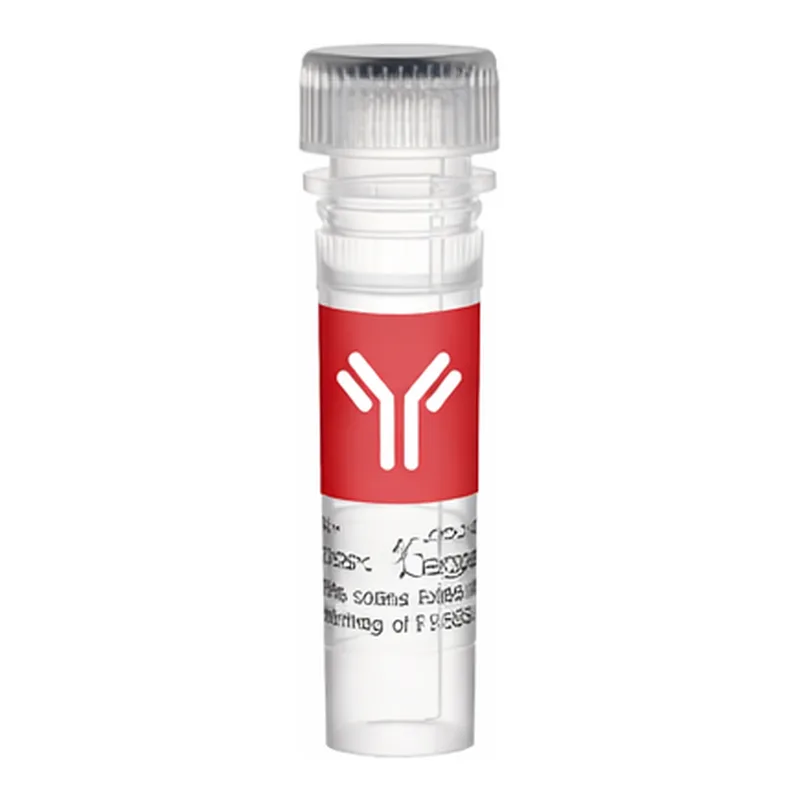
Thermo Fisher Scientific PLP1 Polyclonal Antibody, MaxPab
PLP1 단백질을 표적으로 하는 Thermo Fisher의 토끼 유래 폴리클로날 항체로, Western blot에 적합합니다. 인간 시료에 반응하며, PBS 완충액에 보존된 액상 형태입니다. 마이엘린 단백질 연구 및 Pelizaeus-Merzbacher 질환 관련 연구에 활용 가능합니다.
- 판매단위
- pk
카탈로그
1개 옵션 · 카탈로그 번호를 클릭하면 복사됩니다Thermo Fisher Scientific · Thermo Fisher Scientific PLP1 Polyclonal Antibody, MaxPab
Applications
- Western Blot (WB)
Tested Dilution: 1–5 µg/mL
Product Specifications
| 항목 | 내용 |
|---|---|
| Species Reactivity | Human |
| Host / Isotype | Rabbit / IgG |
| Class | Polyclonal |
| Type | Antibody |
| Immunogen | PLP1 (NP_000524.3, 1–277 a.a) full-length human protein |
| Conjugate | Unconjugated |
| Form | Liquid |
| Concentration | See Label |
| Purification | Affinity chromatography |
| Storage Buffer | PBS, pH 7.4 |
| Contains | No preservative |
| Storage Conditions | −20 °C, Avoid Freeze/Thaw Cycles |
| Shipping Conditions | Ambient (domestic); Wet ice (international) |
Product Specific Information
Sequence of this protein is as follows:
MGLLECCARC LVGAPFASLV ATGLCFFGVA LFCGCGHEAL TGTEKLIETY FSKNYQDYEY LINVIHAFQY VIYGTASFFF LYGALLLAEG FYTTGAVRQI FGDYKTTICG KGLSATVTGG QKGRGSRGQH QAHSLERVCH CLGKWLGHPD KFVGITYALT VVWLLVFACS AVPVYIYFNT WTTCQSIAFP SKTSASIGSL CADARMYGVL PWNAFPGKVC GSNLLSICKT AEFQMTFHLF IAAFVGAAAT LVSLLTFMIA ATYNFAVLKL MGRGTKF
Target Information
PLP1 is a transmembrane proteolipid protein that is the predominant myelin protein present in the central nervous system.
It may play a role in the compaction, stabilization, and maintenance of myelin sheaths, as well as in oligodendrocyte development and axonal survival.
Mutations in this gene cause X-linked Pelizaeus-Merzbacher disease and spastic paraplegia type 2.
Alternatively spliced transcript variants encoding distinct isoforms or having different 5′ UTRs have been identified for this gene.
For Research Use Only. Not for use in diagnostic procedures. Not for resale without express authorization.
제품 이미지
(이미지 없음)
Thermo Fisher Scientific 상품 둘러보기
전체보기
문의
0개 · 배송·재고 문의는 실시간 상담이 빠릅니다아직 등록된 문의가 없어요.