

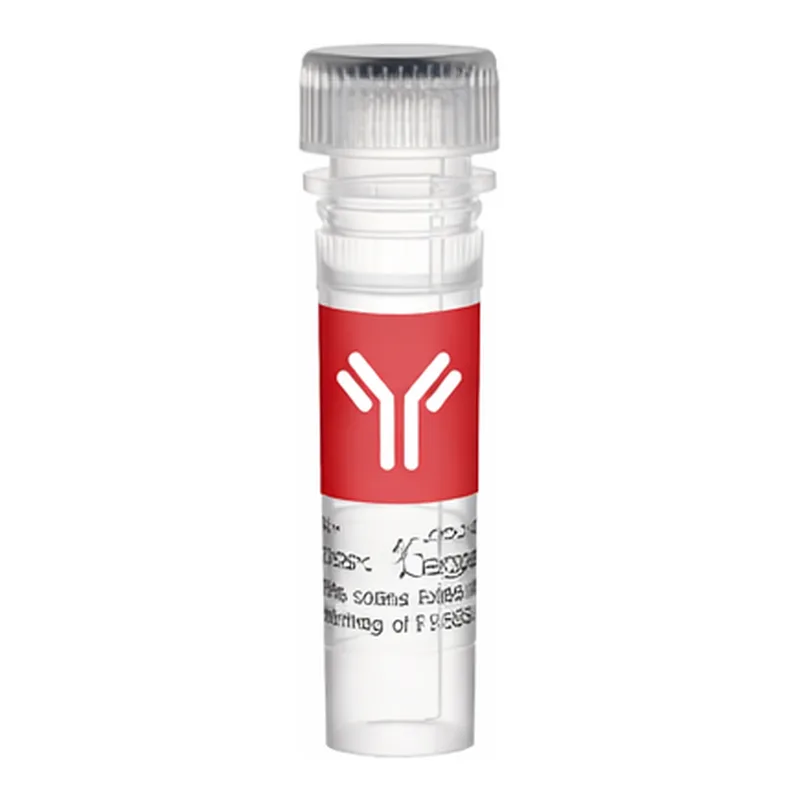
Thermo Fisher Scientific Fibronectin Monoclonal Antibody (FN1, 3568)
Fibronectin 단백질(FN1)을 표적하는 Mouse monoclonal antibody로, IHC(P) 및 Peptide Array에 사용 가능. Human 반응성, Unconjugated 형태, Protein A/G 정제. 세포 접착 및 이동 연구에 적합하며, 연구용 전용 시약.
- 판매단위
- pk
카탈로그
1개 옵션 · 카탈로그 번호를 클릭하면 복사됩니다Thermo Fisher Scientific · Thermo Fisher Scientific Fibronectin Monoclonal Antibody (FN1, 3568)
Applications
Immunohistochemistry (Paraffin) (IHC (P))
- Tested Dilution: 1–2 µg/mL
Peptide Array (Array)
- Tested Dilution: Assay-dependent
Product Specifications
| 항목 | 내용 |
|---|---|
| Species Reactivity | Human |
| Host / Isotype | Mouse / IgG2b, kappa |
| Class | Monoclonal |
| Type | Antibody |
| Clone | FN1, 3568 |
| Immunogen | Recombinant fragment (around aa 467–595) of human fibronectin protein |
| Conjugate | Unconjugated |
| Form | Liquid |
| Concentration | 200 µg/mL |
| Purification | Protein A/G |
| Storage Buffer | PBS, pH 7.4, with 0.05% BSA |
| Contains | 0.05% sodium azide |
| Storage Conditions | 4°C |
| Shipping Conditions | Ambient (domestic); Wet ice (international) |
Product Specific Information
- Immunohistochemistry (PFA fixed): Incubate antibody for 30 min at room temperature.
- Staining of formalin-fixed tissues requires heating tissue sections in 10 mM Tris with 1 mM EDTA, pH 9.0, for 45 min at 95°C followed by cooling at room temperature for 20 minutes.
Target Information
Fibronectin is a disulfide-bonded dimer with a molecular weight range of 230–250 kDa. In the extracellular matrix of connective tissues and vessels, fibronectin exists as an insoluble, cross-linked polymer. It is most abundant during embryonic development and tissue remodeling, and also found as a soluble plasma protein.
Fibronectin interacts with collagen, heparin, and integrins, playing key roles in cell adhesion and migration processes such as embryogenesis, wound healing, blood coagulation, host defense, and metastasis.
Expression is increased in non-small cell lung carcinoma, enhancing tumorigenicity and resistance to apoptosis. The fibronectin gene has three regions subject to alternative splicing, potentially producing 20 different transcript variants, though some full-length variants remain undetermined.
For Research Use Only. Not for use in diagnostic procedures. Not for resale without express authorization.
Thermo Fisher Scientific 상품 둘러보기
전체보기
문의
0개 · 배송·재고 문의는 실시간 상담이 빠릅니다아직 등록된 문의가 없어요.