

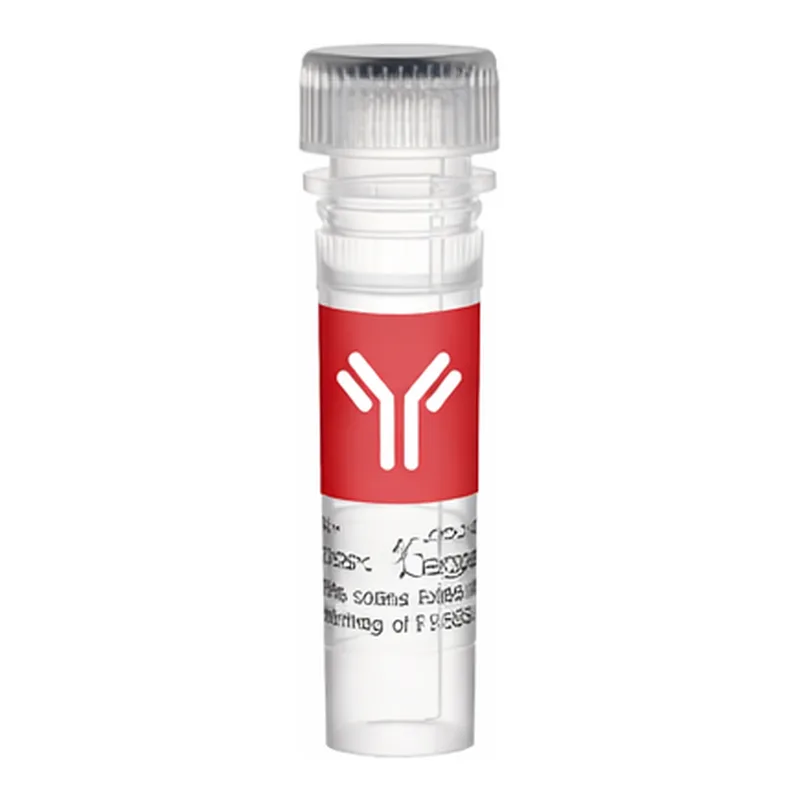
Thermo Fisher Scientific HLA-DQA1 Polyclonal Antibody
HLA-DQA1 단백질을 인식하는 Rabbit Polyclonal 항체로, Western blot 및 IHC(P) 분석에 적합합니다. 인간, 생쥐, 랫드 시료에 반응하며, PBS/glycerol buffer에 보관됩니다. 항체는 Affinity chromatography로 정제되었으며, 연구용으로만 사용 가능합니다.
- 판매단위
- pk
카탈로그
1개 옵션 · 카탈로그 번호를 클릭하면 복사됩니다Thermo Fisher Scientific · Thermo Fisher Scientific HLA-DQA1 Polyclonal Antibody
Applications and Tested Dilution
| Application | Tested Dilution |
|---|---|
| Western Blot (WB) | 1:500–1:2,000 |
| Immunohistochemistry (Paraffin) (IHC (P)) | 1:50–1:200 |
Product Specifications
| 항목 | 내용 |
|---|---|
| Species Reactivity | Human, Mouse, Rat |
| Host / Isotype | Rabbit / IgG |
| Class | Polyclonal |
| Type | Antibody |
| Immunogen | A synthesized peptide derived from human HLA-DQA1 (Accession P01909), corresponding to amino acid residues V31–P81 |
| Conjugate | Unconjugated |
| Form | Liquid |
| Concentration | 1 mg/mL |
| Purification | Affinity chromatography |
| Storage Buffer | PBS, pH 7.4, with 50% glycerol |
| Contains | 0.02% sodium azide |
| Storage Conditions | -20°C |
| Shipping Conditions | Wet ice |
| RRID | AB_2851997 |
Product Specific Information
This antibody detects endogenous levels of total HLA-DQA1.
Target Information
HLA-DQA1 binds peptides derived from antigens that access the endocytic route of antigen-presenting cells (APCs) and presents them on the cell surface for recognition by CD4 T-cells. The peptide binding cleft accommodates peptides of 10–30 residues. Peptides presented by MHC class II molecules are typically generated by degradation of proteins in the endocytic pathway, processed by lysosomal proteases and hydrolases. Exogenous antigens endocytosed by APCs are presented via MHC II molecules, commonly referred to as the exogenous antigen presentation pathway.
Membrane proteins destined for lysosomal degradation also contribute endogenous peptides competing with exogenous ones. Autophagy additionally provides endogenous peptides, as autophagosomes fuse with MHC class II loading compartments. In the gastrointestinal tract, epithelial cells can express MHC class II molecules and CD74, acting as APCs.
MHC class II molecules form heterodimers (α and β chains) that associate with a CD74 trimer in the ER to form a heterononamer complex. During endosomal processing, CD74 is degraded, leaving the CLIP fragment, which is then removed by HLA-DM to allow antigenic peptide binding. HLA-DM stabilizes MHC II until high-affinity peptides bind, after which the complex is transported to the cell surface. HLA-DO regulates HLA-DM interaction in B-cells and dendritic cells. Lysosomal acidification enhances proteolysis and efficient peptide loading.
HLA and MHC antibodies are critical in immunopeptidomics, aiding in the identification and characterization of neoantigens via LC-MS/MS.
For Research Use Only. Not for use in diagnostic procedures. Not for resale without express authorization.
Thermo Fisher Scientific 상품 둘러보기
전체보기
문의
0개 · 배송·재고 문의는 실시간 상담이 빠릅니다아직 등록된 문의가 없어요.