

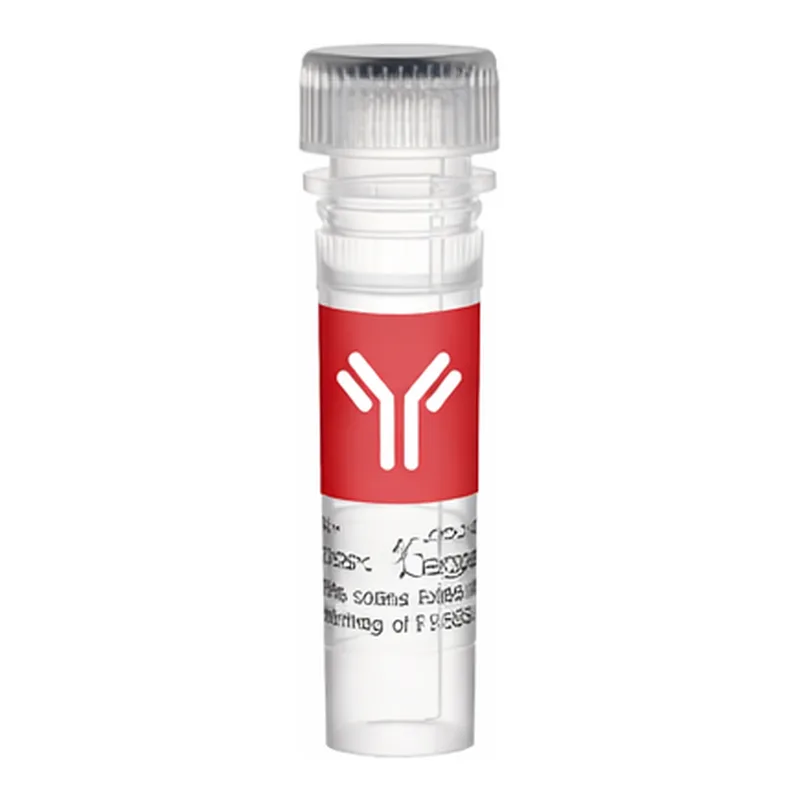
Thermo Fisher Scientific Human ATG101 Synthetic Peptide
인간 ATG101 단백질의 중심부 16개 아미노산 서열에 해당하는 합성 펩타이드입니다. ATG101 항체(PA5-21000)의 블로킹 펩타이드로 사용 가능합니다. 자가포식 관련 연구에 활용되며, 액상 형태로 제공되고 -20°C에서 보관합니다.
- 카테고리
- Protein
- 판매단위
- pk
카탈로그
1개 옵션 · 카탈로그 번호를 클릭하면 복사됩니다Thermo Fisher Scientific · Thermo Fisher Scientific Human ATG101 Synthetic Peptide
Applications
Control (Ctrl)
- Assay-dependent
Blocking Assay (BLOCK)
- Assay-dependent
Product Specifications
| 항목 | 내용 |
|---|---|
| Species Reactivity | Human |
| Class | Synthetic |
| Type | Peptide |
| Conjugate | Unconjugated |
| Form | Liquid |
| Concentration | 200 µg/mL |
| Purification | Purified |
| Storage Buffer | PBS, pH 7.2, with 0.1% BSA |
| Contains | 0.02% sodium azide |
| Storage Conditions | -20°C |
Product Specific Information
This peptide corresponds to 16 amino acids near the center of human ATG101.
PEP-1114 can be used as a blocking peptide with polyclonal antibody PA5-21000.
Target Information
ATG101 is involved in autophagy, the process of bulk degradation of cellular proteins through an autophagosomic-lysosomal pathway. It plays a key role in maintaining cellular homeostasis, nutrient preservation under starvation, and normal turnover of cytosolic components. This process is regulated by TOR (Target of rapamycin) through phosphorylation of autophagy protein ATG1.
ATG101 stabilizes ATG13, which forms a complex with ULK1, ULK2, and FIP200. This complex is a target of TOR phosphorylation under normal conditions. Inhibition of TOR by rapamycin or leucine deprivation leads to dephosphorylation of ATG13, ULK1, and ULK2, initiating autophagy. ATG101 also interacts with ULK1 and is essential for autophagy.
For Research Use Only. Not for use in diagnostic procedures. Not for resale without express authorization.
Thermo Fisher Scientific 상품 둘러보기
전체보기
문의
0개 · 배송·재고 문의는 실시간 상담이 빠릅니다아직 등록된 문의가 없어요.