

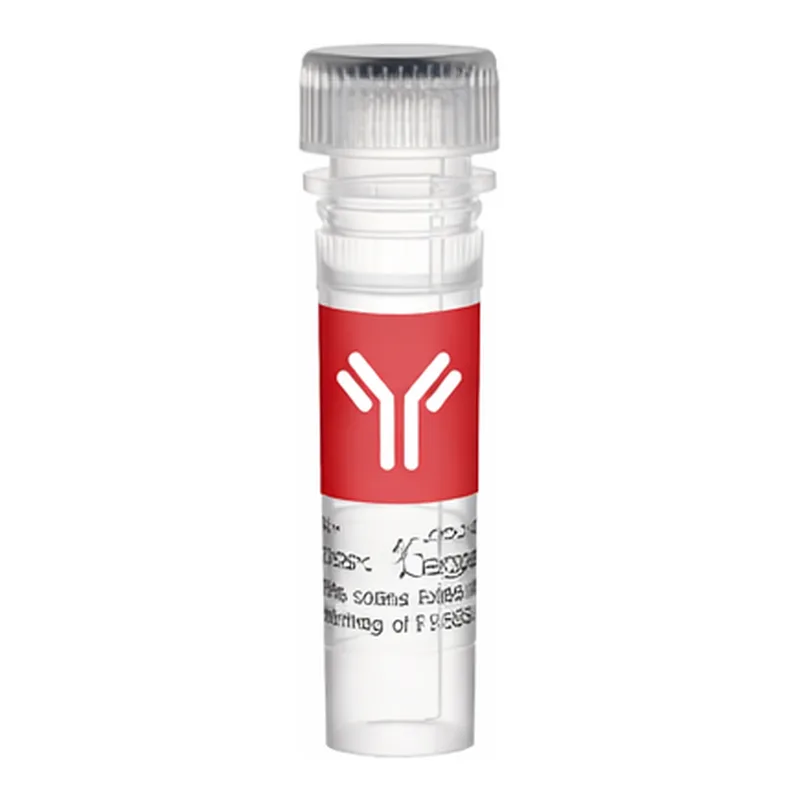
Thermo Fisher Scientific CLN3 Polyclonal Antibody
CLN3 단백질을 인식하는 Rabbit Polyclonal 항체로, Western blot, IHC, ELISA에 적합합니다. 인간, 마우스, 랫트 반응성이 있으며, Affinity Chromatography로 정제되었습니다. PBS/glycerol buffer에 보관하며 -20°C에서 안정적으로 유지됩니다.
- 카탈로그번호
- PA5109553
- 판매단위
- pk
카탈로그
1개 옵션 · 카탈로그 번호를 클릭하면 복사됩니다Thermo Fisher Scientific · Thermo Fisher Scientific CLN3 Polyclonal Antibody
Applications and Tested Dilutions
| Application | Tested Dilution |
|---|---|
| Western Blot (WB) | 1:500–1:2,000 |
| Immunohistochemistry (Paraffin) (IHC (P)) | 1:50–1:100 |
| ELISA | 1 µg/mL |
Product Specifications
| 항목 | 내용 |
|---|---|
| Species Reactivity | Human, Mouse, Rat |
| Host / Isotype | Rabbit / IgG |
| Class | Polyclonal |
| Type | Antibody |
| Immunogen | Recombinant fusion protein containing a sequence corresponding to amino acids 1–280 of human CLN3 (NP_001035897.1) |
| Conjugate | Unconjugated |
| Form | Liquid |
| Concentration | 2.91 mg/mL |
| Purification | Affinity Chromatography |
| Storage Buffer | PBS, pH 7.3, with 50% glycerol |
| Contains | 0.02% sodium azide |
| Storage Conditions | -20°C, Avoid Freeze/Thaw Cycles |
| Shipping Conditions | Wet ice |
| RRID | AB_2854964 |
Product Specific Information
Immunogen sequence:
MGGCAGSRRR FSDSEGEETV PEPRLPLLDH QGAHWKNAVG FWLLGLCNNF SYVVMLSAAH DILSHKRTSG NQSHVDPGPT PIPHNSSSRF DCNSVSTAAV LLADILPTLV IKLLAPLGLH LLPYSPRVLV SGICAAGSFV LVAFSHSVGT SLCGVVFASI SSGLGEVTFL SLTAFYPRAV ISWWSSGTGG AGLLGALSYL GLTQAGLSPQ QTLLSMLGIP ALLLASYFLL LTSPEAQDPG GEEEAESAAR QPLIRTEAPE SKPGSSSSLS LRERWTVFKG
Target Information
CLN3 is a highly glycosylated, hydrophobic 438-amino acid protein with six transmembrane domains. The CLN3 protein localizes to the lysosomal membrane and plays a role in lysosomal function. It may act as a chaperone involved in the folding and unfolding of other proteins, such as subunit C of the ATP synthase complex.
Mutations in the CLN3 gene cause Batten disease, a recessively inherited neurodegenerative disorder of childhood characterized by lysosomal accumulation of hydrophobic material, mainly ATP synthase subunit C. Batten disease is the most common form of neuronal ceroid lipofuscinoses (NCLs), presenting symptoms such as progressive loss of vision, seizures, and psychomotor disturbances.
For Research Use Only. Not for use in diagnostic procedures. Not for resale without express authorization.
Thermo Fisher Scientific 상품 둘러보기
전체보기
문의
0개 · 배송·재고 문의는 실시간 상담이 빠릅니다아직 등록된 문의가 없어요.