

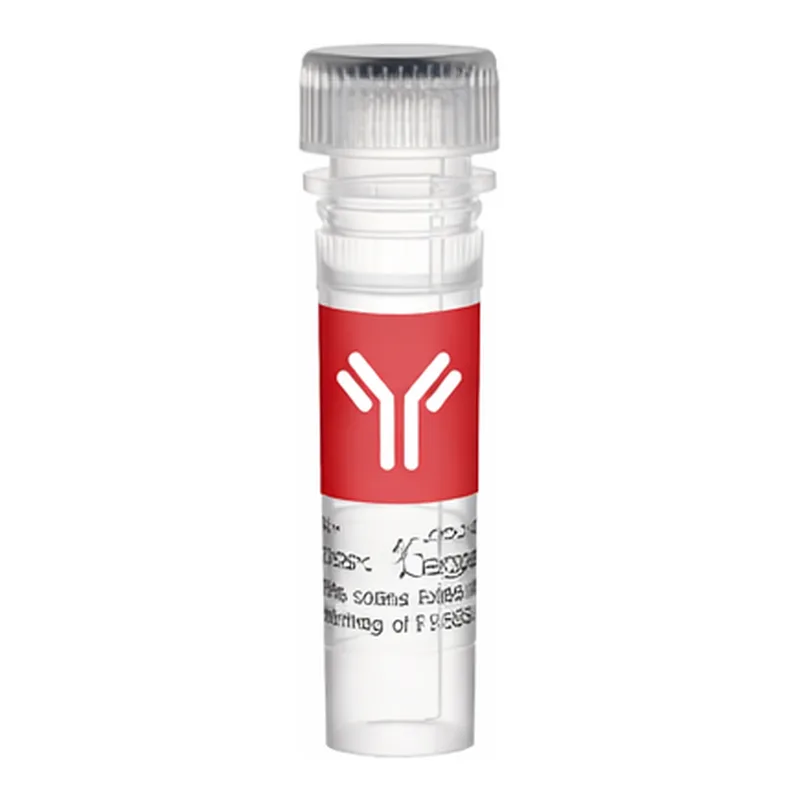
Thermo Fisher Scientific FGF23 (Fibroblast Growth Factor 23) Monoclonal Antibody (FGF23, 4168)
인간 FGF23 단백질을 인식하는 단클론 항체로 IHC(P) 및 Peptide Array에 적합. 200 µg/mL 농도의 액상 제품이며 Protein A/G로 정제됨. PBS 버퍼와 BSA, sodium azide 함유. 연구용으로만 사용 가능.
- 판매단위
- pk
카탈로그
1개 옵션 · 카탈로그 번호를 클릭하면 복사됩니다Thermo Fisher Scientific · Thermo Fisher Scientific FGF23 (Fibroblast Growth Factor 23) Monoclonal Antibody (FGF23, 4168)
Applications
Immunohistochemistry (Paraffin) (IHC (P))
- Tested Dilution: 1–2 µg/mL
Peptide Array (Array)
- Tested Dilution: Assay-dependent
Product Specifications
| 항목 | 내용 |
|---|---|
| Species Reactivity | Human |
| Host / Isotype | Mouse / IgG2c, kappa |
| Class | Monoclonal |
| Type | Antibody |
| Clone | FGF23, 4168 |
| Immunogen | Recombinant fragment (around aa25–251) of human FGF23 protein |
| Conjugate | Unconjugated |
| Form | Liquid |
| Concentration | 200 µg/mL |
| Purification | Protein A/G |
| Storage Buffer | PBS, pH 7.4, with 0.05% BSA |
| Contains | 0.05% sodium azide |
| Storage Conditions | 4°C |
| Shipping Conditions | Ambient (domestic); Wet ice (international) |
Product Specific Information
- Immunohistochemistry (PFA fixed): Incubate antibody for 30 min at room temperature.
- Staining of formalin-fixed tissues requires heating tissue sections in 10 mM Tris with 1 mM EDTA, pH 9.0, for 45 min at 95°C, followed by cooling at room temperature for 20 minutes.
Target Information
The protein encoded by this gene is a member of the fibroblast growth factor family. FGF family members possess broad mitogenic and cell survival activities and are involved in a variety of biological processes including embryonic development, cell growth, morphogenesis, tissue repair, tumor growth, and invasion.
The product of this gene inhibits renal tubular phosphate transport. This gene was identified by its mutations associated with autosomal dominant hypophosphatemic rickets, an inherited phosphate wasting disorder.
Abnormally high expression of this gene was found in oncogenic hypophosphatemic osteomalacia, a phenotypically similar disease caused by abnormal phosphate metabolism. Mutations in this gene have also been shown to cause familial tumoral calcinosis with hyperphosphatemia.
For Research Use Only. Not for use in diagnostic procedures. Not for resale without express authorization.
Thermo Fisher Scientific 상품 둘러보기
전체보기
문의
0개 · 배송·재고 문의는 실시간 상담이 빠릅니다아직 등록된 문의가 없어요.