

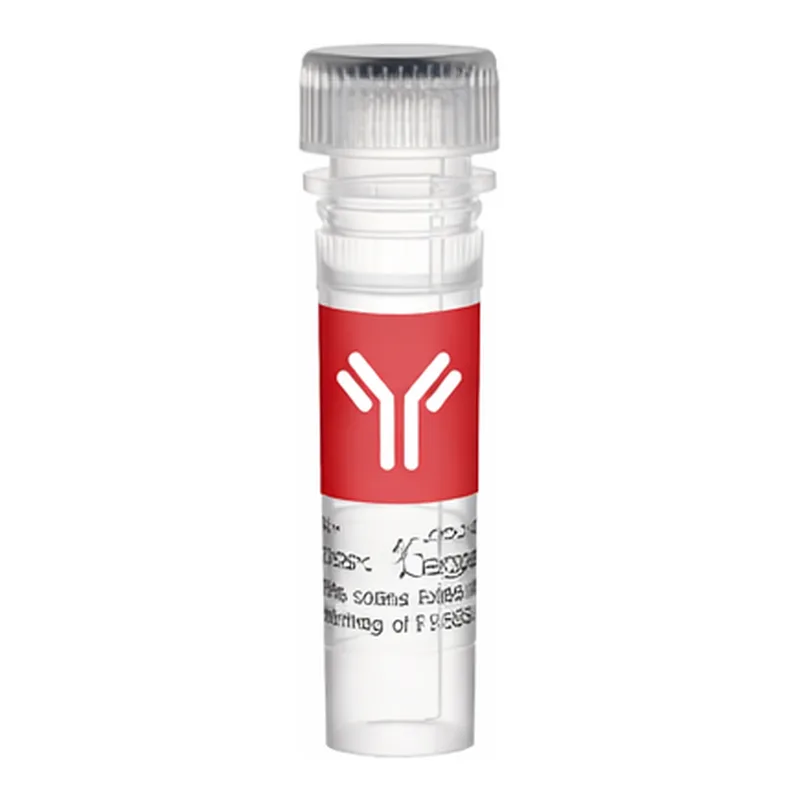
Thermo Fisher Scientific ATXN10 Polyclonal Antibody
ATXN10 단백질을 인식하는 Rabbit Polyclonal 항체로, Human, Mouse, Rat 시료에 반응합니다. Western blot에 적합하며, 합성 펩타이드 면역원으로 제작되었습니다. 액상 형태, 1 mg/mL 농도, PBS buffer(30% glycerol) 보존, -20°C 보관.
- 판매단위
- pk
카탈로그
1개 옵션 · 카탈로그 번호를 클릭하면 복사됩니다Thermo Fisher Scientific · Thermo Fisher Scientific ATXN10 Polyclonal Antibody
Applications
Western Blot (WB)
- Tested Dilution: 1:500–1:1,000
Product Specifications
| 항목 | 내용 |
|---|---|
| Species Reactivity | Human, Mouse, Rat |
| Host / Isotype | Rabbit / IgG |
| Class | Polyclonal |
| Type | Antibody |
| Immunogen | Synthesized peptide derived from human ATXN10 |
| Conjugate | Unconjugated |
| Form | Liquid |
| Concentration | 1 mg/mL |
| Purification | Affinity chromatography |
| Storage Buffer | PBS, pH 7.3, with 30% glycerol |
| Contains | 0.02% sodium azide |
| Storage Conditions | -20°C |
| Shipping Conditions | Wet ice |
| RRID | AB_2691725 |
Product Specific Information
Predicted to react with Mouse and Rat samples.
Target Information
The autosomal dominant cerebellar ataxias (ADCAs) are a clinically and genetically heterogeneous group of disorders characterized by ataxia, dysarthria, dysmetria, and intention tremor. All ADCAs involve some degree of cerebellar dysfunction and varying degrees of signs from other components of the nervous system.
A commonly accepted clinical classification (Harding, 1993) divides ADCAs into three groups based on associated symptoms such as brainstem signs or retinopathy:
- ADCA I: Pyramidal and extrapyramidal symptoms with ophthalmoplegia
- ADCA II: Presence of retinopathy
- ADCA III: Absence of associated signs
Genetic linkage and molecular analyses revealed that ADCAs are genetically heterogeneous even within the subtypes.
For Research Use Only. Not for use in diagnostic procedures. Not for resale without express authorization.
Thermo Fisher Scientific 상품 둘러보기
전체보기
문의
0개 · 배송·재고 문의는 실시간 상담이 빠릅니다아직 등록된 문의가 없어요.