

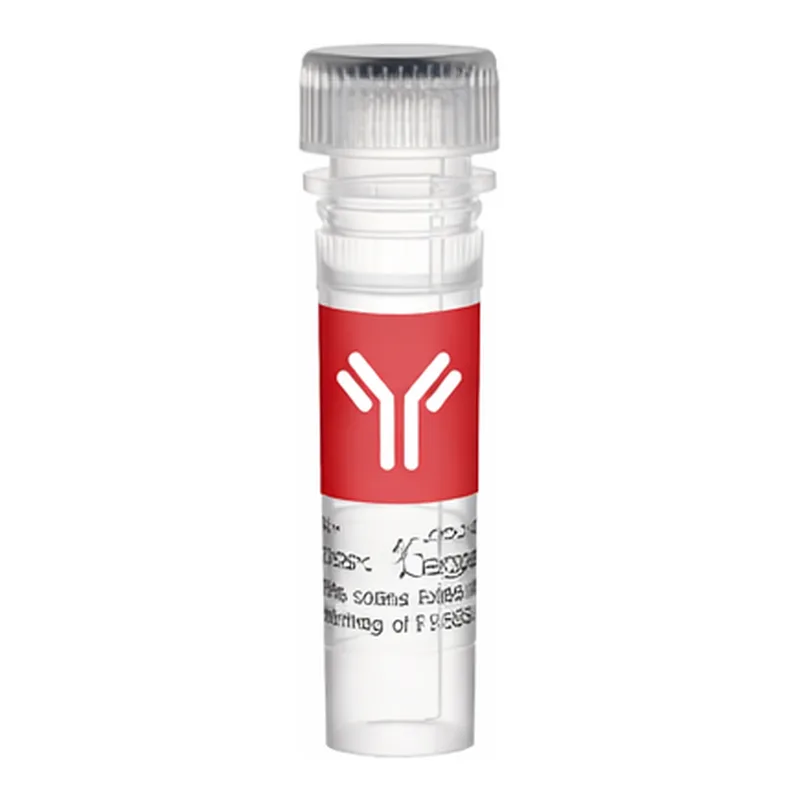
Thermo Fisher Scientific NHLRC1 Polyclonal Antibody
NHLRC1 단백질을 인식하는 Thermo Fisher Scientific의 Rabbit Polyclonal Antibody로, WB, IHC(P), ICC/IF에 사용 가능. Human, Mouse, Rat 반응성. 항원 친화 크로마토그래피로 정제되었으며, 1 mg/mL 농도의 액상 형태로 제공. 연구용으로만 사용.
- 판매단위
- pk
카탈로그
1개 옵션 · 카탈로그 번호를 클릭하면 복사됩니다Thermo Fisher Scientific · Thermo Fisher Scientific NHLRC1 Polyclonal Antibody
Applications and Tested Dilutions
| Application | Tested Dilution |
|---|---|
| Western Blot (WB) | 1:500–1:2,000 |
| Immunohistochemistry (Paraffin) (IHC (P)) | 1:50–1:200 |
| Immunocytochemistry (ICC/IF) | 1:50–1:200 |
Product Specifications
| 항목 | 내용 |
|---|---|
| Species Reactivity | Human, Mouse, Rat |
| Host / Isotype | Rabbit / IgG |
| Class | Polyclonal |
| Type | Antibody |
| Immunogen | Recombinant full length Human NHLRC1 |
| Conjugate | Unconjugated |
| Form | Liquid |
| Concentration | 1 mg/mL |
| Purification | Antigen affinity chromatography |
| Storage Buffer | PBS, pH 7.2, with 50% glycerol |
| Contains | 0.1% sodium azide |
| Storage Conditions | Store at 4°C short term. For long term storage, store at -20°C, avoiding freeze/thaw cycles. |
| Shipping Conditions | Wet ice |
| RRID | AB_2720712 |
Product Specific Information
The antibody was affinity-purified from rabbit antiserum by affinity chromatography using epitope-specific immunogen. The purity is greater than 95% as determined by SDS-PAGE.
Target Information
Progressive myoclonic epilepsy type 2 (EPM2), also called Lafora disease, is an autosomal recessive neurodegenerative disorder characterized by grand mal seizures and/or myoclonus typically beginning around 15 years of age. The disease progresses rapidly with severe cognitive decline and psychotic features, leading to death within 10 years after onset.
Lafora disease is caused by mutations in the NHLRC1 gene, which encodes Malin, a single subunit E3 ubiquitin ligase containing six NHL repeats and one RING-type zinc finger domain. Malin mediates ubiquitination via its RING domain and interacts with Laforin, another protein implicated in EPM2. Malin localizes mainly to the endoplasmic reticulum and, to a lesser extent, the nucleus. It is expressed in brain, cerebellum, spinal cord, medulla, heart, liver, skeletal muscle, and pancreas.
For Research Use Only.
Not for use in diagnostic procedures. Not for resale without express authorization.
Thermo Fisher Scientific 상품 둘러보기
전체보기
문의
0개 · 배송·재고 문의는 실시간 상담이 빠릅니다아직 등록된 문의가 없어요.