

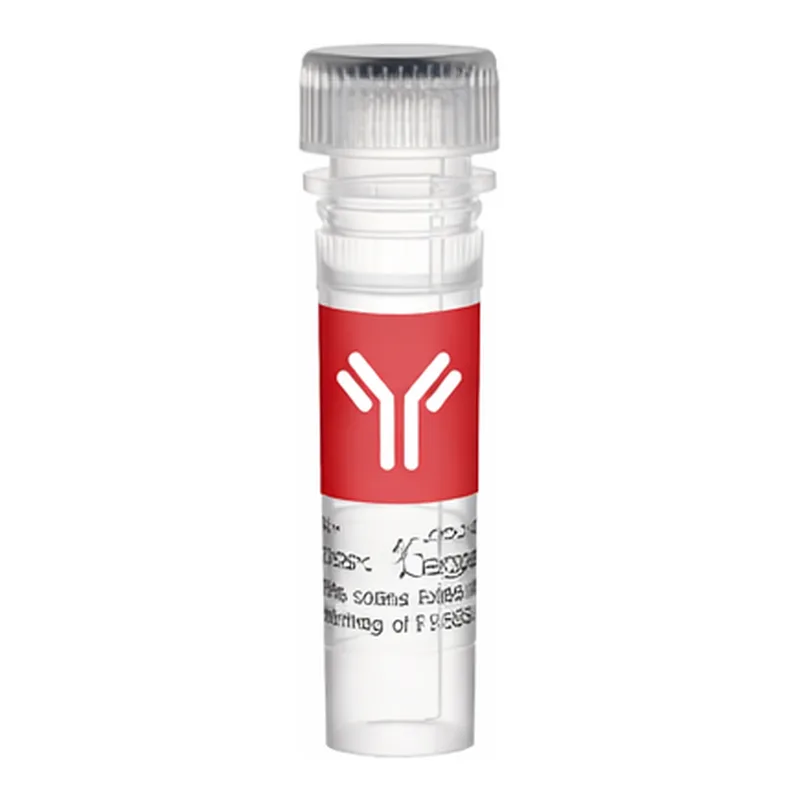
Thermo Fisher Scientific PSME2 Recombinant Rabbit Monoclonal Antibody (PSH0-10)
PSME2 단백질을 표적으로 하는 Thermo Fisher의 재조합 토끼 단클론 항체. Western blot, IHC, ICC, Flow Cytometry 등 다양한 응용 가능. 높은 특이성과 재현성을 제공하며, 단백질 A 정제 및 안정적 저장 조건을 갖춤.
- 판매단위
- pk
카탈로그
1개 옵션 · 카탈로그 번호를 클릭하면 복사됩니다Thermo Fisher Scientific · Thermo Fisher Scientific PSME2 Recombinant Rabbit Monoclonal Antibody (PSH0-10)
Applications and Tested Dilutions
| Application | Tested Dilution |
|---|---|
| Western Blot (WB) | 1:1,000–1:5,000 |
| Immunohistochemistry (Paraffin) (IHC (P)) | 1:4,000 |
| Immunocytochemistry (ICC/IF) | 1:100 |
| Flow Cytometry (Flow) | 1:500–1:1,000 |
Product Specifications
| Specification | Description |
|---|---|
| Species Reactivity | Human, Mouse, Rat |
| Host / Isotype | Rabbit / IgG |
| Expression System | HEK293 cells |
| Class | Recombinant Monoclonal |
| Type | Antibody |
| Clone | PSH0-10 |
| Immunogen | Recombinant protein within human aa 2–239/239 |
| Conjugate | Unconjugated |
| Form | Liquid |
| Concentration | 1 mg/mL |
| Purification | Protein A |
| Storage Buffer | PBS, pH 7.4, with 0.1% BSA, 40% glycerol |
| Contains | 0.05% sodium azide |
| Storage Conditions | Store at 4°C short term; for long term, store at -20°C, avoiding freeze/thaw cycles |
| Shipping Conditions | Wet ice |
| RRID | AB_3094128 |
Product Specific Information
- Positive Control: PC-12 cell lysate, 293T cell lysate, mouse liver tissue lysate, rat thymus tissue lysate, MCF-7 cell lysate, PC-3 cell lysate, HeLa, rat stomach tissue, human rectal carcinoma tissue, HepG2
- Predicted Band Size: 27 kDa
- Subcellular Location: Cytosol, Extracellular region or secreted, Nucleus
Target Information
Proteolytic degradation is crucial for maintaining appropriate levels of short-lived and regulatory proteins involved in cellular metabolism, stress response, antigen presentation, receptor modulation, ion channel regulation, cell cycle, transcription, and signaling.
The ubiquitin-proteasome pathway degrades most proteins in the cytosol and nucleus, while others are processed via the vacuolar pathway involving endosomes, lysosomes, and the endoplasmic reticulum.
The 26S proteasome is an ATP-dependent, multisubunit molecular complex (~2.5 MDa) composed of a 20S core and 19S regulatory subunits that recognize ubiquitinated proteins and facilitate their degradation.
Defects in this pathway are associated with diseases such as cystic fibrosis, Angelman’s syndrome, and Liddle syndrome.
For Research Use Only. Not for use in diagnostic procedures. Not for resale without express authorization.
Thermo Fisher Scientific 상품 둘러보기
전체보기
문의
0개 · 배송·재고 문의는 실시간 상담이 빠릅니다아직 등록된 문의가 없어요.