

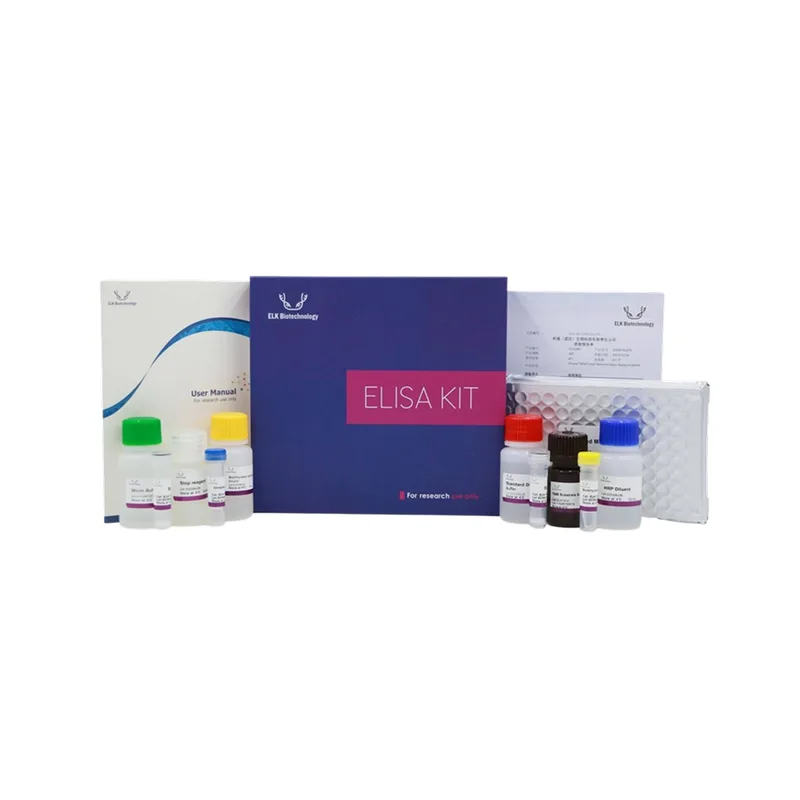
ELK Biotechnology C163A rabbit pAb
C163A rabbit pAb는 인간 C163A 유래 합성 펩타이드로 제작된 폴리클로날 항체입니다. WB 및 ELISA에 적합하며 높은 특이성과 재현성을 제공합니다. 다양한 종(Human, Rat, Mouse)에 반응하며 -20°C에서 장기 보관 가능합니다.
- 판매단위
- pk
카탈로그
2개 옵션 · 카탈로그 번호를 클릭하면 복사됩니다ELK Biotechnology · ELK Biotechnology C163A rabbit pAb
제품명
C163A rabbit pAb
제품 정보
| 항목 | 내용 |
|---|---|
| Applications | WB; ELISA |
| Recommended Dilutions | WB 1:1000–2000, ELISA 1:5000–20000 |
| Immunogen | Synthesized peptide derived from human C163A |
| Species Reactivity | Human; Rat; Mouse |
| Clonality | Polyclonal |
| Isotype | IgG |
| Concentration | 1 mg/ml |
| Host | Rabbit |
| Storage | -20°C / 1 year |
| Human Swiss-Prot No | Q86VB7.2 |
| Cellular Localization | Secreted; Cell membrane; Single-pass type I membrane protein. Isoform 1 and isoform 2 show lower surface expression when expressed in cells. |
Background
Caution: It is uncertain whether Met-1 or Met-6 is the initiator.
The soluble form (sCD163) in plasma is a novel parameter in diseases affecting macrophage function and monocyte/macrophage load in the body. The concentration of sCD163 likely reflects the number of macrophages with high CD163 expression, playing a major role in dampening inflammatory responses and scavenging damaged cell components.
Clinical studies evaluate sCD163 as a disease marker in inflammatory conditions such as infection, autoimmune disease, transplantation, atherosclerosis, and cancer.
Domain: The SRCR domain 3 mediates calcium-sensitive interaction with hemoglobin/haptoglobin complexes.
Function: Acute phase-regulated receptor involved in clearance and endocytosis of hemoglobin/haptoglobin complexes by macrophages, protecting tissues from oxidative damage. Plays a role in iron recycling via endocytosis of hemoglobin/haptoglobin and subsequent heme breakdown. Binds hemoglobin/haptoglobin complexes in a calcium- and pH-dependent manner. Induces intracellular signaling involving tyrosine kinase-dependent calcium mobilization and secretion of IL6 and CSF1. Isoform 3 exhibits higher ligand endocytosis capacity and surface expression.
After shedding, the soluble form (sCD163) may play an anti-inflammatory role and serve as a diagnostic marker for macrophage activation.
Induction: Induced by anti-inflammatory mediators such as glucocorticoids, IL6, IL10; suppressed by proinflammatory mediators like LPS, IFNG, and TNFα.
Miscellaneous: Intravenous LPS induces rapid rise of sCD163 in plasma via metalloproteinase-mediated shedding from monocytes. Long-term LPS infusion increases membrane-bound form expression.
PTM: Soluble form (sCD163) produced by proteolytic shedding induced by LPS, phorbol ester, and Fc region of IgG; dependent on PKC and tyrosine kinases; inhibited by TIMP3; likely mediated by ADAM metalloproteinases. Phosphorylated.
Similarity: Contains 9 SRCR domains.
Subcellular location: Isoform 1 and 2 show lower surface expression when expressed in cells.
Subunit: Interacts with CSNK2B.
Tissue specificity: Expressed in monocytes and mature macrophages such as Kupffer cells (liver), red pulp macrophages (spleen), cortical macrophages (thymus), resident bone marrow macrophages, and meningeal macrophages (CNS). Also expressed in blood. Isoform 1 is least abundant in blood; Isoform 2 least abundant in liver and spleen; Isoform 3 predominant in blood.
ELK Biotechnology 상품 둘러보기
전체보기
문의
0개 · 배송·재고 문의는 실시간 상담이 빠릅니다아직 등록된 문의가 없어요.