

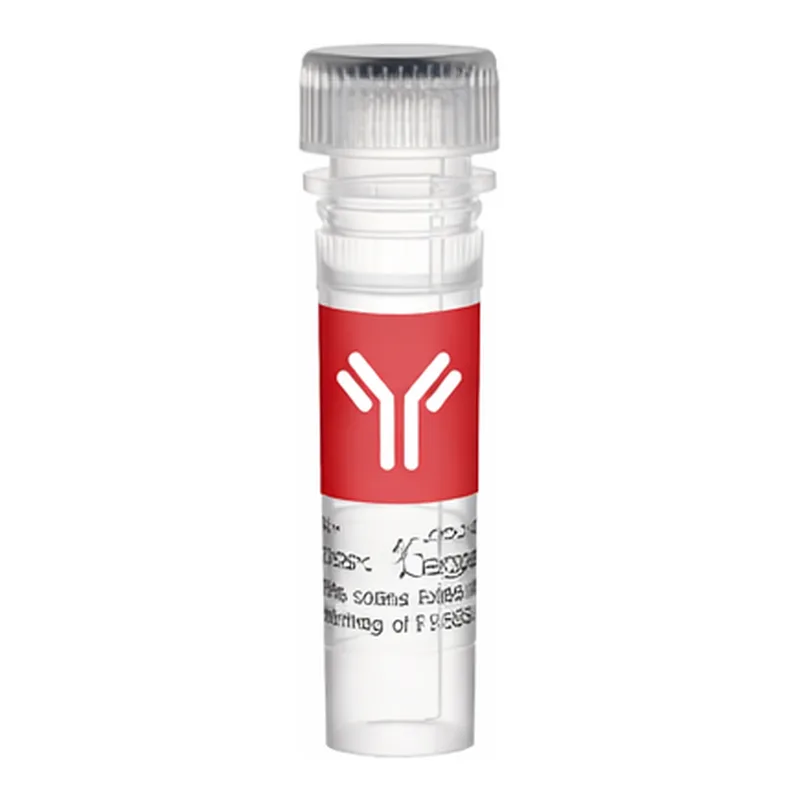
Thermo Fisher Scientific MCK10 Polyclonal Antibody
MCK10(DDR1) 단백질을 인식하는 Rabbit Polyclonal 항체로, Western blot, IHC, ICC/IF 등 다양한 응용에 적합. Human, Mouse, Rat 반응성. 1 mg/mL 농도의 액상 형태로 제공되며, -20°C에서 보관. 연구용으로만 사용 가능.
- 판매단위
- pk
카탈로그
1개 옵션 · 카탈로그 번호를 클릭하면 복사됩니다Thermo Fisher Scientific · Thermo Fisher Scientific MCK10 Polyclonal Antibody
Applications and Tested Dilutions
| Application | Tested Dilution |
|---|---|
| Western Blot (WB) | 1:500–1:2,000 |
| Immunohistochemistry (Paraffin) (IHC-P) | 1:50–1:200 |
| Immunocytochemistry (ICC/IF) | 1:100–1:500 |
Product Specifications
| 항목 | 내용 |
|---|---|
| Species Reactivity | Human, Mouse, Rat |
| Host / Isotype | Rabbit / IgG |
| Class | Polyclonal |
| Type | Antibody |
| Immunogen | A synthesized peptide derived from human DDR1 (Accession Q08345), corresponding to amino acid residues N771–T821 |
| Conjugate | Unconjugated |
| Form | Liquid |
| Concentration | 1 mg/mL |
| Purification | Affinity chromatography |
| Storage Buffer | PBS with 50% glycerol |
| Contains | 0.02% sodium azide |
| Storage Conditions | -20°C |
| Shipping Conditions | Wet ice |
| RRID | AB_2899741 |
Product Specific Information
Antibody detects endogenous levels of total DDR1.
Target Information
DDR1 is a receptor tyrosine kinase activated by collagen and is reported to regulate adhesion, cell migration, and other cellular processes. Receptor tyrosine kinases (RTKs) play a key role in the communication of cells with their microenvironment. These molecules are involved in the regulation of cell growth, differentiation, and metabolism.
The protein encoded by this gene is a RTK that is widely expressed in normal and transformed epithelial cells and is activated by various types of collagen. This protein belongs to a subfamily of tyrosine kinase receptors with a homology region to the Dictyostelium discoideum protein discoidin I in their extracellular domain. Its autophosphorylation is achieved by all collagens so far tested (type I to type VI).
In situ studies and Northern blot analysis showed that expression of this encoded protein is restricted to epithelial cells, particularly in the kidney, lung, gastrointestinal tract, and brain. In addition, this protein is significantly overexpressed in several human tumors from breast, ovarian, esophageal, and pediatric brain. This gene is located on chromosome 6p21.3 in proximity to several HLA class I genes. Alternative splicing of this gene results in multiple transcript variants.
For Research Use Only.
Not for use in diagnostic procedures. Not for resale without express authorization.
Thermo Fisher Scientific 상품 둘러보기
전체보기
문의
0개 · 배송·재고 문의는 실시간 상담이 빠릅니다아직 등록된 문의가 없어요.