

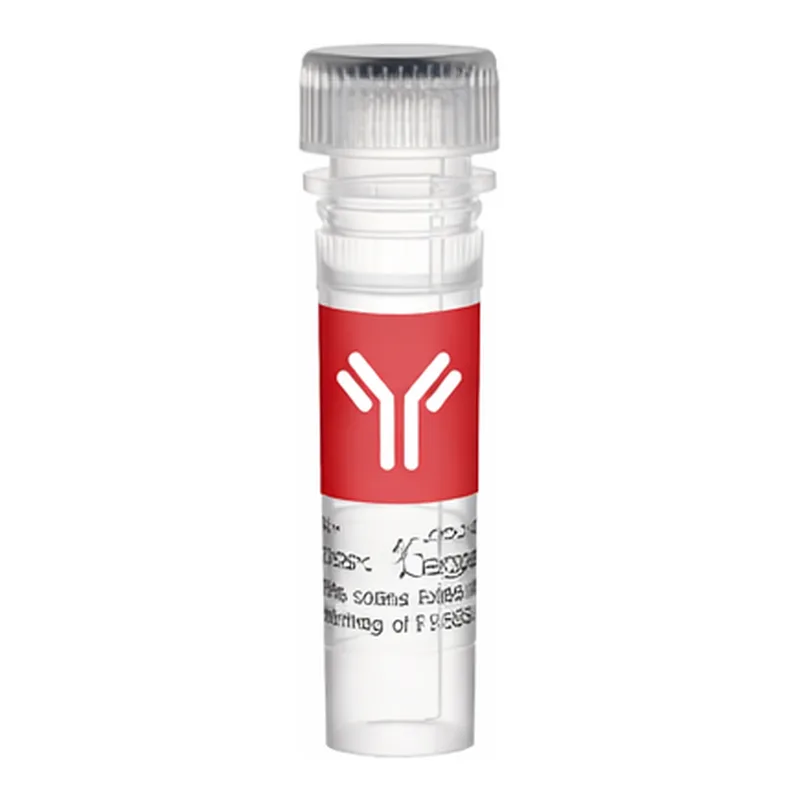
Thermo Fisher Scientific GTF2B Polyclonal Antibody
GTF2B 단백질을 인식하는 Thermo Fisher Scientific의 Rabbit Polyclonal 항체. Western blot, IHC, ICC/IF에 사용 가능하며 Human 및 Mouse 반응성. 항원 친화 크로마토그래피로 정제, 1 mg/mL 농도의 액상 형태. 연구용으로만 사용.
- 판매단위
- pk
카탈로그
1개 옵션 · 카탈로그 번호를 클릭하면 복사됩니다Thermo Fisher Scientific · Thermo Fisher Scientific GTF2B Polyclonal Antibody
Applications and Tested Dilutions
| Application | Tested Dilution |
|---|---|
| Western Blot (WB) | 1:500–1:3,000 |
| Immunohistochemistry (Paraffin) (IHC (P)) | 1:100–1:1,000 |
| Immunocytochemistry (ICC/IF) | 1:100–1:1,000 |
Product Specifications
| 항목 | 내용 |
|---|---|
| Species Reactivity | Human, Mouse |
| Host / Isotype | Rabbit / IgG |
| Class | Polyclonal |
| Type | Antibody |
| Immunogen | Recombinant fragment corresponding to a region within amino acids 22–316 of Human TFIIB |
| Conjugate | Unconjugated |
| Form | Liquid |
| Concentration | 1 mg/mL |
| Purification | Antigen affinity chromatography |
| Storage Buffer | PBS, pH 7, with 20% glycerol |
| Contains | 0.025% ProClin 300 |
| Storage Conditions | Store at 4°C short term. For long term storage, store at -20°C, avoiding freeze/thaw cycles. |
| Shipping Conditions | Wet ice |
| RRID | AB_2546032 |
Product Specific Information
- Recommended positive controls: 293T, A431, HeLa, HepG2, HeLa nuclear extract, GTF2B-transfected 293T
- Predicted reactivity: Mouse (99%), Rat (99%), Zebrafish (95%), Xenopus laevis (96%), Rhesus Monkey (100%), Bovine (99%)
- Store product as a concentrated solution. Centrifuge briefly prior to opening the vial.
Target Information
Ubiquitin is a 76 amino acid highly conserved eukaryotic polypeptide that selectively marks cellular proteins for proteolytic degradation by the 26S proteasome. The process of target selection, covalent attachment, and shuttle to the 26S proteasome is a vital means of regulating the concentrations of key regulatory proteins in the cell by limiting their lifespans. Polyubiquitination is a common feature of this modification. Serial steps for modification include the activation of ubiquitin, an ATP-dependent formation of a thioester bond between ubiquitin and the enzyme E1, transfer by transacylation of ubiquitin from E1 to the ubiquitin conjugating enzyme E2, and covalent linkage to the target protein directly by E2 or via E3 ligase enzyme. Deubiquitination enzymes also exist to reverse the marking of protein substrates. Posttranslational tagging by Ub is involved in a multitude of cellular processes, including cell cycle, cell growth and differentiation, embryogenesis, apoptosis, signal transduction, DNA repair, regulation of transcription and DNA replication, transmembrane transport, stress responses, the immune response, and nervous system functions.
For Research Use Only. Not for use in diagnostic procedures. Not for resale without express authorization.
Thermo Fisher Scientific 상품 둘러보기
전체보기
문의
0개 · 배송·재고 문의는 실시간 상담이 빠릅니다아직 등록된 문의가 없어요.