

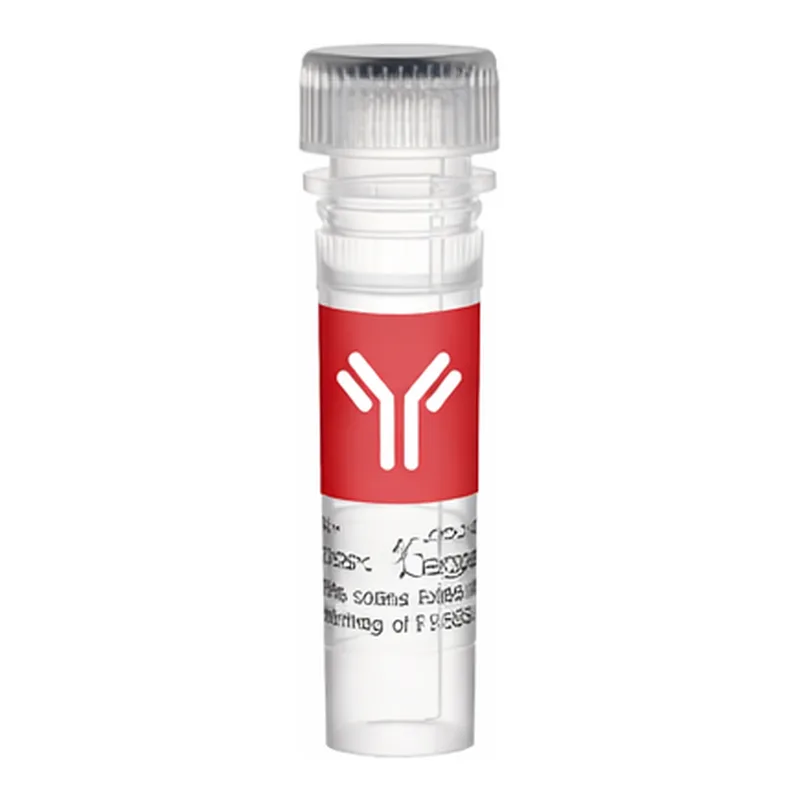
Thermo Fisher Scientific Tyrosine Hydroxylase Polyclonal Antibody
Tyrosine Hydroxylase 단백질을 인식하는 Rabbit Polyclonal 항체로, 인간, 마우스, 랫트, 제브라피시에 반응합니다. WB, IHC, ICC 등 다양한 응용에 사용 가능하며 항원 친화 크로마토그래피로 정제되었습니다. 신경전달물질 합성 연구에 적합합니다.
- 판매단위
- pk
카탈로그
1개 옵션 · 카탈로그 번호를 클릭하면 복사됩니다Thermo Fisher Scientific · Thermo Fisher Scientific Tyrosine Hydroxylase Polyclonal Antibody
Applications and Tested Dilution
| Application | Tested Dilution | Publications |
|---|---|---|
| Western Blot (WB) | 1:500–1:3,000 | View 1 publication |
| Immunohistochemistry (IHC) | – | View 2 publications |
| Immunohistochemistry (Paraffin) (IHC (P)) | 1:100–1:1,000 | – |
| Immunohistochemistry (Frozen) (IHC (F)) | 1:100–1:1,000 | – |
| Immunohistochemistry - Free Floating (IHC (Free)) | 1:100–1:500 | – |
| Immunocytochemistry (ICC/IF) | 1:100–1:1,000 | View 1 publication |
Product Specifications
| 항목 | 내용 |
|---|---|
| Species Reactivity | Human, Mouse, Rat, Zebrafish |
| Published Species | Mouse, Rat |
| Host / Isotype | Rabbit / IgG |
| Class | Polyclonal |
| Type | Antibody |
| Immunogen | Recombinant protein encompassing a sequence within the center region of human Tyrosine Hydroxylase |
| Conjugate | Unconjugated |
| Form | Liquid |
| Concentration | 0.57 mg/mL |
| Purification | Antigen affinity chromatography |
| Storage Buffer | PBS, pH 7, with 20% glycerol |
| Contains | 0.025% ProClin 300 |
| Storage Conditions | Store at 4°C short term. For long term storage, store at -20°C, avoiding freeze/thaw cycles. |
| Shipping Conditions | Wet ice |
| RRID | AB_2792314 |
Product Specific Information
- Keep as concentrated solution.
- Predicted reactivity: Rat (87%).
- Positive Control: IMR32, mouse brain, rat brain.
- Store product as a concentrated solution.
- Centrifuge briefly prior to opening the vial.
Target Information
Tyrosine hydroxylase (TH) is an enzyme involved in the synthesis of catecholamine neurotransmitters such as dopamine, epinephrine, and norepinephrine. In all species, catecholamine synthesis is regulated by the interaction of TH with the cofactor tetrahydrobiopterin (BH4), which binds to the TH catalytic domain to activate the enzyme.
In humans, four TH mRNA splice variants (hTH1–hTH4) have been identified, sharing identical catalytic domains but differing in their N-terminal regulatory regions. TH catalyzes the conversion of L-tyrosine to L-dopa and plays a key role in adrenergic neuron physiology. The enzyme’s role in catecholamine synthesis links it to neuropathogenic diseases such as Parkinson’s disease, schizophrenia, Segawa syndrome, dystonia, and various cardiovascular disorders.
For Research Use Only. Not for use in diagnostic procedures. Not for resale without express authorization.
Thermo Fisher Scientific 상품 둘러보기
전체보기
문의
0개 · 배송·재고 문의는 실시간 상담이 빠릅니다아직 등록된 문의가 없어요.