

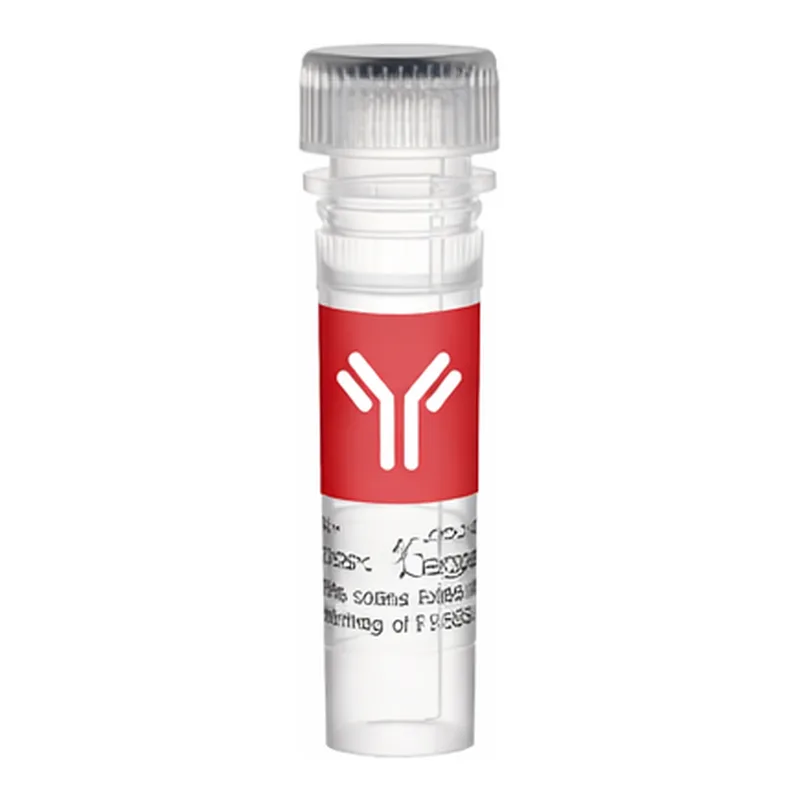
Thermo Fisher Scientific CD3 Monoclonal Antibody (7D6), PE-Alexa Fluor 610
인간 CD3 epsilon 항원을 인식하는 마우스 단클론 항체로, PE-Alexa Fluor 610 형광 표지. 유세포 분석(Flow Cytometry)에 적합하며, 다중 표적 검출 가능. PBS 기반 완충액에 BSA, 10% sucrose 포함. 4°C 암소 보관.
- 판매단위
- pk
카탈로그
1개 옵션 · 카탈로그 번호를 클릭하면 복사됩니다Thermo Fisher Scientific · Thermo Fisher Scientific CD3 Monoclonal Antibody (7D6), PE-Alexa Fluor 610
Applications
- Flow Cytometry (Flow): Assay-dependent
- View 3 publications
Product Specifications
| 항목 | 내용 |
|---|---|
| Species Reactivity | Human |
| Published Species | Human |
| Host / Isotype | Mouse / IgG2a |
| Class | Monoclonal |
| Type | Antibody |
| Clone | 7D6 |
| Immunogen | Human CD3 epsilon |
| Conjugate | PE-Alexa Fluor™ 610 |
| Excitation/Emission Max | 567 / 627 nm |
| Form | Liquid |
| Purification | Purified |
| Storage Buffer | PBS with BSA, 10% sucrose |
| Contains | 0.1% sodium azide |
| Storage Conditions | 4°C, store in dark |
| Shipping Conditions | Ambient (domestic); Wet ice (international) |
| RRID | AB_10392394 |
Additional Formats
- Unconjugated
- Alexa Fluor 488
- APC
- APC-Alexa Fluor 750
- FITC
- PE
- PE-Alexa Fluor 700
- PE-Cyanine5.5
- PE-Cyanine7
- PE-Texas Red
- TRI-COLOR
- Request custom conjugation
Product Specific Information
The R-phycoerythrin (PE)-Cy7 tandem conjugate permits simultaneous multicolor labeling and detection of multiple targets with excitation by a 488 nm laser without occupying traditional channels associated with FITC and PE.
Target Information
The CD3 subunit complex is crucial in transducing antigen-recognition signals into the cytoplasm of T cells and in regulating the cell surface expression of the TCR complex.
T cell activation through the antigen receptor (TCR) involves the cytoplasmic tails of the CD3 subunits (CD3 gamma, CD3 delta, CD3 epsilon, and CD3 zeta). These subunits are structurally related members of the immunoglobulin superfamily encoded by closely linked genes on human chromosome 11.
CD3 components have long cytoplasmic tails that associate with signal transduction molecules, mediated by a double tyrosine-based motif. CD3 may play a role in TCR-induced growth arrest, cell survival, and proliferation.
The CD3 antigen is expressed on 68–82% of normal peripheral blood lymphocytes, 65–85% of thymocytes, and Purkinje cells in the cerebellum. It is not expressed on B or NK cells. Decreased T lymphocyte percentages may be observed in some autoimmune diseases.
Defects in the CD3 gene are associated with CD3 immunodeficiency.
Analyte Specific Reagent
제품 이미지

Thermo Fisher Scientific 상품 둘러보기
전체보기
문의
0개 · 배송·재고 문의는 실시간 상담이 빠릅니다아직 등록된 문의가 없어요.