

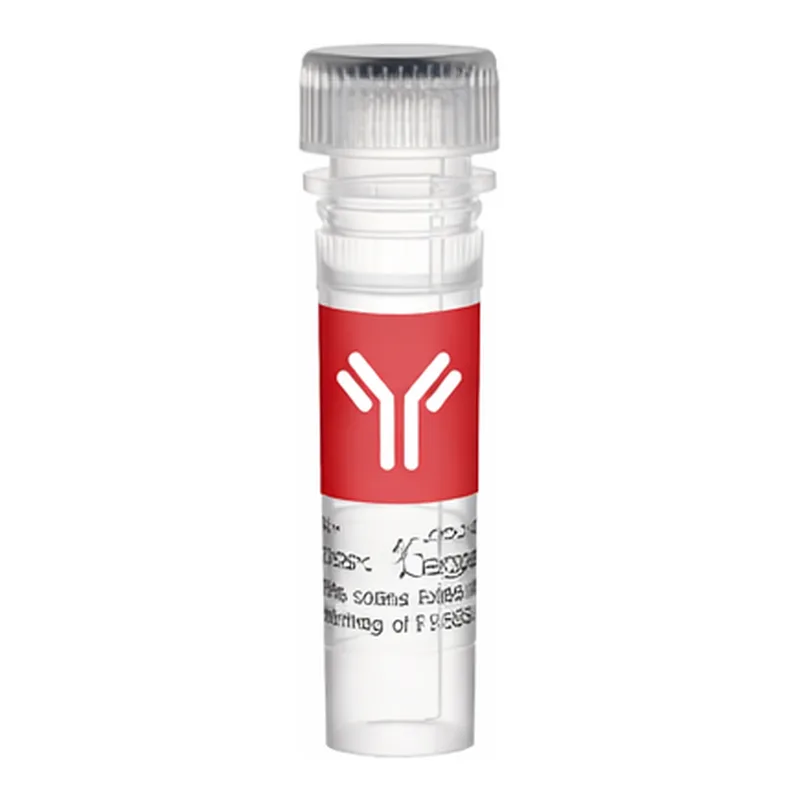
Thermo Fisher Scientific CD197 (CCR7) Monoclonal Antibody (4B12), PerCP-Cyanine5.5, eBioscience
마우스 CCR7(CD197)을 인식하는 4B12 단클론 항체로, PerCP-Cyanine5.5로 표지되어 있습니다. 유세포분석(Flow Cytometry)에 최적화되어 있으며, 37°C에서의 염색 시 신호가 향상됩니다. 항체는 액상 형태로 제공되며, 4°C 암소 보관이 필요합니다.
- 판매단위
- pk
카탈로그
2개 옵션 · 카탈로그 번호를 클릭하면 복사됩니다Thermo Fisher Scientific · Thermo Fisher Scientific CD197 (CCR7) Monoclonal Antibody (4B12), PerCP-Cyanine5.5, eBioscience
Applications
- Flow Cytometry (Flow)
Tested Dilution: 1 µg/test
View 22 publications
Product Specifications
| 항목 | 내용 |
|---|---|
| Species Reactivity | Mouse |
| Published Species | Mouse |
| Host / Isotype | Rat / IgG2a, kappa |
| Recommended Isotype Control | Rat IgG2a kappa Isotype Control (eBR2a), PerCP-Cyanine5.5, eBioscience™ |
| Class | Monoclonal |
| Type | Antibody |
| Clone | 4B12 |
| Conjugate | PerCP-Cyanine5.5 |
| Excitation / Emission Max | 489 / 679 nm |
| Form | Liquid |
| Concentration | 0.2 mg/mL |
| Purification | Affinity chromatography |
| Storage Buffer | PBS, pH 7.2 |
| Contains | 0.09% sodium azide |
| Storage Conditions | 4°C, store in dark, DO NOT FREEZE |
| Shipping Conditions | Ambient (domestic); Wet ice (international) |
| RRID | AB_925738 |
Additional Available Formats
- Alexa Fluor 700
- APC
- APC-eFluor 780
- Biotin
- eFluor 450
- Functional Grade
- PE
- PE-Cyanine7
- PE-eFluor 610
- Request custom conjugation
Product Specific Information
The 4B12 monoclonal antibody reacts with mouse CCR7 (CD197), a chemokine receptor for CCL19 and CCL21. CCR7 mediates the migration of naïve T cells to secondary lymphoid organs and plays a role in dendritic and B cell localization during immune responses.
CCR7 is also a marker for central memory T cells (TCM), characterized by CCR7 and CD62L expression. It is involved in thymocyte development, and its deficiency can lead to aberrant T cell maturation.
Applications
- Reported for use in flow cytometric analysis.
- Tested on mouse splenocytes at ≤1 µg/test.
- Optimal staining achieved at 37°C (brighter signal and better separation).
Recommended Staining Protocol
- Prepare cell suspension and block FcγR with 5 µg/million cells anti-mouse CD16/32 for 15 min on ice.
- Without washing, add 1 µg/million cells 4B12 and incubate at 37°C or 2–8°C for 30 min.
- Wash cells once with Flow Cytometry Staining Buffer and decant supernatant.
- Analyze on flow cytometer or proceed with secondary staining on ice.
Note:
- Co-staining with CCL19-Fc may be affected by binding conditions and steric hindrance.
- 4B12 binding can block detectable CCL19-Fc binding.
- Excitation: 488 nm; Emission: 695 nm; Laser: Blue Laser.
- Filtration: 0.2 µm post-manufacturing filtered.
Target Information
CCR7 is a G protein-coupled receptor induced by Epstein-Barr virus (EBV) and expressed in blood, bone marrow, lymph node, and intestine. It regulates migration of memory T cells to inflamed tissues and promotes dendritic cell maturation. Ligands include CCL19 (ELC) and CCL21 (SLC). CCR family receptors (CCR1–CCR5) are critical for T cell chemotaxis and phagocyte migration to inflammation sites.
For Research Use Only. Not for use in diagnostic procedures.
제품 이미지

Thermo Fisher Scientific 상품 둘러보기
전체보기

문의
0개 · 배송·재고 문의는 실시간 상담이 빠릅니다아직 등록된 문의가 없어요.