

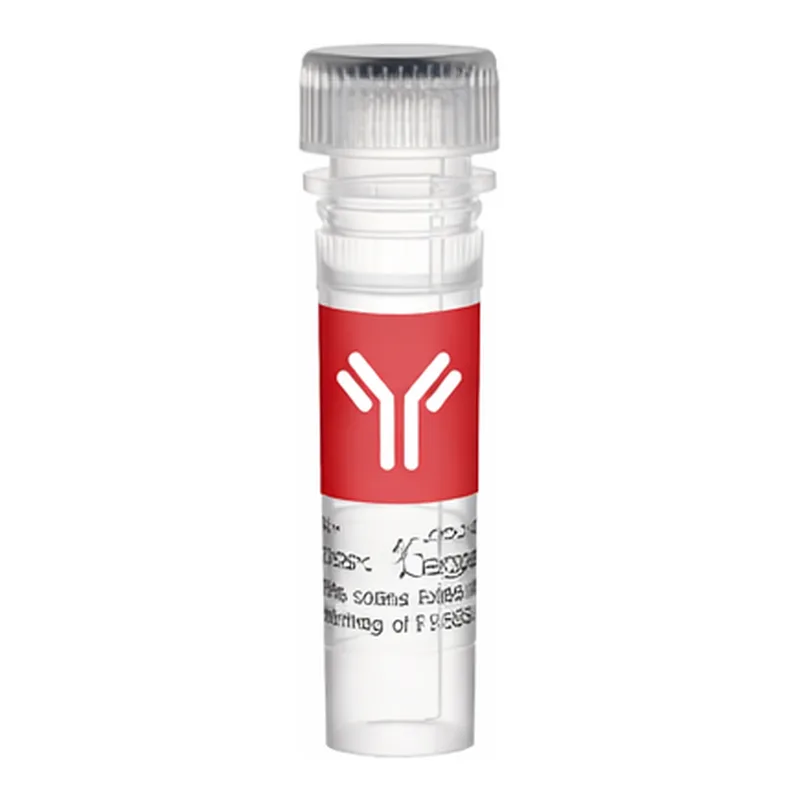
Thermo Fisher Scientific Human HAP1 Synthetic Peptide
인간 HAP1 단백질 중심부 19개 아미노산 서열을 기반으로 한 합성 펩타이드. PA5-20377 항체의 블로킹 펩타이드로 사용 가능. 순도 높은 액상 형태로 제공되며 PBS 버퍼에 보존. 인간 HAP1 관련 연구 및 헌팅턴병 기전 연구에 적합.
- 카테고리
- Protein
- 판매단위
- pk
카탈로그
1개 옵션 · 카탈로그 번호를 클릭하면 복사됩니다Thermo Fisher Scientific · Thermo Fisher Scientific Human HAP1 Synthetic Peptide
Applications
Control (Ctrl)
- Assay-dependent
Blocking Assay (BLOCK)
- Assay-dependent
Product Specifications
| 항목 | 내용 |
|---|---|
| Species Reactivity | Human |
| Class | Synthetic |
| Type | Peptide |
| Conjugate | Unconjugated |
| Form | Liquid |
| Concentration | 200 µg/mL |
| Purification | Purified |
| Storage Buffer | PBS, pH 7.2, with 0.1% BSA |
| Contains | 0.02% sodium azide |
| Storage Conditions | -20°C |
Product Specific Information
This peptide corresponds to 19 amino acids near the center of human HAP1.
PEP-0494 can be used as a blocking peptide with polyclonal antibody PA5-20377.
Target Information
Huntington’s disease (HD), a neurodegenerative disorder characterized by loss of striatal neurons, is caused by an expansion of a polyglutamine tract in the HD protein huntingtin. HAP1 was initially identified through a two-hybrid library screening; the binding of HAP1 to huntingtin correlated with the expansion of the polyglutamine tract.
HAP1 also interacts with two cytoskeletal proteins (dynactin and pericentriolar autoantigen protein 1), suggesting that HAP1 may play a role in vesicular trafficking or organelle transport.
HAP1 is also involved with the huntingtin-enhanced BDNF transport along the cellular microtubules. Attenuation of this process leads to the loss of neurotrophic support and neuronal toxicity, which suggests that loss of this function might contribute to pathogenesis.
Several alternatively spliced isoforms have been described for HAP1.
For Research Use Only. Not for use in diagnostic procedures. Not for resale without express authorization.
Thermo Fisher Scientific 상품 둘러보기
전체보기
문의
0개 · 배송·재고 문의는 실시간 상담이 빠릅니다아직 등록된 문의가 없어요.