

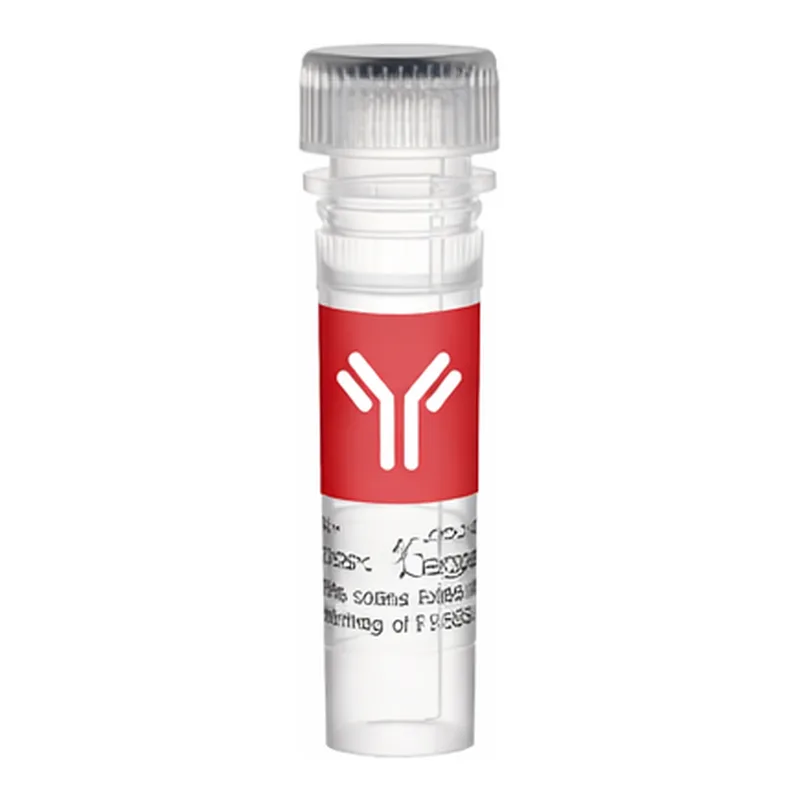
Thermo Fisher Scientific VDR Polyclonal Antibody
비타민 D 수용체(VDR)를 검출하는 Rabbit Polyclonal 항체로, Western blot, IP, Gel Shift 등 다양한 응용에 사용 가능. Human, Mouse, Rat 시료에 반응하며, 합성 펩타이드(aa 395-413)를 면역원으로 사용. 연구용으로만 사용 가능.
- 카탈로그번호
- PA1711
- 판매단위
- pk
카탈로그
1개 옵션 · 카탈로그 번호를 클릭하면 복사됩니다Thermo Fisher Scientific · Thermo Fisher Scientific VDR Polyclonal Antibody
Applications and Tested Dilution
| Application | Tested Dilution | Publications |
|---|---|---|
| Western Blot (WB) | 1:100 | View 2 publications |
| Immunohistochemistry (IHC) | - | View 2 publications |
| Immunoprecipitation (IP) | Assay-dependent | View references |
| Immunomicroscopy (IM) | - | View 1 publication |
| Gel Shift (GS) | Assay-dependent | View references |
Product Specifications
| Specification | Description |
|---|---|
| Species Reactivity | Chicken, Human, Mouse, Rat |
| Published Species | Avian, Human, Mouse |
| Host / Isotype | Rabbit / IgG |
| Class | Polyclonal |
| Type | Antibody |
| Immunogen | Synthetic Peptide: E(395)EHSKQYRCLS FQPECSMK(413) |
| Conjugate | Unconjugated |
| Form | Liquid |
| Concentration | Not determined |
| Storage Buffer | Whole serum |
| Contains | 0.05% sodium azide |
| Storage Conditions | -20°C, avoid freeze/thaw cycles |
| Shipping Conditions | Wet ice |
| RRID | AB_2212362 |
Product Specific Information
PA1-711 detects vitamin D receptor (VDR) from human, mouse, and rat tissues.
It has been successfully used in Western blot, immunoprecipitation, and gel shift assays.
By Western blot, this antibody detects an approximately 53 kDa protein representing VDR in COS-7 cells transfected with the human gene.
PA1-711 supershifts DNA fragments that contain VDR response elements (e.g., rat osteocalcin and mouse osteopontin upstream elements).
The immunizing peptide corresponds to amino acid residues 395–413 from human VDR.
Recombinant human VDR (Cat. # RP-710) and human RXR beta (Cat. # RP-812) proteins can be purchased separately for control experiments in Western blot, immunoprecipitation, and gel shift assays.
Target Information
Steroid receptors are ligand-dependent intracellular proteins that stimulate transcription of specific genes by binding to DNA sequences following activation by the appropriate hormone.
The 1,25-dihydroxy-vitamin D3 receptor (VDR) belongs to the superfamily of steroid hormone receptors, which includes estrogen, progesterone, glucocorticoid, androgen, and thyroid hormone receptors.
Vitamin D modulates calcium and phosphorus homeostasis, bone remodeling, cell growth regulation, and differentiation.
VDR has been found in the intestine, bone, kidney, epidermis, and cells of the endocrine immune system.
Repression of T-cell proliferation and interleukin-2 (IL-2) gene expression occurs when VDR binds within the IL-2 enhancer.
Formation of VDR/retinoic X receptor (RXR) heterodimers in the presence of intracellular 1,25(OH)2D3 interferes with assembly of NFATp/Fos/Jun/DNA complex and subsequent IL-2 gene transcription.
The corresponding gene for the vitamin D receptor is NR1I1.
For Research Use Only. Not for use in diagnostic procedures. Not for resale without express authorization.
Thermo Fisher Scientific 상품 둘러보기
전체보기
문의
0개 · 배송·재고 문의는 실시간 상담이 빠릅니다아직 등록된 문의가 없어요.