

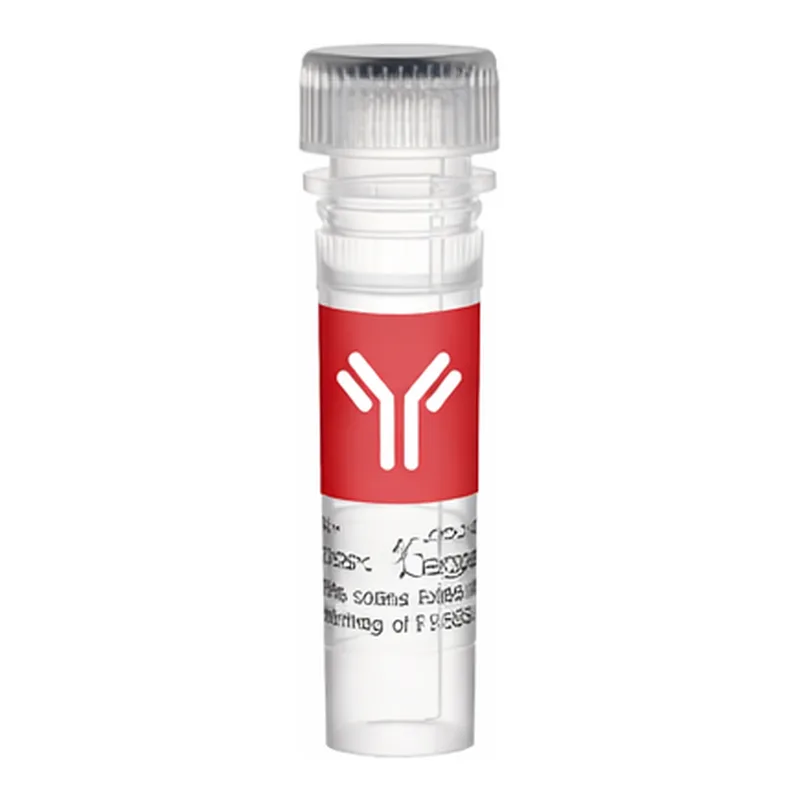
Thermo Fisher Scientific NPY Polyclonal Antibody
Rabbit polyclonal antibody targeting Neuropeptide Y (NPY); validated for IHC and IHC-P applications. Human reactive, predicted cross-reactivity with multiple species. High purity via antigen affinity chromatography. Supplied in PBS with BSA and sodium ...
- 판매단위
- pk
카탈로그
1개 옵션 · 카탈로그 번호를 클릭하면 복사됩니다Thermo Fisher Scientific · Thermo Fisher Scientific NPY Polyclonal Antibody
Applications
Immunohistochemistry (IHC)
- Tested Dilution: Not specified
- View 2 publications
Immunohistochemistry (Paraffin) (IHC-P)
- Tested Dilution: 1:1,000–1:2,000
- View publications
Product Specifications
| 항목 | 내용 |
|---|---|
| Species Reactivity | Human |
| Published Species | Mouse |
| Host / Isotype | Rabbit / IgG |
| Class | Polyclonal |
| Type | Antibody |
| Immunogen | Synthetic peptide conjugated to KLH derived from within residues 1 to the C-terminus of Pig Neuropeptide Y |
| Conjugate | Unconjugated |
| Form | Liquid |
| Concentration | 0.9 mg/mL |
| Purification | Antigen affinity chromatography |
| Storage Buffer | PBS, pH 7.4, with 1% BSA |
| Contains | 0.02% sodium azide |
| Storage Conditions | Store at 4°C short term. For long term storage, store at -20°C, avoiding freeze/thaw cycles. |
| Shipping Conditions | Ambient (domestic); Wet ice (international) |
| RRID | AB_10987237 |
Product Specific Information
- Heat-mediated antigen retrieval recommended prior to tissue staining.
- Predicted to react with sheep, rabbit, chicken, guinea pig, cow, pigeon, pig, zebrafish, and rhesus monkey based on sequence homology.
Target Information
This gene encodes a neuropeptide that is widely expressed in the central nervous system and influences many physiological processes, including cortical excitability, stress response, food intake, circadian rhythms, and cardiovascular function. The neuropeptide functions through G protein-coupled receptors to inhibit adenylyl cyclase, activate mitogen-activated protein kinase, regulate intracellular calcium levels, and activate potassium channels. A polymorphism in this gene resulting in a change of leucine 7 to proline in the signal peptide is associated with elevated cholesterol levels, higher alcohol consumption, and may be a risk factor for various metabolic and cardiovascular diseases.
For Research Use Only. Not for use in diagnostic procedures. Not for resale without express authorization.
Thermo Fisher Scientific 상품 둘러보기
전체보기
문의
0개 · 배송·재고 문의는 실시간 상담이 빠릅니다아직 등록된 문의가 없어요.