

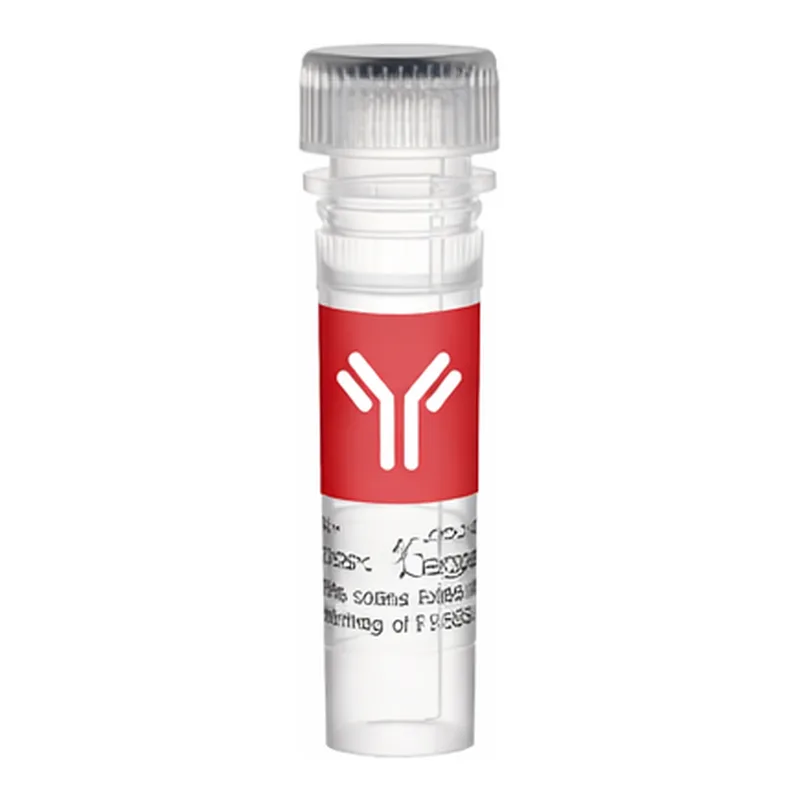
Thermo Fisher Scientific H3K9ac Monoclonal Antibody (GT464)
H3K9ac 단백질을 인식하는 Mouse monoclonal antibody로, Western blot 및 Immunocytochemistry에 적합. Human에 반응하며, 예측 반응종은 Mouse와 Chimpanzee. Protein G로 정제된 1 mg/mL 액상 형태로, PBS buffer에 보존. 연구용으로만 사용 가능.
- 판매단위
- pk
카탈로그
1개 옵션 · 카탈로그 번호를 클릭하면 복사됩니다Thermo Fisher Scientific · Thermo Fisher Scientific H3K9ac Monoclonal Antibody (GT464)
Applications
| Application | Tested Dilution |
|---|---|
| Western Blot (WB) | 1:1,000–1:10,000 |
| Immunocytochemistry (ICC/IF) | 1:100–1:1,000 |
Product Specifications
| 항목 | 내용 |
|---|---|
| Species Reactivity | Human |
| Host / Isotype | Mouse / IgG1 |
| Class | Monoclonal |
| Type | Antibody |
| Clone | GT464 |
| Immunogen | Carrier-protein conjugated synthetic peptide encompassing a sequence within the N-terminus region of human Histone H3K9ac (acetyl Lys9). |
| Conjugate | Unconjugated |
| Form | Liquid |
| Concentration | 1 mg/mL |
| Purification | Protein G |
| Storage Buffer | PBS |
| Contains | No preservative |
| Storage Conditions | Store at 4°C short term. For long term storage, store at -20°C, avoiding freeze/thaw cycles. |
| Shipping Conditions | Ambient (domestic); Wet ice (international) |
| RRID | AB_2787143 |
Product Specific Information
- Keep as concentrated solution.
- Predicted reactivity: Mouse (100%), Chimpanzee (100%).
- Positive Control: HeLa (0.012% DMSO treatment for 18 hr), HeLa (0.4 µM Tricostatin A (TSA) treatment for 18 hr).
- Store product as a concentrated solution. Centrifuge briefly prior to opening the vial.
Target Information
Histone H3 is one of the DNA-binding proteins found in the chromatin of all eukaryotic cells. H3, along with four core histone proteins, binds to DNA forming the structure of the nucleosome. Histones play a central role in transcription regulation, DNA repair, DNA replication, and chromosomal stability. Post-translationally, histones are modified in various ways to either directly change chromatin structure or allow for the binding of specific transcription factors.
The N-terminal tail of histone H3 protrudes from the globular nucleosome core and can undergo several different types of post-translational modification that influence cellular processes. These modifications include methylation or acetylation of lysine and arginine residues and phosphorylation of serine or threonine.
For Research Use Only. Not for use in diagnostic procedures. Not for resale without express authorization.
Thermo Fisher Scientific 상품 둘러보기
전체보기
문의
0개 · 배송·재고 문의는 실시간 상담이 빠릅니다아직 등록된 문의가 없어요.