

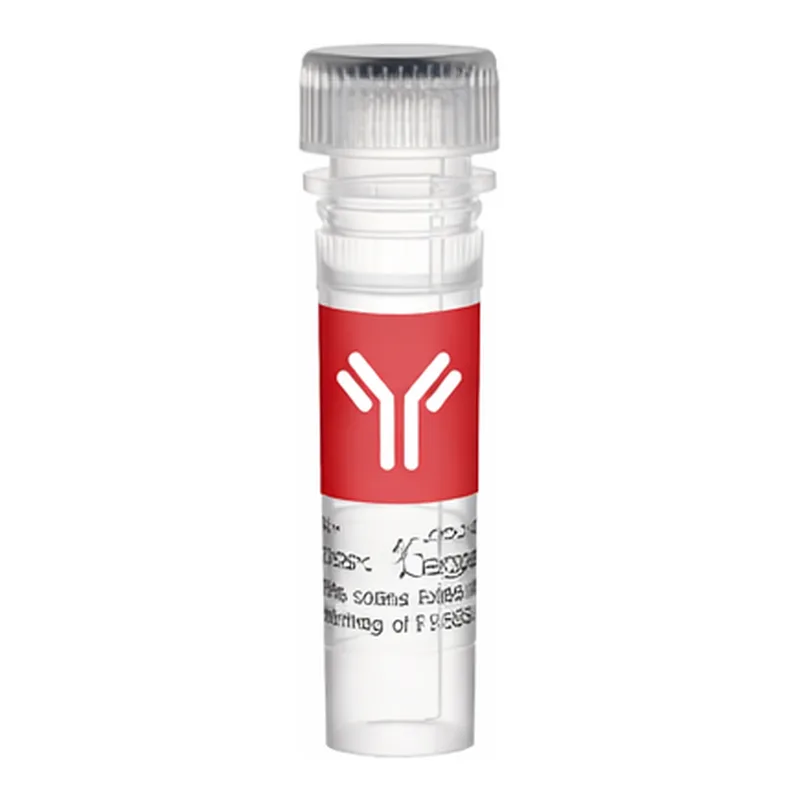
Thermo Fisher Scientific CD281 (TLR1) Monoclonal Antibody (GD2.F4), eBioscience
인간 TLR1을 인식하는 GD2.F4 단클론 항체로, Flow cytometry 및 IHC에 적합합니다. 높은 순도(>90%)와 낮은 응집도(<10%)를 가지며, PBS 완충액에 보관됩니다. 선천면역 연구 및 TLR 신호전달 연구에 활용 가능합니다.
- 판매단위
- pk
카탈로그
2개 옵션 · 카탈로그 번호를 클릭하면 복사됩니다Thermo Fisher Scientific · Thermo Fisher Scientific CD281 (TLR1) Monoclonal Antibody (GD2.F4), eBioscience
Applications and Tested Dilution
| Application | Tested Dilution | Publications |
|---|---|---|
| Immunohistochemistry (IHC) | Assay-Dependent | - |
| Flow Cytometry (Flow) | 1 µg/test | 2 publications |
| Immunoprecipitation (IP) | - | 1 publication |
| Neutralization (Neu) | - | 1 publication |
| Inhibition Assays (IA) | - | 1 publication |
Product Specifications
| 항목 | 내용 |
|---|---|
| Species Reactivity | Human |
| Published Species | Human |
| Host / Isotype | Mouse / IgG1, kappa |
| Class | Monoclonal |
| Type | Antibody |
| Clone | GD2.F4 |
| Conjugate | Unconjugated |
| Form | Liquid |
| Concentration | 0.5 mg/mL |
| Purification | Affinity chromatography |
| Storage Buffer | PBS, pH 7.2 |
| Contains | 0.09% sodium azide |
| Storage Conditions | 4°C |
| Shipping Conditions | Ambient (domestic); Wet ice (international) |
| RRID | AB_468597 |
Additional Formats:
- Functional Grade (Cat. No. 16-9911-82)
- PE Conjugate (Cat. No. 12-9911-42)
- Custom conjugation available upon request
Product Specific Information
The GD2.F4 antibody reacts with human Toll-like receptor 1 (TLR1). TLR1 is expressed in low numbers on peripheral blood monocytes and even lower on dendritic cells, with high donor variability. eBioscience validated the GD2.F4 mAb by flow cytometry using healthy donor cells, showing low TLR1 expression (less than 1/4 log shift).
Although the ligand and exact function of TLR1 are not fully defined, it is suggested to cooperate with TLR2 in response to certain agonists. Despite low surface expression, TLRs are effective signal transducers in monocytes and dendritic cells. The Toll family includes at least ten human members, characterized by leucine-rich repeats in the extracellular domain and a cytoplasmic IL-1 receptor homology domain. TLR2 and TLR4 are known pattern recognition receptors involved in innate immunity and inflammation.
Applications Reported:
GD2.F4 antibody is reported for flow cytometric and immunohistochemical use. No data reported for IP, WB, or inhibition assays.
Applications Tested:
Validated by flow cytometry using normal human peripheral blood cells. Recommended ≤1 µg/test (100 µL final volume). Cell number should be empirically determined (10⁵–10⁸ cells/test). Optimize antibody titration for best results.
Purity: >90% by SDS-PAGE
Aggregation: <10% by HPLC
Filtration: 0.2 µm post-manufacturing filtered
Target Information
TLR1 is a member of the Toll-like receptor family, essential for pathogen recognition and activation of innate immunity. TLRs recognize pathogen-associated molecular patterns (PAMPs) on infectious agents and mediate cytokine production for immune response. In mammals, TLRs are transmembrane proteins with leucine-rich repeats (extracellular) and IL-1 receptor motifs (cytoplasmic). TLR1 interacts with TLR2, enhancing NF-κB activation in response to synthetic lipopeptides and recognizing tri-acylated lipoproteins. Alternative splicing and polyadenylation generate multiple TLR1 transcript variants.
For Research Use Only. Not for use in diagnostic procedures. Not for resale without authorization.
Thermo Fisher Scientific 상품 둘러보기
전체보기
문의
0개 · 배송·재고 문의는 실시간 상담이 빠릅니다아직 등록된 문의가 없어요.