

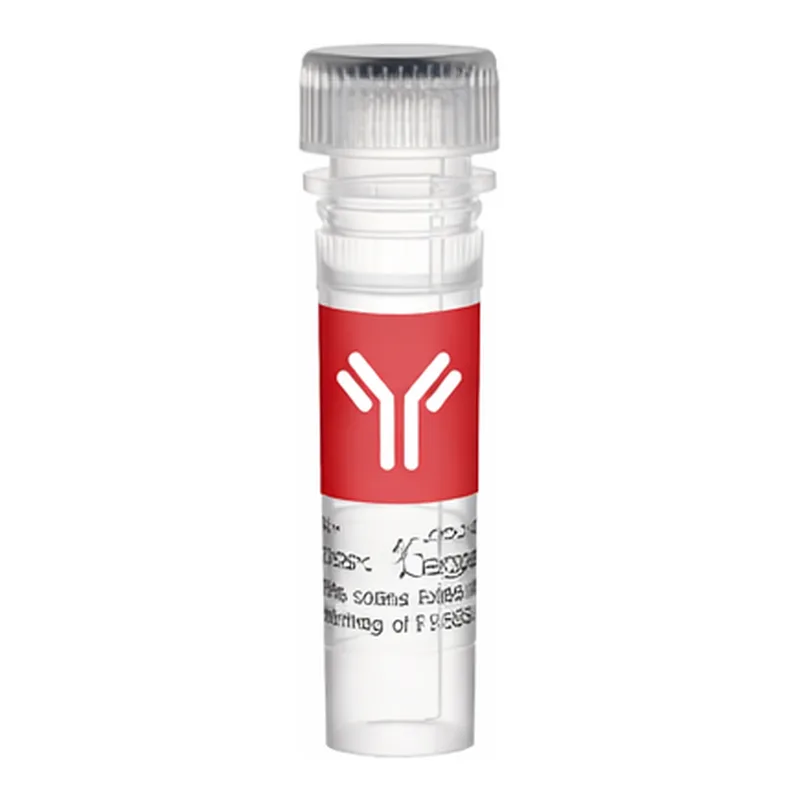
Thermo Fisher Scientific HDAC2 (near C-terminus) Polyclonal Antibody
HDAC2 단백질의 C-말단 부위를 인식하는 Rabbit Polyclonal 항체로, Human, Mouse, Rat, Primate에 반응합니다. Western blot, IHC, ELISA, IP에 사용 가능하며, 고순도 친화 크로마토그래피 정제 제품입니다. -20°C 보관, 방부제 무첨가.
- 판매단위
- pk
카탈로그
1개 옵션 · 카탈로그 번호를 클릭하면 복사됩니다Thermo Fisher Scientific · Thermo Fisher Scientific HDAC2 (near C-terminus) Polyclonal Antibody
Applications and Tested Dilutions
| Application | Tested Dilution |
|---|---|
| Western Blot (WB) | 1:2,000 |
| Immunohistochemistry (IHC) | 1:100–1:500 |
| ELISA | 1:20,000–1:60,000 |
| Immunoprecipitation (IP) | 1 µg/mL |
Product Specifications
| 항목 | 내용 |
|---|---|
| Species Reactivity | Human, Mouse, Non-human primate, Rat |
| Host / Isotype | Rabbit / IgG |
| Class | Polyclonal |
| Type | Antibody |
| Immunogen | HDAC2 affinity purified antibody was prepared from whole rabbit serum produced by repeated immunizations with a synthetic peptide corresponding to the near C-terminal region of human HDAC2. |
| Conjugate | Unconjugated |
| Form | Liquid |
| Concentration | 1 mg/mL |
| Purification | Affinity chromatography |
| Storage Buffer | 0.02M potassium phosphate, pH 7.2, with 30% glycerol, 0.15M NaCl |
| Contains | No preservative |
| Storage Conditions | -20°C, Avoid Freeze/Thaw Cycles |
| Shipping Conditions | Ambient (domestic); Wet ice (international) |
Product Specific Information
Store vial at -20°C prior to opening. Aliquot contents and freeze at -20°C or below for extended storage. Avoid cycles of freezing and thawing. Centrifuge product if not completely clear after standing at room temperature. This product is stable for several weeks at 4°C as an undiluted liquid. Dilute only prior to immediate use.
This antibody is specific towards HDAC2. A BLAST analysis was used to suggest cross-reactivity with Human, Mouse, Rat, and Primate based on 100% sequence homology. Cross-reactivity with HDAC2 from other sources has not been determined.
Target Information
HDAC2 belongs to the histone deacetylase family. Histone deacetylases act via the formation of large multiprotein complexes and are responsible for the deacetylation of lysine residues at the N-terminal regions of core histones (H2A, H2B, H3, and H4). This protein forms transcriptional repressor complexes by associating with many different proteins, including YY1, a mammalian zinc-finger transcription factor. Thus, it plays an important role in transcriptional regulation, cell cycle progression, and developmental events. Alternative splicing results in multiple transcript variants.
For Research Use Only. Not for use in diagnostic procedures. Not for resale without express authorization.
Thermo Fisher Scientific 상품 둘러보기
전체보기
문의
0개 · 배송·재고 문의는 실시간 상담이 빠릅니다아직 등록된 문의가 없어요.