

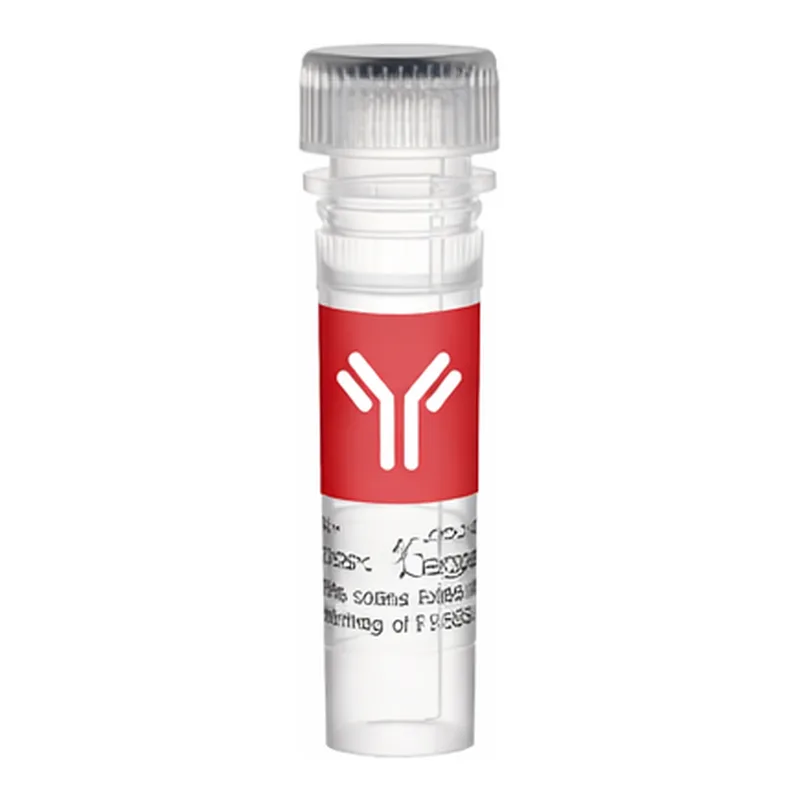
Thermo Fisher Scientific CD9 Monoclonal Antibody (eBioKMC8 (KMC8)), FITC, eBioscience
마우스 CD9 인식 단클론 항체로, FITC 형광 표지되어 Flow Cytometry에 최적화됨. 다양한 세포 유형에서 CD9 발현 연구에 활용 가능. 488 nm 여기, 520 nm 방출 특성. 4°C 암소 보관, 동결 금지.
- 판매단위
- pk
카탈로그
1개 옵션 · 카탈로그 번호를 클릭하면 복사됩니다Thermo Fisher Scientific · Thermo Fisher Scientific CD9 Monoclonal Antibody (eBioKMC8 (KMC8)), FITC, eBioscience
Applications and Tested Dilutions
| Application | Tested Dilution | Publications |
|---|---|---|
| Western Blot (WB) | - | 1 publication |
| Immunohistochemistry (IHC) | - | 1 publication |
| Immunocytochemistry (ICC/IF) | - | 2 publications |
| Flow Cytometry (Flow) | 1 µg/test | 10 publications |
| ELISA | - | 1 publication |
Product Specifications
| 항목 | 내용 |
|---|---|
| Species Reactivity | Mouse |
| Published Species | Human, Mouse |
| Host / Isotype | Rat / IgG2a, kappa |
| Recommended Isotype Control | Rat IgG2a kappa Isotype Control (eBR2a), FITC, eBioscience™ |
| Class | Monoclonal |
| Type | Antibody |
| Clone | eBioKMC8 (KMC8) |
| Conjugate | FITC |
| Excitation / Emission Max | 498 / 517 nm |
| Form | Liquid |
| Concentration | 0.5 mg/mL |
| Purification | Affinity chromatography |
| Storage Buffer | PBS, pH 7.2 |
| Contains | 0.09% sodium azide |
| Storage Conditions | 4°C, store in dark, DO NOT FREEZE |
| Shipping Conditions | Ambient (domestic); Wet ice (international) |
| RRID | AB_1210669 |
Additional Formats
- Unconjugated
- Alexa Fluor 700
- APC
- eFluor 450
- PE
- Super Bright 600
- Custom conjugation available
Product Specific Information
Description:
The eBioKMC8 monoclonal antibody reacts with mouse CD9, a 24 kDa member of the transmembrane 4 superfamily characterized by four hydrophobic domains spanning the cell membrane. CD9 is expressed by monocytes, macrophages, platelets, early B cells, activated B and T cells, dendritic cells, eosinophils, basophils, endothelial cells, myoblasts, and neuroblasts. On T cells, CD9 functions as a co-stimulatory molecule on naive T cells. CD9 is also expressed in oocytes, and deficiency results in sterility due to defective gamete fusion.
In mouse macrophages, CD9 associates with FcgammaRs to modify phagocytosis and inflammatory signaling. In B cells, CD9 marks marginal zone B cells, B1 cells, and plasma cells. In dendritic cells, CD9 facilitates association of heterologous MHC II molecules. Expression levels vary among donors.
Applications Reported: Flow cytometric analysis.
Applications Tested: Tested on mouse splenocytes and bone marrow cells. Recommended ≤1 µg/test (100 µL final volume; 10⁵–10⁸ cells/test). Antibody titration recommended for optimal performance.
Excitation: 488 nm
Emission: 520 nm
Laser: Blue Laser
Filtration: 0.2 µm post-manufacturing filtered.
Target Information
CD9 antigen is a glycoprotein expressed on developing B lymphocytes, platelets, monocytes, eosinophils, basophils, stimulated T lymphocytes, neurons, and glial cells. It belongs to the tetraspanin family, spanning the membrane four times. CD9 regulates cell activation and aggregation, possibly through association with integrins CD41/CD61 (GPIIb/GPIIIa).
It plays roles in cell motility, osteoclastogenesis, neurite outgrowth, myotube formation, and sperm-egg fusion. CD9 is essential for MHC II molecule association on dendritic cells, influencing T cell stimulation. It contributes to differentiation, adhesion, and signal transduction, and acts as a metastasis suppressor in solid tumors.
For Research Use Only. Not for use in diagnostic procedures. Not for resale without express authorization.
제품 이미지

Thermo Fisher Scientific 상품 둘러보기
전체보기

문의
0개 · 배송·재고 문의는 실시간 상담이 빠릅니다아직 등록된 문의가 없어요.