

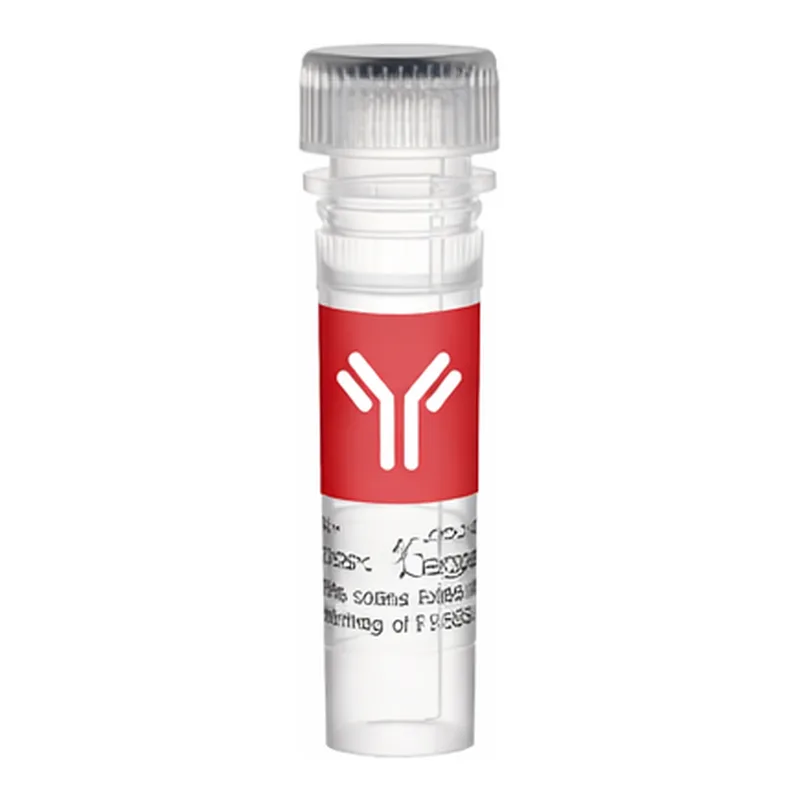
Thermo Fisher Scientific Caffeine Monoclonal Antibody (F1-P2B1G1)
카페인을 표적으로 하는 Thermo Fisher Scientific의 단클론 항체로 ELISA 및 RIA 분석에 적합. 화학 샘플에 반응하며 Protein A로 정제된 액상 형태. 냉장 보관 가능하며 장기 보관 시 -20°C에서 안정적 유지.
- 판매단위
- pk
카탈로그
1개 옵션 · 카탈로그 번호를 클릭하면 복사됩니다Thermo Fisher Scientific · Thermo Fisher Scientific Caffeine Monoclonal Antibody (F1-P2B1G1)
Thermo Fisher Scientific Caffeine Monoclonal Antibody (F1-P2B1G1)
Applications
- ELISA (ELISA): Assay-dependent
- Radioimmune Assays (RIA): Assay-dependent
Product Specifications
| 항목 | 내용 |
|---|---|
| Species Reactivity | Chemical |
| Host / Isotype | Mouse / IgG2b |
| Class | Monoclonal |
| Type | Antibody |
| Clone | F1-P2B1G1 |
| Immunogen | Caffeine-3-KLH |
| Conjugate | Unconjugated |
| Form | Liquid |
| Concentration | 5 mg/mL |
| Purification | Protein A |
| Storage Buffer | PBS, pH 7.4 |
| Contains | 0.09% sodium azide |
| Storage Conditions | Maintain refrigerated at 2–8°C for up to 6 months. For long-term storage store at -20°C |
| Shipping Conditions | Ambient (domestic); Wet ice (international) |
| RRID | AB_11152991 |
Product Specific Information
MIC0401 targets caffeine in ELISA and RIA applications and shows reactivity with chemical samples.
The MIC0401 immunogen is caffeine-3-KLH.
MIC0401 was formerly sold as a Seradyn product.
Target Information
Caffeine is a methylxanthine alkaloid found in seeds, nuts, or leaves of various plants native to South America and East Asia. It is structurally related to adenosine and acts primarily as an adenosine receptor antagonist with psychotropic and anti-inflammatory activities.
Upon ingestion, caffeine binds to adenosine receptors in the central nervous system (CNS), inhibiting adenosine binding and preventing downregulation of CNS activity. This stimulates medullary, vagal, vasomotor, and respiratory centers in the brain and promotes neurotransmitter release, further stimulating CNS activity.
The anti-inflammatory effects of caffeine result from nonselective competitive inhibition of phosphodiesterases (PDEs), increasing intracellular cyclic AMP (cAMP), activating protein kinase A, and inhibiting leukotriene synthesis, leading to reduced inflammation and innate immunity.
[National Center for Biotechnology Information. PubChem Compound Database; CID=2519]
For Research Use Only. Not for use in diagnostic procedures. Not for resale without express authorization.
Thermo Fisher Scientific 상품 둘러보기
전체보기
문의
0개 · 배송·재고 문의는 실시간 상담이 빠릅니다아직 등록된 문의가 없어요.