

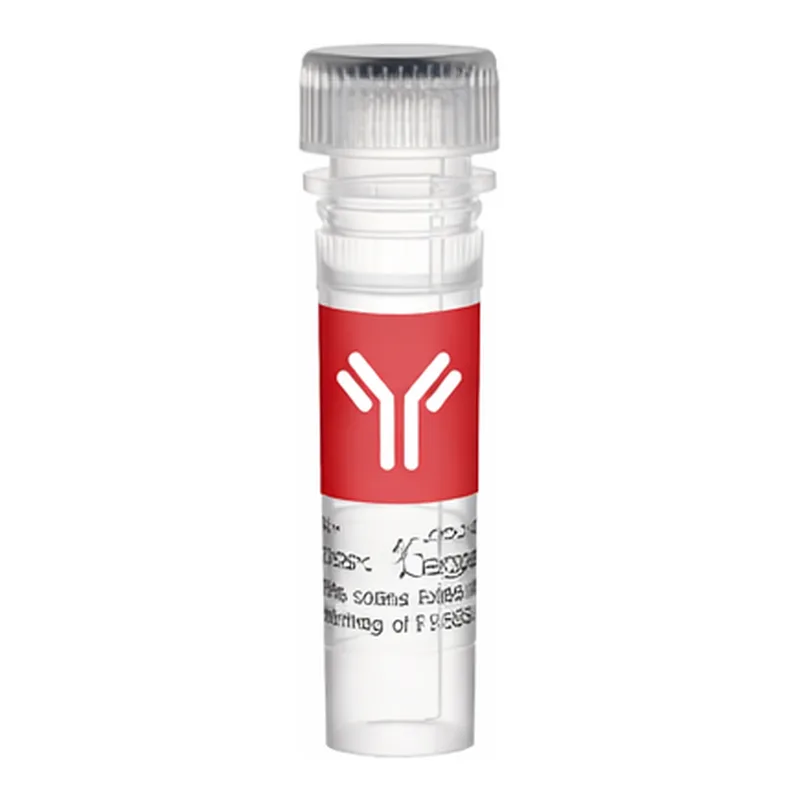
Thermo Fisher Scientific Acetylated Lysine Monoclonal Antibody (1C6)
히스톤 H3의 아세틸화된 라이신9 주변 합성 펩타이드로 제작된 마우스 모노클로날 항체. Western blot, ICC/IF, IP, ChIP 등 다양한 응용 가능. 인간, 마우스, 원숭이 시료에서 반응. 단백질 G 정제, 액상 형태, -20°C 보관.
- 판매단위
- pk
카탈로그
1개 옵션 · 카탈로그 번호를 클릭하면 복사됩니다Thermo Fisher Scientific · Thermo Fisher Scientific Acetylated Lysine Monoclonal Antibody (1C6)
Applications and Tested Dilution
| Application | Tested Dilution | Publications |
|---|---|---|
| Western Blot (WB) | 1:500–1:2,000 | View 7 publications |
| Immunocytochemistry (ICC/IF) | 1:100–1:500 | - |
| Immunoprecipitation (IP) | 3 µg | View 2 publications |
| ChIP assay (ChIP) | 10 µg | - |
| Peptide Array (Array) | Assay-dependent | - |
| Dot blot (DB) | Assay-dependent | - |
| Miscellaneous PubMed (Misc) | - | View 1 publication |
Product Specifications
| Specification | Description |
|---|---|
| Species Reactivity | Chemical |
| Published Species | Chemical, Human, Mouse |
| Host / Isotype | Mouse / IgG2b |
| Class | Monoclonal |
| Type | Antibody |
| Clone | 1C6 |
| Immunogen | Synthetic peptide sequence surrounding the acetylated lysine 9 of histone H3 |
| Conjugate | Unconjugated |
| Form | Liquid |
| Concentration | 1 mg/mL |
| Purification | Protein G |
| Storage Buffer | PBS with 1 mg/mL BSA |
| Contains | 0.05% sodium azide |
| Storage Conditions | -20°C, Avoid Freeze/Thaw Cycles |
| Shipping Conditions | Ambient (domestic); Wet ice (international) |
| RRID | AB_2257634 |
Product Specific Information
MA1-2021 detects human, mouse, and monkey acetylated lysine.
It has been successfully used in Western blot, immunoprecipitation, dot blot, ChIP assay, and immunofluorescence (cells).
In Western blot, this antibody may detect a ladder of acetylated proteins in HeLa cell lysate.
In immunofluorescence, MA1-2021 recognizes acetylated lysine in gamma-irradiated HeLa cells.
The immunogen is a synthetic peptide sequence surrounding the acetylated lysine 9 of histone H3.
Target Information
In the nucleus, DNA is tightly packed into nucleosomes, creating a repressive environment for transcription.
Acetylation of lysine residues in histones and non-histone proteins is an important mechanism for overcoming this repression.
This modification can lead to structural transitions and specific signaling within chromatin domains.
Bromodomain-mediated recognition of acetylated lysine serves as a regulatory mechanism in protein-protein interactions, chromatin remodeling, and transcriptional activation.
For Research Use Only.
Not for use in diagnostic procedures.
Not for resale without express authorization.
Thermo Fisher Scientific 상품 둘러보기
전체보기
문의
0개 · 배송·재고 문의는 실시간 상담이 빠릅니다아직 등록된 문의가 없어요.