

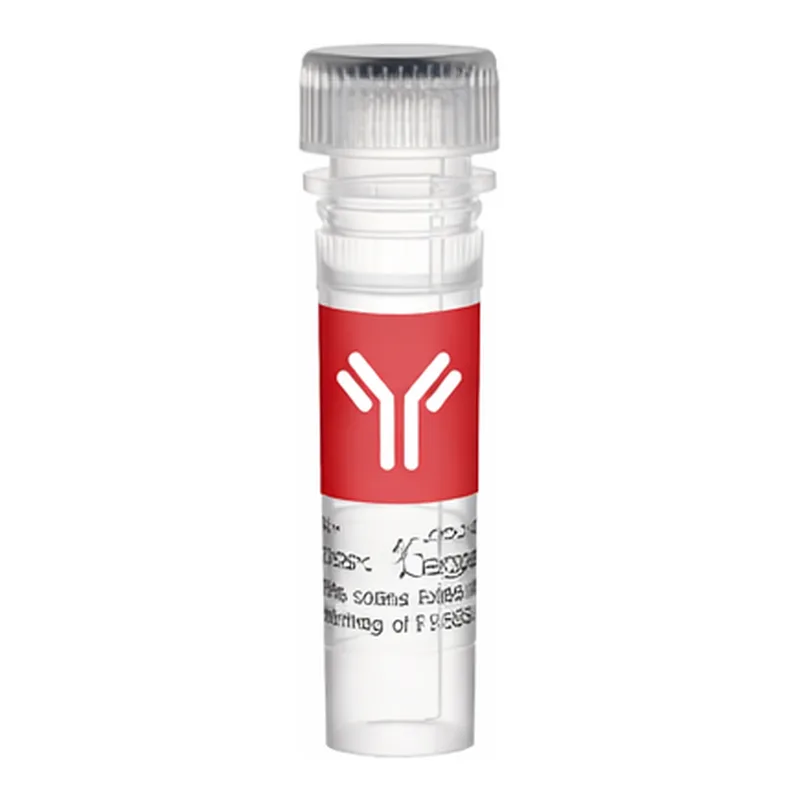
Thermo Fisher Scientific PSMA Polyclonal Antibody
Rabbit polyclonal antibody targeting human PSMA for IHC (paraffin) applications. Unconjugated liquid form with 0.1 mg/mL concentration. Recommended antigen retrieval using citrate buffer pH 6.0. Positive control: prostate carcinoma. For researc...
- 판매단위
- pk
카탈로그
1개 옵션 · 카탈로그 번호를 클릭하면 복사됩니다Thermo Fisher Scientific · Thermo Fisher Scientific PSMA Polyclonal Antibody
Applications
Immunohistochemistry (Paraffin) (IHC (P))
- Tested Dilution: 1:100
- Publications: [References not provided]
Product Specifications
| 항목 | 내용 |
|---|---|
| Host / Isotype | Rabbit / IgG |
| Class | Polyclonal |
| Type | Antibody |
| Immunogen | Synthetic peptide derived from C-terminus of human PSMA |
| Conjugate | Unconjugated |
| Form | Liquid |
| Concentration | 0.1 mg/mL |
| Storage Conditions | -20°C, Avoid Freeze/Thaw Cycles |
| Shipping Conditions | Ambient (domestic); Wet ice (international) |
| RRID | AB_2550033 |
Product Specific Information
Heat-mediated antigen retrieval is recommended prior to staining, using a 10 mM citrate buffer (pH 6.0) for 10 minutes followed by cooling at room temperature for 20 minutes.
Following antigen retrieval, incubate samples with primary antibody for 30 minutes at room temperature.
A suggested positive control is prostate carcinoma.
Target Information
This gene encodes a type II transmembrane glycoprotein belonging to the M28 peptidase family.
The protein acts as a glutamate carboxypeptidase on various substrates, including the nutrient folate and the neuropeptide N-acetyl-L-aspartyl-L-glutamate.
It is expressed in multiple tissues such as prostate, central and peripheral nervous system, and kidney.
Mutations may cause impaired intestinal absorption of dietary folates, leading to low blood folate levels and hyperhomocysteinemia.
Expression in the brain may be involved in pathological conditions associated with glutamate excitotoxicity.
In the prostate, the protein is up-regulated in cancerous cells and serves as an effective diagnostic and prognostic indicator of prostate cancer.
This gene likely originated from a duplication event of a nearby chromosomal region.
Alternative splicing produces multiple transcript variants encoding different isoforms.
For Research Use Only. Not for use in diagnostic procedures. Not for resale without express authorization.
Thermo Fisher Scientific 상품 둘러보기
전체보기
문의
0개 · 배송·재고 문의는 실시간 상담이 빠릅니다아직 등록된 문의가 없어요.