

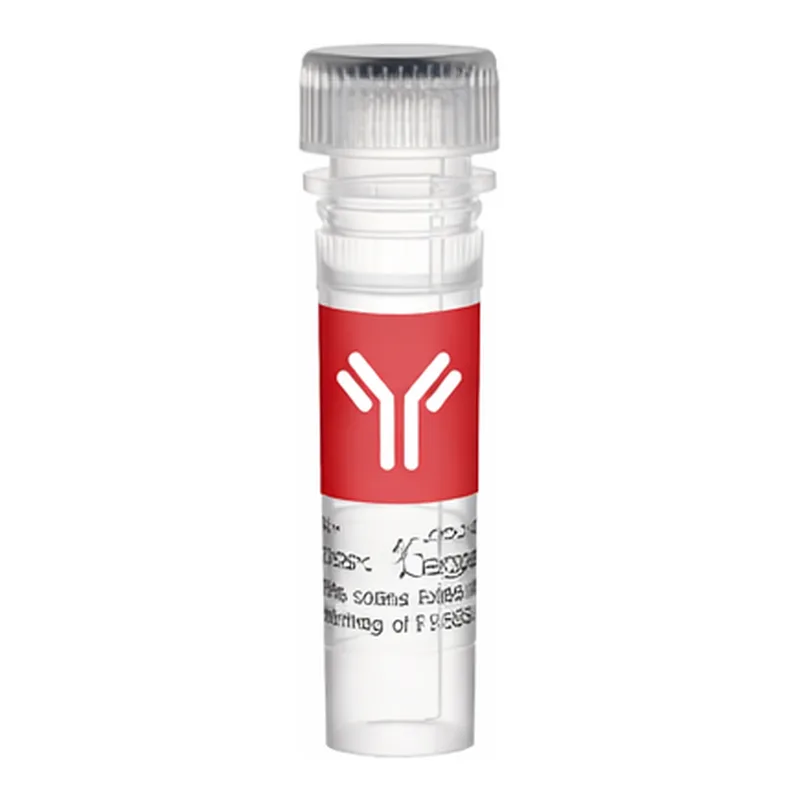
Thermo Fisher Scientific APLP1 Polyclonal Antibody
인간 APLP1 단백질을 인식하는 폴리클로날 항체로 Western blot, IHC, IP에 사용 가능. 항원 친화 크로마토그래피로 정제되었으며, 동결건조 형태로 제공. 인지질 단백질 발현 연구 및 신경 발달 관련 연구에 적합.
- 카탈로그번호
- PA548028
- 판매단위
- pk
카탈로그
1개 옵션 · 카탈로그 번호를 클릭하면 복사됩니다Thermo Fisher Scientific · Thermo Fisher Scientific APLP1 Polyclonal Antibody
Applications and Tested Dilutions
| Application | Tested Dilution |
|---|---|
| Western Blot (WB) | 0.1 µg/mL |
| Immunohistochemistry (Paraffin) (IHC (P)) | 0.3–15 µg/mL |
| Immunoprecipitation (IP) | 25 µg/mL |
Product Specifications
| 항목 | 내용 |
|---|---|
| Species Reactivity | Human |
| Host / Isotype | Goat / IgG |
| Class | Polyclonal |
| Type | Antibody |
| Immunogen | Mouse myeloma cell line NS0-derived recombinant human APLP-1 (Gln34–Glu580) |
| Conjugate | Unconjugated |
| Form | Lyophilized |
| Concentration | 0.2 mg/mL |
| Purification | Antigen affinity chromatography |
| Storage Buffer | PBS with 5% trehalose |
| Contains | No Preservative |
| Storage Conditions | -20°C, Avoid Freeze/Thaw Cycles |
| Shipping Conditions | Ambient (domestic); Wet ice (international) |
| RRID | AB_2608602 |
Product Specific Information
- In Western blots, approximately 15% cross-reactivity with recombinant mouse APLP-1 is observed.
- Reconstitute at 0.2 mg/mL in sterile PBS.
Target Information
This gene encodes a member of the highly conserved amyloid precursor protein gene family. The encoded protein is a membrane-associated glycoprotein that is cleaved by secretases in a manner similar to amyloid beta A4 precursor protein cleavage. This cleavage liberates an intracellular cytoplasmic fragment that may act as a transcriptional activator. The encoded protein may also play a role in synaptic maturation during cortical development. Alternatively spliced transcript variants encoding different isoforms have been described.
For Research Use Only. Not for use in diagnostic procedures. Not for resale without express authorization.
Thermo Fisher Scientific 상품 둘러보기
전체보기
문의
0개 · 배송·재고 문의는 실시간 상담이 빠릅니다아직 등록된 문의가 없어요.