

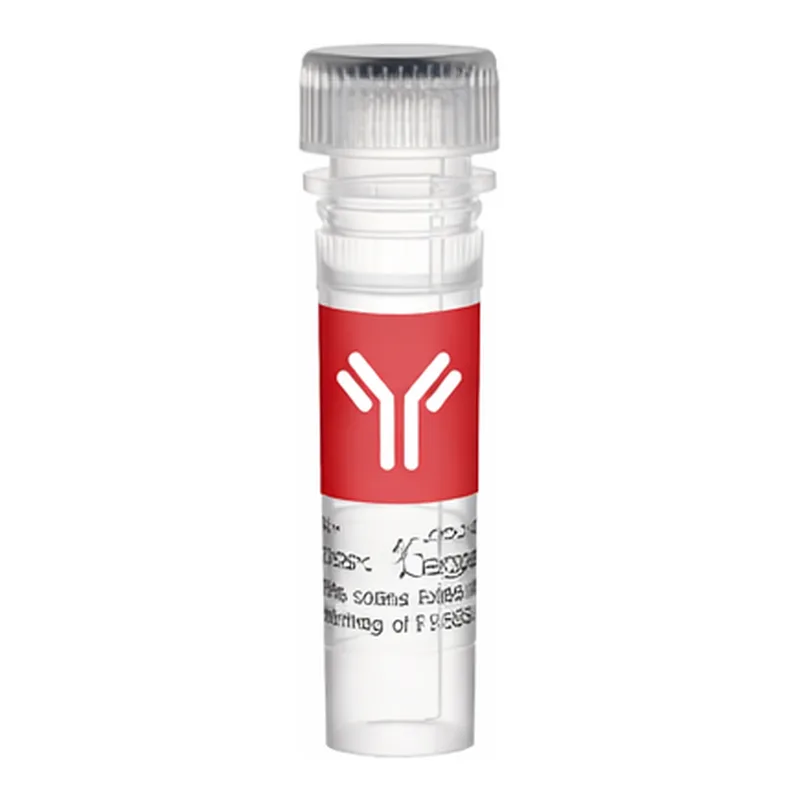
Thermo Fisher Scientific cAbl Polyclonal Antibody
Rabbit polyclonal antibody targeting human c-Abl (ABL1) protein. Validated for WB, IHC, ICC/IF, and IP applications. Recognizes residues 550–600 of ABL1. Supplied as liquid, unconjugated form at 0.2 mg/mL. For research use only.
- 카탈로그번호
- A301660Ax (2개 옵션)
- 판매단위
- pk
카탈로그
2개 옵션 · 카탈로그 번호를 클릭하면 복사됩니다Thermo Fisher Scientific · Thermo Fisher Scientific cAbl Polyclonal Antibody
Applications and Tested Dilutions
| Application | Tested Dilution |
|---|---|
| Western Blot (WB) | 1:2,000–1:10,000 |
| Immunohistochemistry (IHC) | 1:100–1:1,000 |
| Immunohistochemistry (Paraffin) (IHC-P) | 1:100–1:1,000 |
| Immunocytochemistry (ICC/IF) | 1:100–1:1,000 |
| Immunoprecipitation (IP) | 2–5 µg/mg lysate |
Product Specifications
| Property | Description |
|---|---|
| Host / Isotype | Rabbit / IgG |
| Class | Polyclonal |
| Type | Antibody |
| Immunogen | Region between residue 550 and 600 of human v-abl Abelson murine leukemia viral oncogene homolog 1 |
| Conjugate | Unconjugated |
| Form | Liquid |
| Concentration | 0.20 mg/mL |
| Storage Conditions | 4°C |
| Shipping Conditions | Wet ice |
Product Specific Information
The recommended shelf life for this product is 1 year from date of receipt.
Target Information
The ABL1 proto-oncogene encodes a cytoplasmic and nuclear protein tyrosine kinase involved in cell differentiation, division, adhesion, and stress response. Activity of c-Abl is negatively regulated by its SH3 domain; deletion of this domain can convert c-Abl into an oncogene. The DNA-binding activity of ABL1 is regulated by CDC2-mediated phosphorylation, suggesting a role in the cell cycle.
In chronic myelogenous leukemia (CML) and some acute lymphoblastic leukemias (ALL), the c-Abl gene undergoes a (9;22) chromosomal translocation, forming the Philadelphia chromosome, which fuses c-Abl sequences from chromosome 9 with the Bcr gene on chromosome 22. The c-Abl oncogene was first identified as the viral transforming gene of Abelson murine leukemia virus (A-MuLV). c-Abl may also regulate DNA repair by activating proapoptotic pathways when DNA damage is irreparable.
For Research Use Only. Not for use in diagnostic procedures. Not for resale without express authorization.
Thermo Fisher Scientific 상품 둘러보기
전체보기
문의
0개 · 배송·재고 문의는 실시간 상담이 빠릅니다아직 등록된 문의가 없어요.