

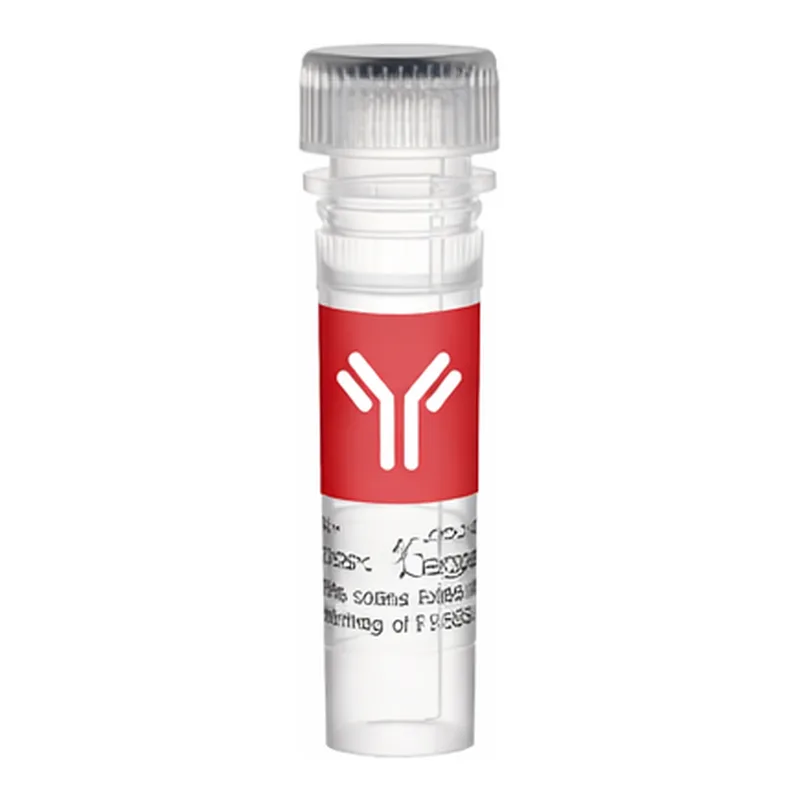
Thermo Fisher Scientific FPR3 Polyclonal Antibody
Rabbit polyclonal antibody specific to human FPR3 for IHC and ICC applications. Recognizes FPR family receptors involved in immune and inflammatory responses. Suitable for research use with high specificity and antigen affinity purified.
- 판매단위
- pk
카탈로그
1개 옵션 · 카탈로그 번호를 클릭하면 복사됩니다Thermo Fisher Scientific · Thermo Fisher Scientific FPR3 Polyclonal Antibody
Applications and Tested Dilution
| Application | Tested Dilution |
|---|---|
| Immunohistochemistry (Paraffin) (IHC-P) | 3 µg/mL |
| Immunocytochemistry (ICC/IF) | Assay-dependent |
Product Specifications
| Specification | Details |
|---|---|
| Species Reactivity | Human, Non-human primate |
| Host / Isotype | Rabbit / IgG |
| Class | Polyclonal |
| Type | Antibody |
| Immunogen | Synthetic 18 amino acid peptide from N-terminal extracellular domain of human FPR3 / FPRH2 |
| Conjugate | Unconjugated |
| Form | Liquid |
| Concentration | 1 mg/mL |
| Purification | Antigen affinity chromatography |
| Storage Buffer | PBS |
| Contains | 0.1% sodium azide |
| Storage Conditions | Store at 4°C short term. For long term storage, store at -20°C, avoiding freeze/thaw cycles. |
| Shipping Conditions | Ambient (domestic); Wet ice (international) |
| RRID | AB_2550921 |
Product Specific Information
Percent identity with other species by BLAST analysis:
Human, Chimpanzee, Gorilla, Monkey (100%); Orangutan (94%); Gibbon (89%).
Target Information
The N-formyl peptide receptor (FPR) family includes three members: FPR, FPR3 (also known as FPRL1, lipoxin A4 receptor, FPRH1, or FPR2), and FPR-like 2 (FPRL2). These are chemotactic G protein-coupled receptors with seven transmembrane domains, expressed on phagocytic leukocytes such as neutrophils and monocytes. Each receptor contains specific residues determining ligand specificity.
FPR3 is a promiscuous receptor binding several ligands including lipoxin A4, N-formyl-methionyl-leucyl-phenylalanine (fMLP), serum amyloid A (SAA), prion peptide, and the 42 amino acid form of beta amyloid. Upon activation, FPR3 induces migration and calcium mobilization in human monocytes and neutrophils, playing a role in inflammatory and host defense responses. FPR3 may mediate inflammation in prion and Alzheimer’s diseases, making it a potential target for therapeutic research.
For Research Use Only. Not for use in diagnostic procedures. Not for resale without express authorization.
Thermo Fisher Scientific 상품 둘러보기
전체보기
문의
0개 · 배송·재고 문의는 실시간 상담이 빠릅니다아직 등록된 문의가 없어요.