

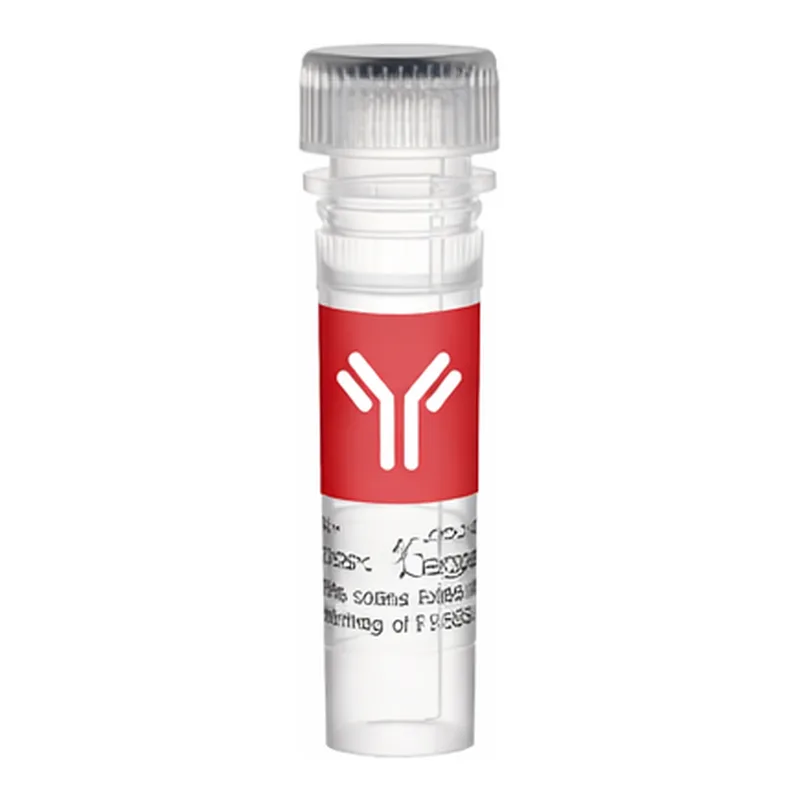
Thermo Fisher Scientific CD3e Monoclonal Antibody (145-2C11), FITC, eBioscience
마우스 CD3e 단백질을 인식하는 FITC 결합 단클론 항체로 T세포 표지 및 활성화 연구에 적합. Flow cytometry 및 IHC(F)에서 검증됨. 0.5 mg/mL 농도의 액상 형태로 제공되며 4°C 암소 보관. 다양한 형광체 포맷으로도 제공 가능.
- 판매단위
- pk
카탈로그
4개 옵션 · 카탈로그 번호를 클릭하면 복사됩니다Thermo Fisher Scientific · Thermo Fisher Scientific CD3e Monoclonal Antibody (145-2C11), FITC, eBioscience
Applications and Tested Dilutions
| Application | Tested Dilution | Publications |
|---|---|---|
| Western Blot (WB) | - | 2 |
| Immunohistochemistry (IHC) | - | 20 |
| Immunohistochemistry (Frozen) (IHC (F)) | 10 µg/mL | 3 |
| Immunocytochemistry (ICC/IF) | 10 µg/mL | 6 |
| Flow Cytometry (Flow) | 0.5 µg/test | 279 |
| Immunoprecipitation (IP) | - | 1 |
| Functional Assay | - | 2 |
| T-Cell Activation (TCA) | - | 6 |
| Miscellaneous (PubMed) | - | 1 |
Product Specifications
| 항목 | 내용 |
|---|---|
| Species Reactivity | Mouse |
| Published Species | Human, Mouse |
| Host / Isotype | Armenian hamster / IgG |
| Recommended Isotype Control | Armenian Hamster IgG Isotype Control (eBio299Arm), FITC, eBioscience™ |
| Class | Monoclonal |
| Type | Antibody |
| Clone | 145-2C11 |
| Conjugate | FITC |
| Excitation / Emission Max | 498 / 517 nm |
| Form | Liquid |
| Concentration | 0.5 mg/mL |
| Purification | Affinity chromatography |
| Storage Buffer | PBS, pH 7.2 |
| Contains | 0.09% sodium azide |
| Storage Conditions | 4°C, store in dark, DO NOT FREEZE |
| Shipping Conditions | Ambient (domestic); Wet ice (international) |
| RRID | AB_464881 |
Additional Available Formats
Unconjugated, Alexa Fluor 488, APC, APC-eFluor 780, Biotin, Brilliant UV 496/563/615/661/737, Brilliant Violet 421/480/605/650/711/786, eFluor 450, Functional Grade, NovaFluor Blue/Red/Yellow series, PE, PE-Cyanine5/5.5/7, PE-eFluor 610, PerCP-Cyanine5.5, Super Bright 436/600/780.
Custom conjugation available upon request.
Product Specific Information
The 145-2C11 monoclonal antibody reacts with mouse CD3e, a 20 kDa subunit of the TCR complex. The epsilon chain, along with gamma and delta subunits, is essential for assembly, trafficking, and surface expression of the TCR complex. CD3 is expressed by thymocytes and all mature T cells. Binding of 145-2C11 to TCR initiates intracellular signaling leading to activation, proliferation, or apoptosis depending on conditions.
Applications Reported: Flow cytometry and immunohistochemistry (frozen tissue).
Applications Tested:
- Flow cytometry: ≤0.5 µg/test (100 µL final volume, 10⁵–10⁸ cells/test).
- IHC (Frozen): ≤10 µg/mL.
Antibody should be titrated for optimal performance.
Excitation: 488 nm
Emission: 520 nm
Laser: Blue Laser
Filtration: 0.2 µm post-manufacturing filtered.
Target Information
The CD3 complex transduces antigen-recognition signals into T cells and regulates TCR surface expression. It comprises CD3 gamma, delta, epsilon, and zeta subunits, encoded by closely linked genes on human chromosome 11. These subunits contain cytoplasmic tails with tyrosine-based motifs that mediate signaling molecule interactions. CD3 is expressed on 68–82% of peripheral blood lymphocytes and 65–85% of thymocytes, but not on B or NK cells. Defects in CD3 genes are associated with immunodeficiency.
For Research Use Only. Not for use in diagnostic procedures. Not for resale without express authorization.
제품 이미지

Thermo Fisher Scientific 상품 둘러보기
전체보기
문의
0개 · 배송·재고 문의는 실시간 상담이 빠릅니다아직 등록된 문의가 없어요.