

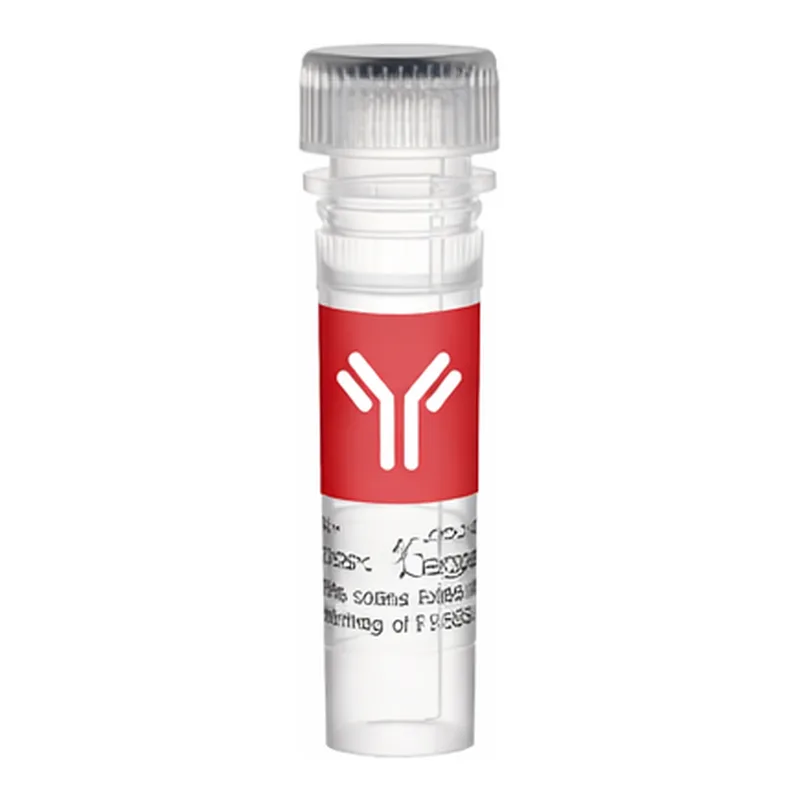
Thermo Fisher Scientific Phospho-Tau (Ser396) Polyclonal Antibody
Rabbit polyclonal antibody targeting phosphorylated Tau (Ser396) for detection in neurodegenerative disease research. Validated for WB and ELISA. Lyophilized, unconjugated form. Ideal for studies on Alzheimer’s disease-related tau phosphorylation.
- 판매단위
- pk
카탈로그
1개 옵션 · 카탈로그 번호를 클릭하면 복사됩니다Thermo Fisher Scientific · Thermo Fisher Scientific Phospho-Tau (Ser396) Polyclonal Antibody
Applications
| Application | Tested Dilution |
|---|---|
| Western Blot (WB) | 0.5–1 µg/mL |
| ELISA | 0.05–0.2 µg/mL |
| Miscellaneous (PubMed) | – |
Product Specifications
| Property | Description |
|---|---|
| Published Species | Not Applicable |
| Host / Isotype | Rabbit / IgG |
| Class | Polyclonal |
| Type | Antibody |
| Immunogen | KLH-coupled synthetic peptide corresponding to residues surrounding serine 396 of human tau |
| Conjugate | Unconjugated |
| Form | Lyophilized |
| Storage Conditions | –20°C or –80°C if preferred |
| Shipping Conditions | Wet ice |
Product Specific Information
Reconstitute the lyophilized powder with deionized water (or equivalent) to an antibody concentration of 0.5 mg/mL.
Tau is a microtubule-associated phosphoprotein (MAP) localized in neuronal axons. It promotes tubulin polymerization and stabilizes microtubules. Tau proteins constitute a family of six isoforms, ranging from 352 to 441 amino acids. The tau variants differ with the presence of either three or four repeat regions near the carboxy-terminal and one or two inserts near the amino-terminal.
Tau is hyperphosphorylated by ERK, GSK-3β, TPKII, and CDK5. At least thirty phosphorylation sites have been described, including Ser396, which is one of the major abnormal phosphorylation sites of tau. Phosphorylation at these sites reduces tau’s ability to promote microtubule self-assembly. Hyperphosphorylated tau is the major protein found in paired helical filaments (PHFs), forming the neurofibrillary tangles characteristic of Alzheimer’s disease (AD) and other CNS disorders.
Target Information
Tau is a neuronal microtubule-associated protein found predominantly on axons. It promotes tubulin polymerization and stabilizes microtubules. The C-terminus binds axonal microtubules while the N-terminus binds neural plasma membrane components, functioning as a linker between both structures.
Axonal polarity is influenced by TAU/MAPT localization in the neuronal cell body domain defined by the centrosome. Short isoforms provide cytoskeletal plasticity, while longer isoforms contribute to stabilization.
In its hyperphosphorylated form, Tau is the major component of paired helical filaments (PHF), the building blocks of neurofibrillary lesions in Alzheimer’s disease brains. Hyperphosphorylation impairs Tau’s microtubule-binding function, leading to destabilization and neuronal degeneration.
Numerous kinases phosphorylate Tau, including GSK-3β, PKA, CDK5, and casein kinase II. Hyperphosphorylated Tau is observed in neurofibrillary lesions of Alzheimer’s disease, Pick’s disease, frontotemporal dementia, corticobasal degeneration, and progressive supranuclear palsy.
For Research Use Only. Not for use in diagnostic procedures. Not for resale without express authorization.
Thermo Fisher Scientific 상품 둘러보기
전체보기
문의
0개 · 배송·재고 문의는 실시간 상담이 빠릅니다아직 등록된 문의가 없어요.