

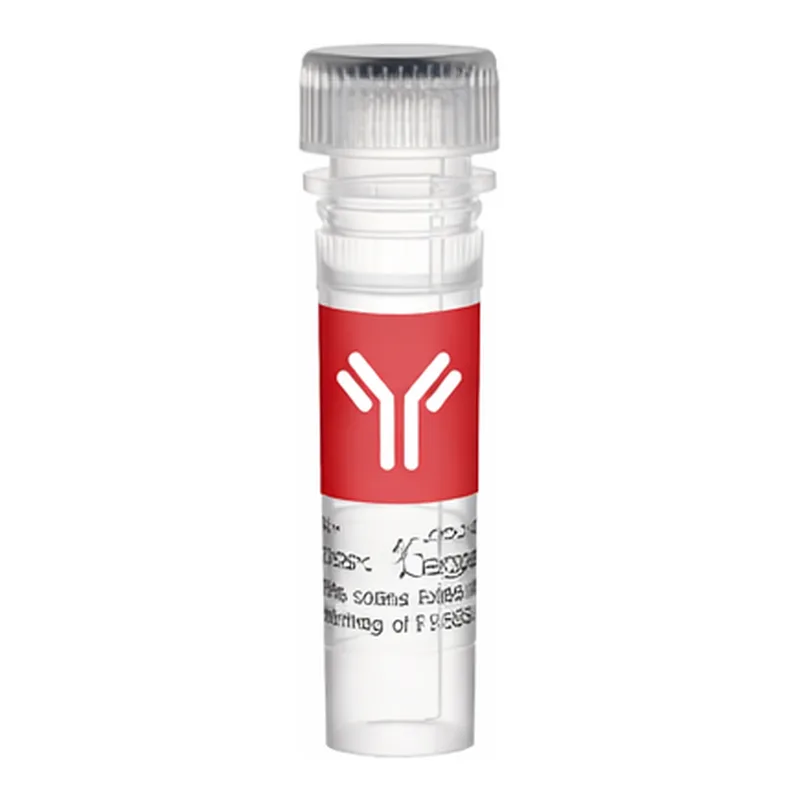
Thermo Fisher Scientific EpCAM (CD326) Chimeric Recombinant Rabbit Monoclonal Antibody (KS1/4)
EpCAM(CD326)을 표적하는 키메라 재조합 토끼 단클론 항체로, 인간 시료에 반응합니다. Western blot, ICC/IF, Flow cytometry 등 다양한 응용에 적합합니다. Protein A로 정제된 액상 항체로 1 mg/mL 농도이며, EpCAM 발현 연구용으로 사용됩니다.
- 판매단위
- pk
카탈로그
1개 옵션 · 카탈로그 번호를 클릭하면 복사됩니다Thermo Fisher Scientific · Thermo Fisher Scientific EpCAM (CD326) Chimeric Recombinant Rabbit Monoclonal Antibody (KS1/4)
Applications and Tested Dilutions
| Application | Tested Dilution | Publications |
|---|---|---|
| Western Blot (WB) | 2 µg/mL | - |
| Immunocytochemistry (ICC/IF) | 1:100 | - |
| Flow Cytometry (Flow) | 1:100 | - |
| ELISA | Assay-dependent | - |
| Immunostaining (IS) | Assay-dependent | - |
Product Specifications
| 항목 | 내용 |
|---|---|
| Species Reactivity | Human |
| Host / Isotype | Rabbit / IgG, kappa |
| Expression System | HEK293 cells |
| Class | Recombinant Monoclonal |
| Type | Antibody |
| Clone | KS1/4 |
| Immunogen | The original antibody was generated by immunizing BALB/c mice with human adenocarcinoma of the lung cell line UCLA P3. |
| Conjugate | Unconjugated |
| Form | Liquid |
| Concentration | 1 mg/mL |
| Purification | Protein A |
| Storage Buffer | PBS |
| Contains | 0.02% ProClin 300 |
| Storage Conditions | Store at 4°C short term. For long term storage, store at -20°C, avoiding freeze/thaw cycles. |
| Shipping Conditions | Wet ice |
| RRID | AB_3074760 |
Product Specific Information
Specificity:
This antibody binds to the EpCAM receptor, which is expressed on the surface of adenocarcinomas and on almost all epithelial cell membranes, except mesodermal and neural cell membranes.
Target Information
Ep-CAM (epithelial adhesion molecule, epithelial specific antigen, ESA) is a transmembrane glycoprotein expressed in the epithelium with a molecular weight of approximately 40 kDa. It functions as an epithelial cell adhesion molecule and mediates Ca²⁺-independent homotypic interactions.
Ep-CAM plays a role in regulating cell cycle, proliferation, and metabolism of epithelial cells and fibroblasts by inducing the proto-oncogene c-myc and cell cycle regulatory genes cyclin A and cyclin E.
Formation of Ep-CAM-mediated adhesions negatively regulates cadherin-mediated adhesions, influencing epithelial differentiation and growth. Overexpression of Ep-CAM is associated with enhanced epithelial proliferation and is highly expressed in human carcinomas, serving as a marker for tumors of epithelial origin. It is typically localized on the basolateral surface of simple epithelia and many carcinoma types, and can distinguish adenocarcinomas from pleural mesotheliomas.
For Research Use Only. Not for use in diagnostic procedures. Not for resale without express authorization.
Thermo Fisher Scientific 상품 둘러보기
전체보기
문의
0개 · 배송·재고 문의는 실시간 상담이 빠릅니다아직 등록된 문의가 없어요.