

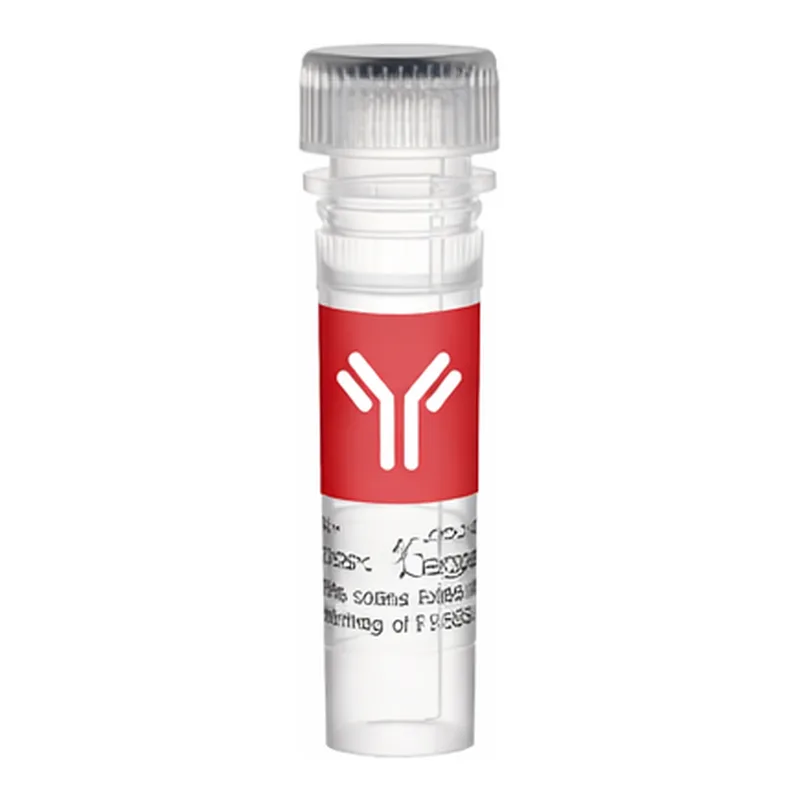
Thermo Fisher Scientific Aldolase A Polyclonal Antibody
Aldolase A 단백질을 인식하는 Thermo Fisher Scientific의 염소 유래 폴리클로날 항체입니다. Western blot에 적합하며 인간, 마우스, 랫트 시료에서 반응합니다. 고순도 정제 및 안정적 액상 형태로 제공되어 연구용으로 최적화되어 있습니다.
- 카탈로그번호
- PA5143150
- 판매단위
- pk
카탈로그
1개 옵션 · 카탈로그 번호를 클릭하면 복사됩니다Thermo Fisher Scientific · Thermo Fisher Scientific Aldolase A Polyclonal Antibody
Applications
Western Blot (WB)
- Tested Dilution: 0.03–0.1 µg/mL
Product Specifications
| 항목 | 내용 |
|---|---|
| Species Reactivity | Human, Mouse, Rat |
| Host / Isotype | Goat / IgG |
| Class | Polyclonal |
| Type | Antibody |
| Immunogen | Peptide with sequence C-QKADDGRPFPQ |
| Conjugate | Unconjugated |
| Form | Liquid |
| Concentration | 0.5 mg/mL |
| Purification | Ammonium sulfate precipitation |
| Storage Buffer | TBS, pH 7.3, with 0.5% BSA |
| Contains | 0.02% sodium azide |
| Storage Conditions | -20°C, Avoid Freeze/Thaw Cycles |
| Shipping Conditions | Wet ice |
| RRID | AB_2933789 |
Product Specific Information
- This antibody is expected to recognize both reported isoforms (P_000025.1; NP_001230106.1).
- Tested in Peptide ELISA: antibody detection limit dilution 1:128,000.
Target Information
Aldolase encodes a member of the class I fructose-bisphosphate aldolase protein family.
The encoded protein is a glycolytic enzyme that catalyzes the reversible conversion of fructose-1,6-bisphosphate to glyceraldehyde 3-phosphate and dihydroxyacetone phosphate.
Three aldolase isozymes (A, B, and C), encoded by three different genes, are differentially expressed during development.
Mutations in this gene have been associated with Glycogen Storage Disease XII, an autosomal recessive disorder associated with hemolytic anemia.
Disruption of this gene also plays a role in the progression of multiple types of cancers.
Related pseudogenes have been identified on chromosomes 3 and 10.
For Research Use Only. Not for use in diagnostic procedures. Not for resale without express authorization.
Thermo Fisher Scientific 상품 둘러보기
전체보기
문의
0개 · 배송·재고 문의는 실시간 상담이 빠릅니다아직 등록된 문의가 없어요.