

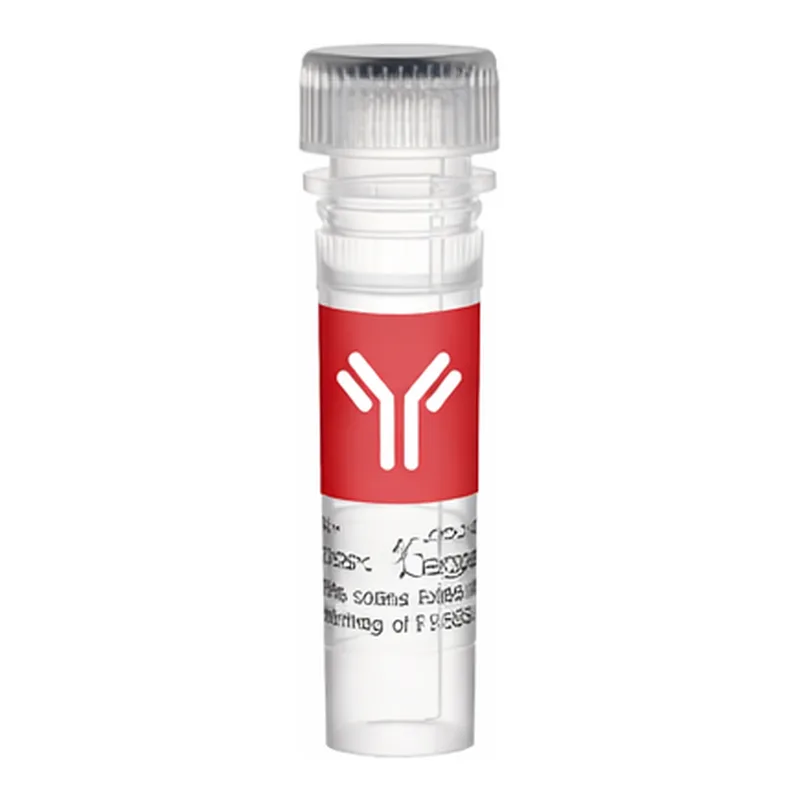
Thermo Fisher Scientific Cortactin Polyclonal Antibody
Rabbit polyclonal antibody recognizing human Cortactin, validated for IHC and IHC-P applications. Antigen affinity purified, supplied as liquid at 0.25 mg/mL in TBS with BSA and sodium azide. Predicted cross-reactivity with Orangutan and Gorilla. For r...
- 판매단위
- pk
카탈로그
2개 옵션 · 카탈로그 번호를 클릭하면 복사됩니다Thermo Fisher Scientific · Thermo Fisher Scientific Cortactin Polyclonal Antibody
Applications
| Application | Tested Dilution |
|---|---|
| Immunohistochemistry (IHC) | 1:100–1:500 |
| Immunohistochemistry (Paraffin) (IHC-P) | 1:100–1:500 |
Product Specifications
| Property | Description |
|---|---|
| Species Reactivity | Human |
| Host / Isotype | Rabbit / IgG |
| Class | Polyclonal |
| Type | Antibody |
| Immunogen | Region between residue 450 and 500 of human cortactin |
| Conjugate | Unconjugated |
| Form | Liquid |
| Concentration | 0.25 mg/mL |
| Purification | Antigen affinity chromatography |
| Storage Buffer | TBS, pH 7.0–8.0, with 0.1% BSA |
| Contains | 0.09% sodium azide |
| Storage Conditions | 4°C |
| Shipping Conditions | Wet ice |
Product Specific Information
- Recommended shelf life: 1 year from date of receipt
- Based on 100% sequence identity, this antibody is predicted to react with Orangutan and Gorilla
Target Information
Cortactin (Cttn) is a ubiquitous actin-binding protein originally identified as a Src substrate. It contributes to the organization of the actin cytoskeleton and cell shape, playing a role in lamellipodia formation and cell migration. Cortactin accumulates in peripheral, actin-enriched structures, facilitating actin network formation. It contains four major domains: N-terminal acidic (NTA), tandem repeats, proline-rich, and SH3 domains. The NTA domain associates with the Arp2/3 and WASP complexes at F-actin branches. Cortactin promotes cell motility and invasion, including a critical role in invadopodia formation, which are actin-rich protrusions involved in extracellular matrix degradation by cancer cells. It is phosphorylated by Src family kinases at Y421, Y466, and Y482, and by Erk family kinases at S405 and S418.
For Research Use Only. Not for use in diagnostic procedures. Not for resale without express authorization.
Thermo Fisher Scientific 상품 둘러보기
전체보기
문의
0개 · 배송·재고 문의는 실시간 상담이 빠릅니다아직 등록된 문의가 없어요.