

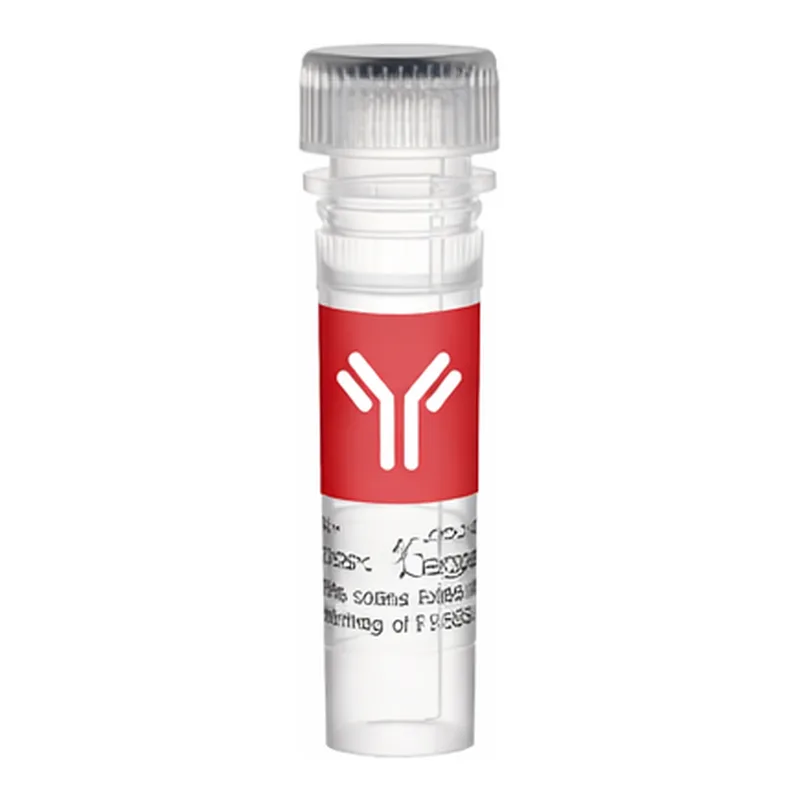
Thermo Fisher Scientific ATPIF1 Polyclonal Antibody
Thermo Fisher Scientific의 ATPIF1 Polyclonal Antibody는 인간 ATPIF1 단백질에 특이적인 토끼 IgG 항체로, Western blot, IHC, ICC/IF에 적합합니다. 항원 친화 크로마토그래피로 정제되었으며, 안정적인 액상 형태로 제공됩니다. 연구용으로만 사용됩니다.
- 판매단위
- pk
카탈로그
1개 옵션 · 카탈로그 번호를 클릭하면 복사됩니다Thermo Fisher Scientific · Thermo Fisher Scientific ATPIF1 Polyclonal Antibody
Applications
Western Blot (WB)
- Tested Dilution: 0.04–0.4 µg/mL
Immunohistochemistry (Paraffin) (IHC (P))
- Tested Dilution: 1:50–1:200
Immunocytochemistry (ICC/IF)
- Tested Dilution: 0.25–2 µg/mL
Product Specifications
| 항목 | 내용 |
|---|---|
| Species Reactivity | Human |
| Host / Isotype | Rabbit / IgG |
| Class | Polyclonal |
| Type | Antibody |
| Immunogen | Recombinant protein corresponding to Human ATPIF1. Recombinant protein control fragment (Product #RP-94184). |
| Conjugate | Unconjugated |
| Form | Liquid |
| Concentration | 0.05 mg/mL |
| Purification | Antigen affinity chromatography |
| Storage Buffer | PBS, pH 7.2, with 40% glycerol |
| Contains | 0.02% sodium azide |
| Storage Conditions | Store at 4°C short term. For long term storage, store at -20°C, avoiding freeze/thaw cycles. |
| Shipping Conditions | Wet ice |
| RRID | AB_2790151 |
Product Specific Information
Immunogen sequence:
VRTMQARGFG SDQSENVDRG AGSIREAGGA FGKREQAEEE RYFRAQSREQ LAALKKHHEE EIVHHKKEIE RLQKEIERHK QKIKMLK
Target Information
Complex V, also called F1F0 ATPase or ATP synthase, is highly conserved across species and found in plants, fungi, bacteria, and animals. This transmembrane enzyme drives the reversible reaction from ADP + phosphate to ATP in oxidative phosphorylation and functions as a proton pump.
Although primarily localized to mitochondria, ATP synthase has also been identified on plasma membranes of various cell types, where it acts as receptors such as HDL or angiostatin receptors.
In mammals, ATP synthase consists of 17 subunits divided into the soluble F1 section (α, β, γ, δ, ε) and the membrane-embedded F0 section (a, b, c). Mutations in mitochondrial-encoded subunits of Complex V are known to cause OXPHOS diseases.
For Research Use Only. Not for use in diagnostic procedures. Not for resale without express authorization.
Thermo Fisher Scientific 상품 둘러보기
전체보기
문의
0개 · 배송·재고 문의는 실시간 상담이 빠릅니다아직 등록된 문의가 없어요.