

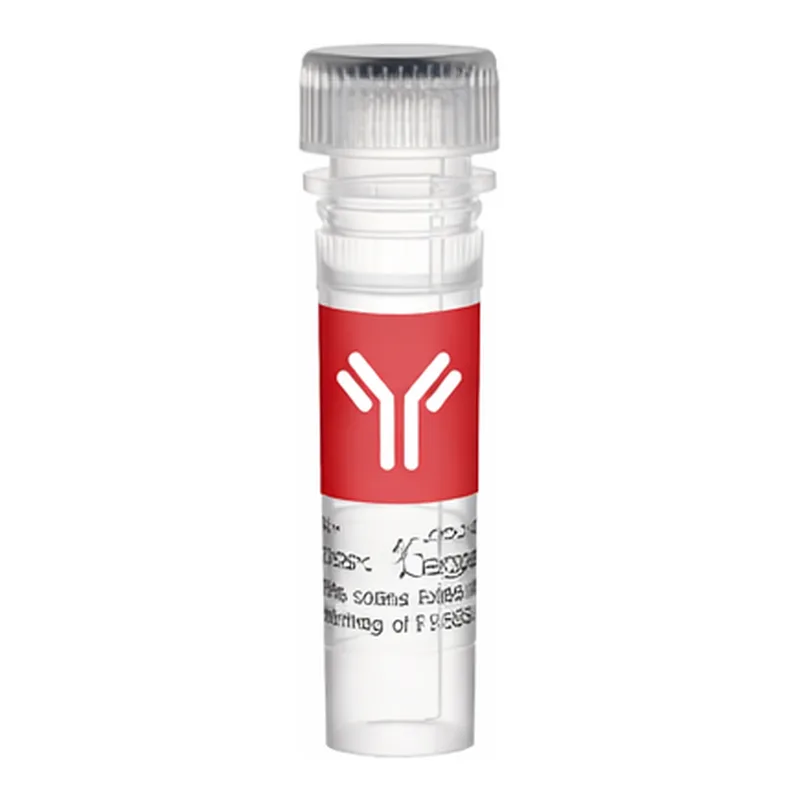
Thermo Fisher Scientific TPSB2 Recombinant Rabbit Monoclonal Antibody (9H6)
Thermo Fisher Scientific의 TPSB2 Recombinant Rabbit Monoclonal Antibody (Clone 9H6)는 인간 및 생쥐 시료에 반응하며, Western blot, Flow cytometry, ELISA 등 다양한 응용에 적합합니다. HEK293 세포에서 발현된 고순도 단클론 항체로 안정적인 액상 형태로 제공됩니다.
- 판매단위
- pk
카탈로그
1개 옵션 · 카탈로그 번호를 클릭하면 복사됩니다Thermo Fisher Scientific · Thermo Fisher Scientific TPSB2 Recombinant Rabbit Monoclonal Antibody (9H6)
Applications
Western Blot (WB)
- Tested Dilution: 1:500–1:2,000
Flow Cytometry (Flow)
- Tested Dilution: 1:50–1:200
ELISA
- Tested Dilution: Assay-dependent
Product Specifications
| 항목 | 내용 |
|---|---|
| Species Reactivity | Human, Mouse |
| Host / Isotype | Rabbit / IgG |
| Expression System | HEK293 cells |
| Class | Recombinant Monoclonal |
| Type | Antibody |
| Clone | 9H6 |
| Immunogen | A synthesized peptide derived from Human TPSB2 |
| Conjugate | Unconjugated |
| Form | Liquid |
| Concentration | 0.4 mg/mL |
| Purification | Affinity chromatography |
| Storage Buffer | PBS, pH 7.4, with 50% glycerol |
| Contains | 0.02% sodium azide |
| Storage Conditions | -20°C or -80°C if preferred |
| Shipping Conditions | Wet ice |
| RRID | AB_3093699 |
Target Information
TPSB2 is a protein coding gene. Tryptases comprise a family of trypsin-like serine proteases, belonging to the peptidase family S1. Tryptases are enzymatically active only as heparin-stabilized tetramers and are resistant to all known endogenous proteinase inhibitors. Several tryptase genes are clustered on chromosome 16p13.3, characterized by highly conserved 3′ UTR and tandem repeat sequences at both 5′ flank and 3′ UTR, which may regulate mRNA stability. These genes contain an intron immediately upstream of the initiator Met codon, separating transcription initiation from the protein coding sequence — a unique feature among tryptases. Allelic variations once led to classification as two separate genes, beta II and beta III. Beta tryptases are predominant in mast cells, while alpha tryptases dominate in basophils. Tryptases have been implicated as mediators in asthma and other allergic or inflammatory disorders.
For Research Use Only. Not for use in diagnostic procedures. Not for resale without express authorization.
Thermo Fisher Scientific 상품 둘러보기
전체보기
문의
0개 · 배송·재고 문의는 실시간 상담이 빠릅니다아직 등록된 문의가 없어요.