

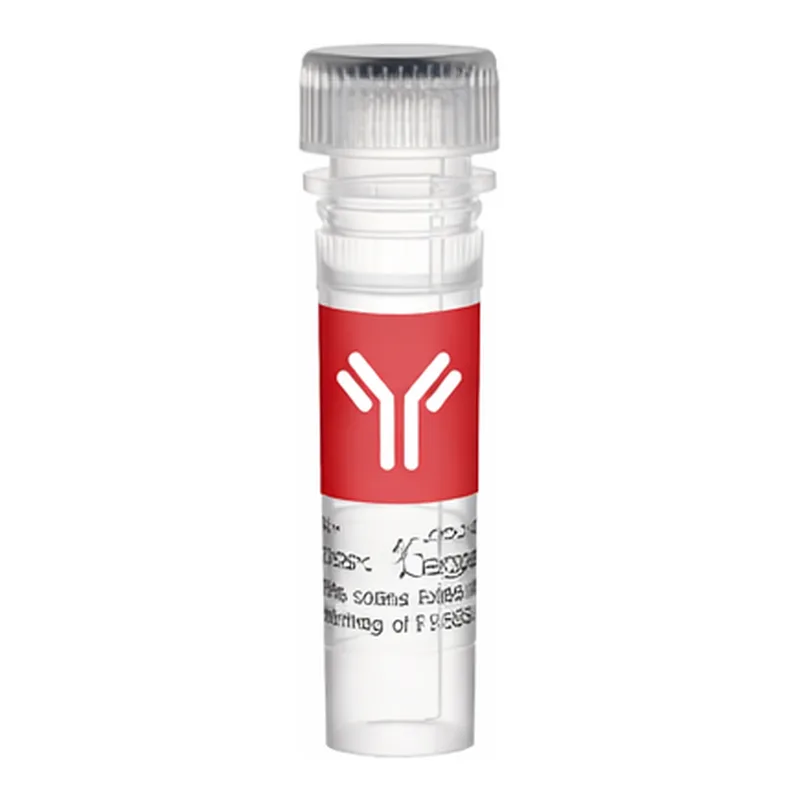
Thermo Fisher Scientific PON3 Monoclonal Antibody (OTI1A5), TrueMAB
PON3 단백질을 인식하는 Mouse monoclonal antibody (Clone OTI1A5). Western blot 및 IHC(P)에서 검증됨. Human 시료에 반응하며, 액상 형태로 제공. Affinity chromatography로 정제되어 높은 특이성과 재현성을 보장. 연구용으로만 사용 가능.
- 판매단위
- pk
카탈로그
1개 옵션 · 카탈로그 번호를 클릭하면 복사됩니다Thermo Fisher Scientific · Thermo Fisher Scientific PON3 Monoclonal Antibody (OTI1A5), TrueMAB
Applications and Tested Dilution
| Application | Tested Dilution |
|---|---|
| Western Blot (WB) | 1:2,000 |
| Immunohistochemistry (Paraffin) (IHC (P)) | 1:2,000 |
Product Specifications
| 항목 | 내용 |
|---|---|
| Species Reactivity | Human |
| Host / Isotype | Mouse / IgG2b |
| Class | Monoclonal |
| Type | Antibody |
| Clone | OTI1A5 |
| Immunogen | Human recombinant protein fragment corresponding to amino acids 30–319 of human PON3 produced in E. coli |
| Conjugate | Unconjugated |
| Form | Liquid |
| Concentration | 1 mg/mL |
| Purification | Affinity chromatography |
| Storage Buffer | PBS with 1% BSA, 50% glycerol |
| Contains | 0.02% sodium azide |
| Storage Conditions | -20°C, Avoid Freeze/Thaw Cycles |
| Shipping Conditions | Ambient (domestic); Wet ice (international) |
Target Information
Paraoxonase-1 (PON1) is a calcium-dependent ester hydrolase associated with apoA-I in HDL. PON1 prevents the oxidation of LDL, thereby reducing the formation of atherogenic oxidised-LDL. Polymorphisms of the human PON1 gene are correlated with coronary artery disease, indicating a genetic association between PON1 and coronary artery disease. PON1 activity is lower in subjects prone to atherosclerosis, such as those with type 1 and type 2 diabetes, familial hypercholesterolemia, and renal disease, suggesting its involvement in atherosclerosis development.
PON2 is a ubiquitously expressed intracellular protein that can protect cells against oxidative damage. PON3 is similar to PON1 in activity but differs in substrate specificity. PON1 and PON3 are implicated in lowering the risk of developing coronary artery disease and atherosclerosis. Human PON3 protein shares the three conserved cysteine residues identified in PON1, suggesting their importance in in vivo activities. PON1-based catalytic scavengers can serve as potential therapeutic agents for organophosphate intoxication.
For Research Use Only. Not for use in diagnostic procedures. Not for resale without express authorization.
Thermo Fisher Scientific 상품 둘러보기
전체보기
문의
0개 · 배송·재고 문의는 실시간 상담이 빠릅니다아직 등록된 문의가 없어요.