

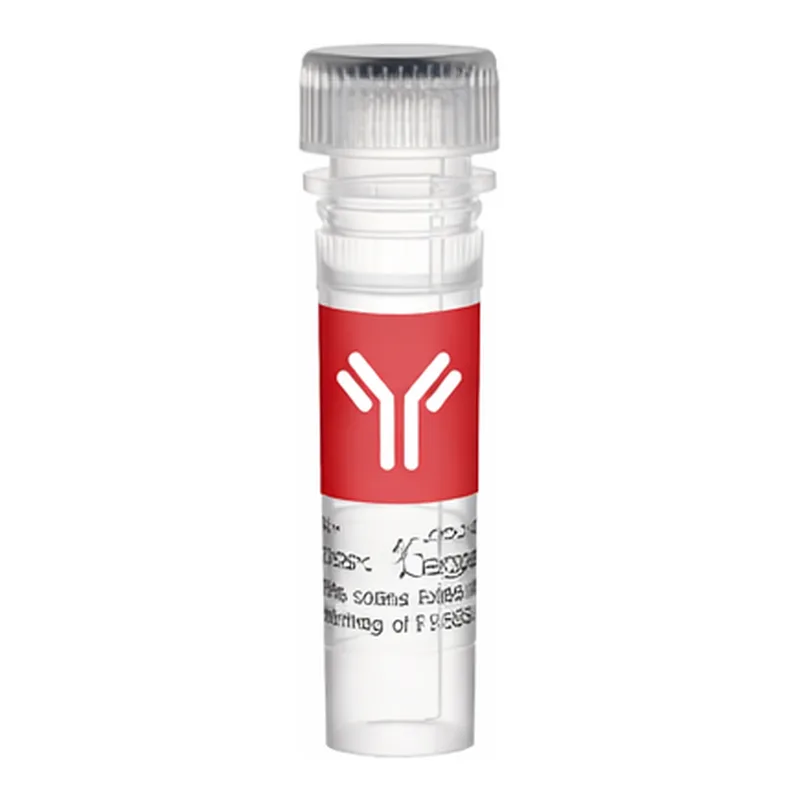
Thermo Fisher Scientific HCAR2 Recombinant Rabbit Monoclonal Antibody (7A3F2)
HCAR2 단백질을 인식하는 재조합 토끼 단일클론 항체로, Western blot과 ELISA에 적합합니다. HEK293 세포에서 발현되었으며, 고순도의 Affinity chromatography로 정제되었습니다. 인간 GPR109A/HM74A/HCAR2 서열(aa 100-200)을 기반으로 제작되어 염증 및 대사 연구에 유용합니다.
- 카탈로그번호
- MA551337
- 판매단위
- pk
카탈로그
1개 옵션 · 카탈로그 번호를 클릭하면 복사됩니다Thermo Fisher Scientific · Thermo Fisher Scientific HCAR2 Recombinant Rabbit Monoclonal Antibody (7A3F2)
Applications and Tested Dilution
| Application | Tested Dilution |
|---|---|
| Western Blot (WB) | 1:1,000–1:5,000 |
| ELISA | 1 µg/mL |
Product Specifications
| 항목 | 내용 |
|---|---|
| Species Reactivity | Mouse |
| Host / Isotype | Rabbit / IgG |
| Expression System | HEK293 cells |
| Class | Recombinant Monoclonal |
| Type | Antibody |
| Clone | 7A3F2 |
| Immunogen | A synthetic peptide corresponding to amino acids 100–200 of human GPR109A/HM74A/HCAR2 (NP_808219.1) |
| Conjugate | Unconjugated |
| Form | Liquid |
| Concentration | 0.59 mg/mL |
| Purification | Affinity chromatography |
| Storage Buffer | PBS, pH 7.3, with 0.05% BSA, 50% glycerol |
| Contains | 0.05% ProClin 300 |
| Storage Conditions | -20°C, Avoid Freeze/Thaw Cycles |
| Shipping Conditions | Wet ice |
| RRID | AB_3093101 |
Product Specific Information
Immunogen sequence:
CRLMLFMLAM NRQGSIIFLT VVAVDRYFRV VHPHHALNKI SNRTAAIISC LLWGITIGLT VHLLKKKMPI QNGGANLCSS FSICHTFQWH EAMFLLEFFL P
Target Information
GPR109A (also known as HCA2, HM74a, and NIACR1) is a 42 kDa G-protein coupled receptor belonging to the hydroxyl-carboxylic acid receptor family, which includes GPR109B and GPR81.
GPR109A has two known ligands: niacin and butyrate (or 3-hydroxybutyrate). The endogenous ligands for GPR109B and GPR81 are 3-hydroxyl-octanoic acid and lactate, respectively.
GPR109A is expressed in:
- Adipocytes
- Neutrophils
- Langerhans cells
- Keratinocytes
- Intestinal epithelial cells
- Colonic macrophages
Niacin (vitamin B3) improves cholesterol metabolism and reduces inflammation via GPR109A. The receptor also plays a key role in suppressing inflammation and colon cancer. Both ligands are produced by colonic commensal bacteria.
In mice, GPR109A expression in intestinal epithelial cells and macrophages contributes to the suppression of colitis and colon cancer. In humans, GPR109A is silenced in colon carcinoma cells by DNA methylation, increasing intestinal inflammation.
For Research Use Only.
Not for use in diagnostic procedures. Not for resale without express authorization.
Thermo Fisher Scientific 상품 둘러보기
전체보기
문의
0개 · 배송·재고 문의는 실시간 상담이 빠릅니다아직 등록된 문의가 없어요.