

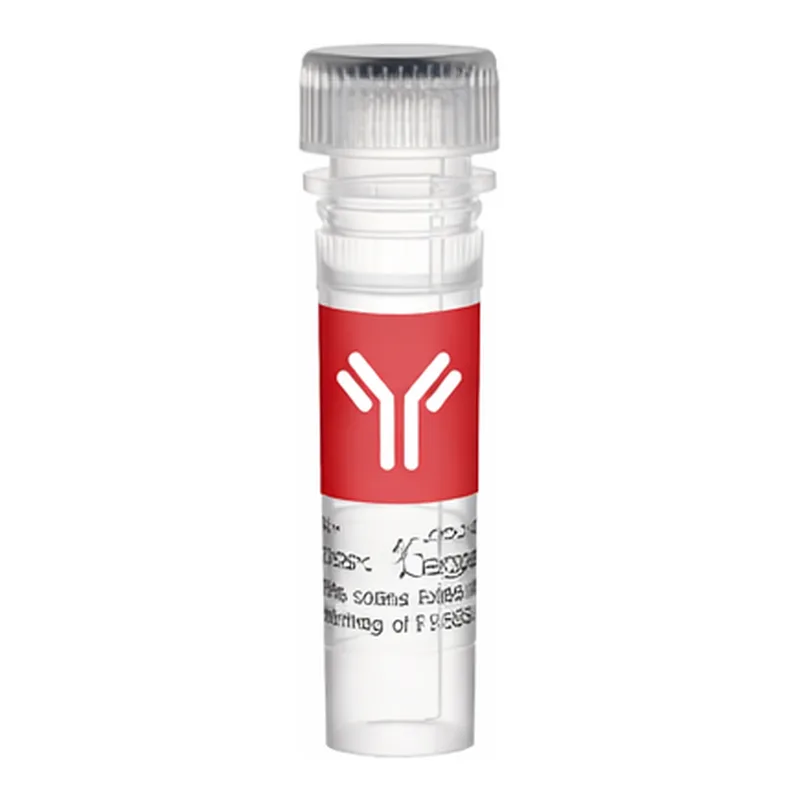
Thermo Fisher Scientific Aubergine/Sting Polyclonal Antibody
드로소필라 Aubergine/Sting 단백질을 인식하는 친화정제 폴리클로날 항체로, Western blot, ELISA, IP에 적합합니다. 높은 특이성과 재현성을 제공하며, RNAi 관련 연구 및 생식세포 발달 연구에 활용됩니다. -20°C에서 안정적으로 보관 가능합니다.
- 판매단위
- pk
카탈로그
1개 옵션 · 카탈로그 번호를 클릭하면 복사됩니다Thermo Fisher Scientific · Thermo Fisher Scientific Aubergine/Sting Polyclonal Antibody
Thermo Fisher Scientific Aubergine/Sting Polyclonal Antibody
Applications and Tested Dilutions
| Application | Tested Dilution |
|---|---|
| Western Blot (WB) | 1:1,000–1:5,000 |
| ELISA | 1:20,000 |
| Immunoprecipitation (IP) | 1:1,000–1:10,000 |
Product Specifications
| Specification | Description |
|---|---|
| Species Reactivity | Fruit fly (Drosophila melanogaster) |
| Host / Isotype | Rabbit / IgG |
| Class | Polyclonal |
| Type | Antibody |
| Immunogen | Synthetic peptide corresponding to an internal region of Drosophila melanogaster Aubergine/Sting protein |
| Conjugate | Unconjugated |
| Form | Liquid |
| Concentration | 1 mg/mL |
| Purification | Affinity chromatography |
| Storage Buffer | 0.02 M potassium phosphate, pH 7.2, with 0.15 M NaCl |
| Contains | 0.01% sodium azide |
| Storage Conditions | -20°C, Avoid freeze/thaw cycles |
| Shipping Conditions | Ambient (domestic); Wet ice (international) |
Product Specific Information
Store vial at -20°C prior to opening. Aliquot contents and freeze at -20°C or below for extended storage. Avoid cycles of freezing and thawing. Centrifuge product if not completely clear after standing at room temperature.
This product is stable for several weeks at 4°C as an undiluted liquid. Dilute only prior to immediate use.
Anti-Aubergine affinity-purified antibody is directed against Drosophila Aubergine protein. BLAST analysis suggests limited cross-reactivity with Aubergine proteins from other sources.
Target Information
Aubergine (Sting) is a Drosophila protein involved in germ-line development and RNA interference (RNAi).
Drosophila melanogaster possesses a robust innate immune system that responds to bacterial, fungal, and viral infections through humoral and cellular activities similar to those in other animals.
RNA interference (RNAi) acts as a gene regulation and defense mechanism by suppressing gene expression via targeted RNA degradation. This process is directed by exogenous dsRNA (cleaved into siRNAs) or endogenous miRNAs.
In plants, RNAi functions as an antiviral immune response system. In Drosophila, several core RNAi pathway genes have been reported, including piwi, vig, aubergine (aub), armitage (armi), Rm62, r2d2, and Argonaute2 (AGO2).
For Research Use Only. Not for use in diagnostic procedures. Not for resale without express authorization.
Thermo Fisher Scientific 상품 둘러보기
전체보기
문의
0개 · 배송·재고 문의는 실시간 상담이 빠릅니다아직 등록된 문의가 없어요.